Scientists Unveil 539 Distinct Chemical Brain Zones, Revealing Hidden Lipid Map
Introduction
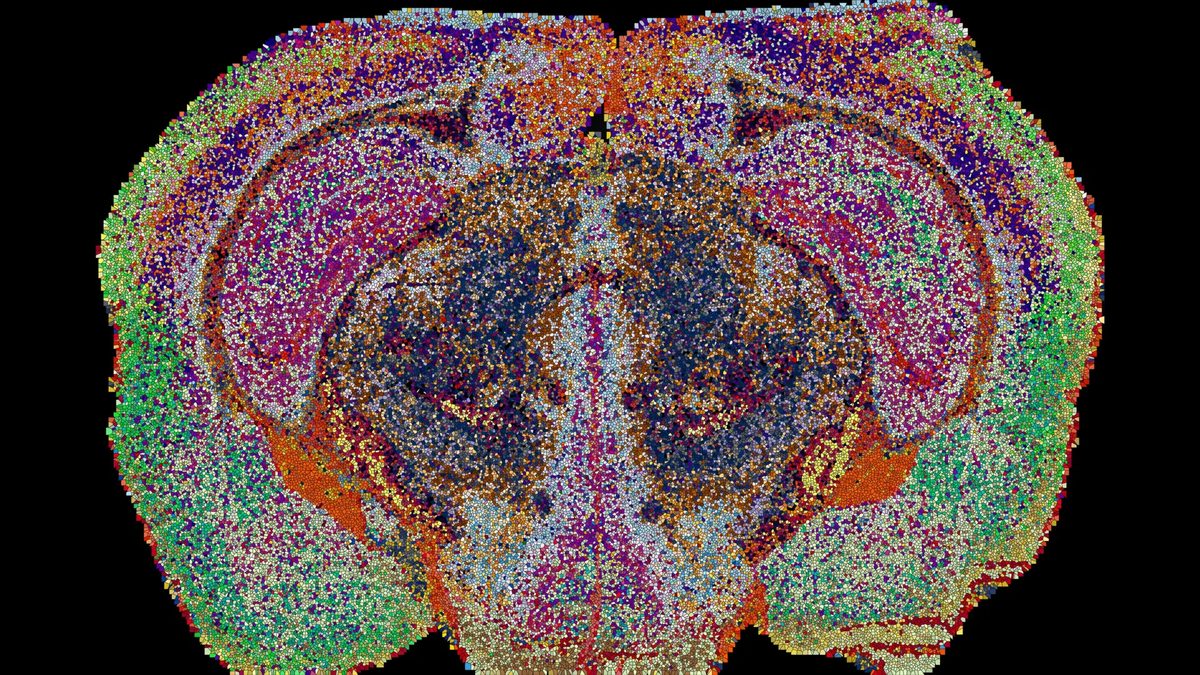
For decades, neuroscience has meticulously dissected the brain, focusing on its intricate cellular structures, complex neural connections, genetic blueprints, and protein machinery. However, a crucial component of brain biology—lipids, the essential fatty molecules underpinning cell membranes and neural communication—has remained largely uncharted territory. This oversight has left a significant gap in our understanding of the brain's chemical landscape. Now, a pioneering study from the Ecole Polytechnique Fédérale de Lausanne (EPFL) has unveiled a hidden layer of organization within the brain by constructing the first detailed 3D map of its lipid distribution, revealing 539 distinct chemical regions that challenge previous assumptions about brain uniformity.
Key Details
- Discovery of 539 "Lipizones": Researchers identified 539 distinct chemical territories, termed "lipizones," based on unique lipid compositions.
- Novel Mapping Technique: The study employed mass spectrometry imaging, analyzing millions of measurements from mouse brains to create a comprehensive 3D reconstruction.
- Unexpected White Matter Complexity: The atlas revealed that white matter, previously considered relatively uniform, is composed of numerous chemically distinct lipid zones.
- Lipids as "Postal Codes": Lipids act as chemical identifiers, linking distant but functionally related brain regions with similar molecular signatures.
- Pregnancy-Induced Changes: Significant lipid composition shifts were observed in the brains of pregnant mice, particularly in the cortex, suggesting neural adaptation.
- Methodological Transferability: While the map is specific to mice, the innovative methodology is expected to enable similar discoveries in the human brain.
Background
Lipids are fundamental to brain function. They form the structural basis of cell membranes, provide the myelin sheath that insulates nerve fibers—crucial for rapid signal transmission—and play active roles in intercellular communication. Despite their importance, mapping the precise location and distribution of different lipid types within the brain has been a formidable challenge. Traditional imaging techniques often lack the resolution or specificity to differentiate individual lipid molecules, leaving scientists with a fragmented and often imprecise view of the brain's chemical architecture. This lack of detailed lipid mapping has hindered efforts to understand how lipid imbalances contribute to neurological and psychiatric conditions, ranging from Alzheimer's disease to depression.
Impact Analysis
The creation of the Lipid Brain Atlas represents a paradigm shift in neurobiology. By applying advanced mass spectrometry imaging and sophisticated machine learning algorithms to analyze millions of data points from mouse brains, the EPFL team, led by Giovanni D’Angelo, Luca Fusar Bassini, and Gioele La Manno, has provided unprecedented resolution of the brain's chemical organization. The identification of 539 distinct lipizones demonstrates that the brain's structure is far more chemically heterogeneous than previously appreciated. The discovery of complex lipid patterning within white matter is particularly significant, suggesting that the cells responsible for myelin production exhibit a greater diversity in their chemical makeup than genetic data alone indicated. This finding could necessitate a re-evaluation of how white matter function and integrity are understood, especially in the context of demyelinating diseases.
“In effect, lipids work like postal codes, giving distant but related parts of the brain the same chemical address,” stated Professor Giovanni D’Angelo.
Furthermore, the atlas revealed previously unrecognized chemical boundaries in structures like the choroid plexus and the lining of the brain's ventricles. The observation of widespread lipid changes during pregnancy in mice, particularly the significant increase in galactosyl ceramide in white matter, provides compelling evidence that the brain undergoes substantial chemical remodeling to adapt to physiological demands. This suggests a dynamic interplay between systemic physiological states and brain chemistry, highlighting potential mechanisms for neuroplasticity.
Broader Context
This research emerges at a time when the complexity of the brain is increasingly recognized, moving beyond a purely structural or genetic view. The integration of chemical information, specifically lipidomics, offers a complementary dimension to existing atlases based on anatomy, cell types, and gene expression. The Lipid Brain Atlas can be integrated with these other datasets to build a more holistic understanding of brain organization. The findings also resonate with growing research linking lipid dysregulation to a spectrum of brain disorders. Understanding the baseline chemical architecture and its variations is a critical first step toward identifying pathological lipid signatures associated with conditions like Alzheimer's, Parkinson's, multiple sclerosis, and depression. The freely accessible nature of the atlas empowers the global scientific community to leverage this data for hypothesis generation and experimental design.
Future Outlook
The immediate future for this research involves leveraging the Lipid Brain Atlas to investigate specific brain functions and diseases. Scientists can now use the atlas as a reference map to explore how deviations from these established lipid patterns correlate with neurological disorders, brain aging, and developmental abnormalities. The transferable methodology is a key takeaway, paving the way for the creation of similar lipid atlases for the human brain. While direct extrapolation from mouse to human is not possible, the principle that the brain possesses a highly organized lipid architecture is likely universal. Future studies will focus on applying and adapting these techniques to human brain tissue, potentially leading to new diagnostic biomarkers and therapeutic targets for a range of neurological conditions. The insights gained from studying pregnancy-related changes may also open avenues for understanding hormonal influences on brain chemistry and plasticity.
Conclusion
The development of the Lipid Brain Atlas by EPFL scientists marks a significant advancement in neuroscience, revealing a previously hidden layer of chemical organization within the brain. By identifying 539 distinct lipizones and uncovering unexpected complexity, particularly in white matter, the study provides a powerful new tool for understanding brain structure and function. The findings underscore the critical role of lipids in brain architecture and highlight the brain's dynamic chemical adaptability, as evidenced by pregnancy-induced changes. While the current atlas is based on mouse models, the innovative methodology promises to unlock similar insights into the human brain, offering new avenues for research into aging, disease, and the fundamental mechanisms of neural organization. This work fundamentally enriches our perception of the brain, emphasizing that its complexity extends deep into its molecular, fatty underpinnings.
Source: sciencedaily.com