San Clemente Residents Consider Self-Taxation Amidst Severe Beach Erosion Crisis
Introduction
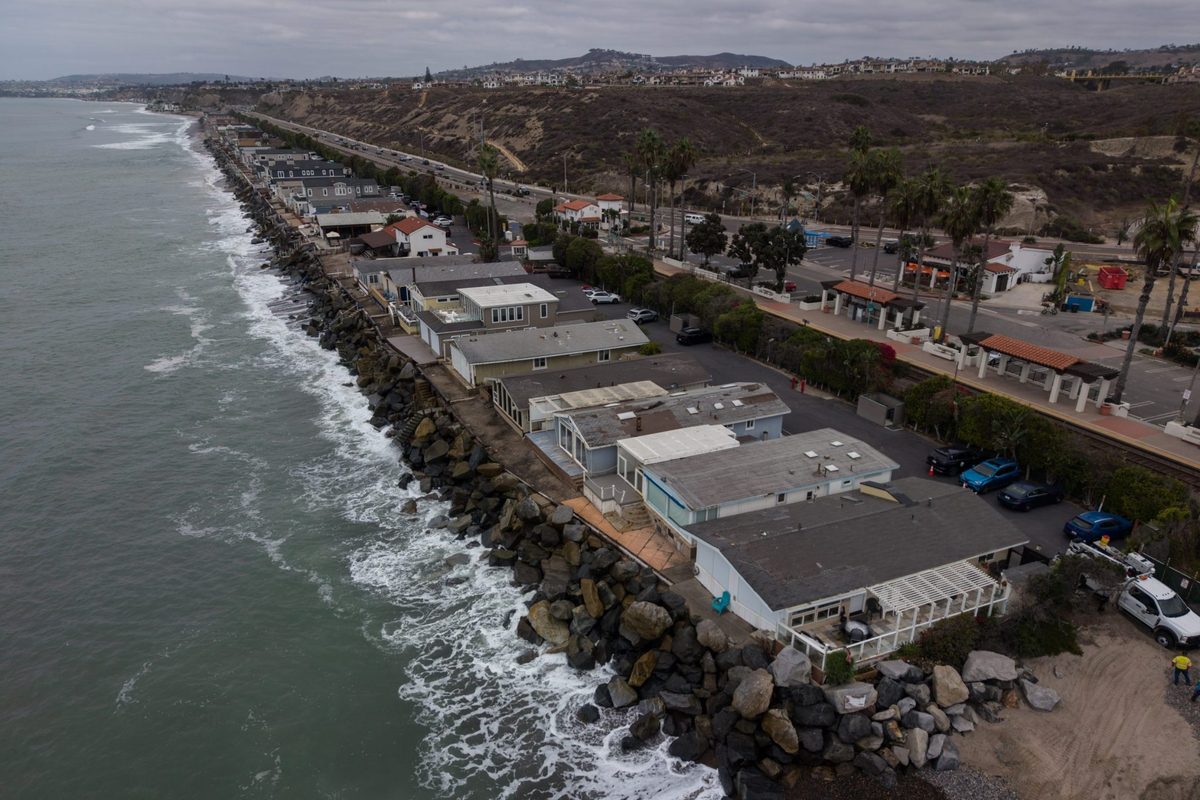
San Clemente, a picturesque Southern California city renowned for its “Spanish village by the sea” charm, is facing an existential threat from the relentless advance of coastal erosion. What was once a mile-long stretch of inviting sand has been dramatically reduced, with rising sea levels and powerful waves consuming the shoreline. This environmental crisis is not only diminishing the city’s famed beaches but also damaging oceanfront properties and repeatedly disrupting a critical passenger rail line, underscoring the profound impact of climate change on coastal living.
Key Details
- Erosion Impact: Coastal erosion has significantly reduced San Clemente’s beaches, making once-accessible areas impassable and altering the community’s recreational landscape.
- Infrastructure Threat: Crumbling seaside bluffs and encroaching surf have led to repeated closures of a vital passenger rail line, a key artery for commuters, freight, and the military.
- Proposed Solution: Residents are considering a ballot measure for a 1% sales tax to fund wildfire protection and, crucially, beach restoration and sand replenishment.
- Sand Deficit: City officials estimate San Clemente faces a deficit of approximately 3 million cubic yards of sand, a monumental challenge to address.
- Transportation Authority Concerns: The Orange County Transportation Authority faces hurdles in obtaining state permits for sand replenishment and is exploring long-term, costly solutions like relocating rail lines inland or even discontinuing service.
Background
For decades, San Clemente has been a sought-after coastal destination. However, the natural processes that sustained its beaches have been exacerbated by a combination of factors. Rising sea levels, a direct consequence of global climate change, are pushing the shoreline further inland. Simultaneously, urban development has inadvertently reduced the natural flow of sediment that once replenished the beaches. Warmer ocean waters contribute to higher, more forceful waves, accelerating the erosion process. This confluence of environmental changes has transformed a once-abundant coastline into a rapidly receding frontier.
Impact Analysis
The consequences of this erosion are multifaceted and severe. Economically, the loss of beach access impacts tourism and local businesses that rely on the city’s coastal appeal. Environmentally, the shrinking beaches disrupt coastal ecosystems. Socially, the erosion erodes the quality of life for residents, limiting recreational opportunities and impacting property values. The repeated closures of the coastal rail line, a crucial transportation corridor, have significant economic repercussions, affecting commuters, businesses, and the movement of goods. The current approach of reinforcing tracks with rocks, while a temporary fix, paradoxically accelerates sand loss, creating a self-defeating cycle.
“The constant pressure is sea level rise. It is going to keep rising, and rising, and the beaches will retreat landward.” – Sean Vitousek, research oceanographer with the U.S. Geological Survey.
Broader Context
San Clemente’s plight is not an isolated incident but part of a larger pattern affecting coastal communities across California and globally. Scientists have long warned about the vulnerability of Southern California’s beaches to erosion, with projections indicating significant losses by the end of the century. The recent strengthening of El Niño events, linked to human-caused climate change, further heightens these risks, bringing increased potential for flooding and landslides. Towns like Pacifica and Long Beach have already experienced severe impacts, demonstrating the widespread nature of this challenge. The debate in San Clemente over a local tax measure reflects a broader struggle: how to fund adaptation and mitigation strategies in the face of escalating climate change impacts, especially in communities that may lean politically conservative and traditionally resist new taxes.
Future Outlook
The proposed 1% sales tax in San Clemente represents a potential, albeit controversial, short-term solution to a long-term problem. If passed, it could provide much-needed funds for immediate sand replenishment. However, the long-term viability of such measures is uncertain. Transportation officials are grappling with more drastic and expensive options, including relocating the vital rail line inland—a prospect previously deemed too costly—or even ceasing operations. The effectiveness of such interventions hinges on securing state permits for sand replenishment and addressing the fundamental issue of rising sea levels. Without a comprehensive, regional, and potentially national strategy to combat climate change and its effects, coastal communities like San Clemente will continue to face an uphill battle against the encroaching ocean.
Conclusion
The erosion crisis in San Clemente serves as a stark microcosm of the challenges facing coastal regions worldwide. The potential for residents to tax themselves underscores the urgency and the direct impact on their daily lives and community infrastructure. While local solutions like sand replenishment are necessary, they are ultimately temporary fixes. The situation demands a broader reckoning with climate change, necessitating significant investment in resilient infrastructure, sustainable coastal management, and global efforts to curb greenhouse gas emissions. The ocean, as one resident aptly put it, “always eventually wins,” but humanity’s response to this challenge will determine the future habitability of our coastlines.
Source: fortune.com