Voyager Probes: Nearly 50 Years of Unprecedented Solar System Exploration and Interstellar Discoveries
Introduction
For nearly half a century, NASA's twin Voyager probes have been humanity's intrepid explorers, venturing into the vast expanse of our solar system and beyond. Launched in 1977, Voyager 2 embarked on its journey on August 20th, followed closely by Voyager 1 on September 5th. What began as a four-year mission to study the gas giants has evolved into NASA's longest-running and most ambitious exploration, costing over $865 million. Today, these probes are billions of miles from Earth, continuing to send back invaluable data from interstellar space, a testament to their enduring design and the persistent efforts of NASA scientists.
Key Details
- Twin Probes, Singular Mission: Voyager 1 and Voyager 2 were launched within weeks of each other in 1977, utilizing a rare planetary alignment to slingshot them on accelerated trajectories.
- Grand Tour Achieved: Voyager 2 is the only spacecraft to have visited all four outer gas giants: Jupiter, Saturn, Uranus, and Neptune. Voyager 1 completed its tour of Jupiter and Saturn before heading towards interstellar space.
- Scientific Arsenal: Each probe is equipped with 11 scientific instruments designed to study planetary bodies, magnetic fields, and charged particles.
- Interstellar Pioneers: Voyager 1 crossed the heliopause, the boundary of our solar system's influence, in 2012, becoming the first human-made object to enter interstellar space. Voyager 2 followed suit in 2018.
- Enduring Longevity: Despite nearly 50 years in operation and the harsh conditions of deep space, NASA continues to maintain and operate the probes, even implementing power-saving measures and component replacements to extend their lifespan.
- Record Distances: By November 2026, Voyager 1 will be approximately 16 billion miles from Earth, while Voyager 2 will be over 13.2 billion miles away, traveling at approximately 34,000 mph relative to the Sun.
Background
The Voyager program was conceived to take advantage of a unique celestial event: a once-in-175-year alignment of the outer planets. This alignment allowed a single spacecraft to visit Jupiter, Saturn, Uranus, and Neptune in a relatively short period. Voyager 2, with its slower but more comprehensive trajectory, was tasked with this ambitious "Grand Tour." Voyager 1, launched on a faster path, focused on Jupiter and Saturn before venturing out of the solar system.
The probes were originally designed for a four-year mission, but their robust engineering and the ingenuity of NASA's mission control have allowed them to far surpass their expected operational life. The initial cost of the mission, over $865 million, has yielded scientific returns that are immeasurable, fundamentally reshaping our understanding of the outer solar system.
Impact Analysis
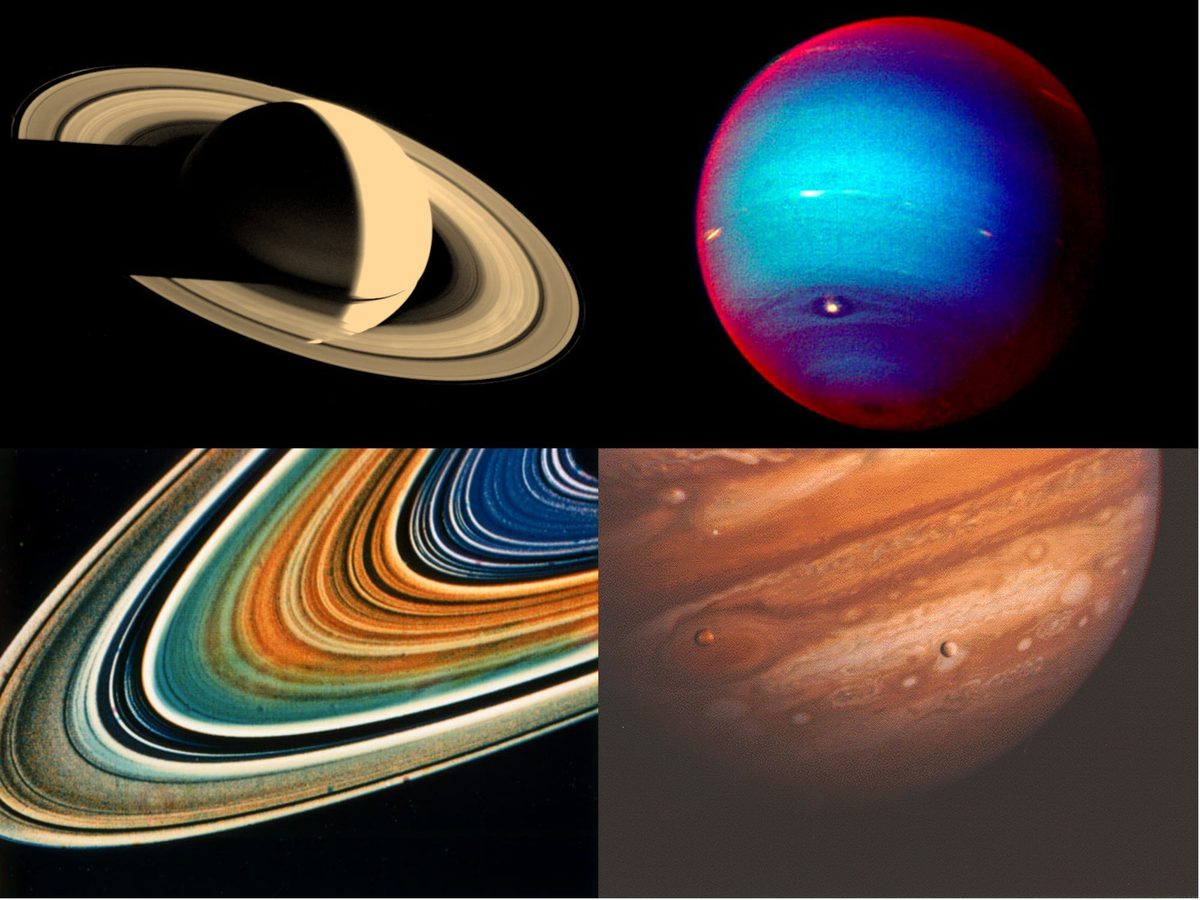
The images and data returned by the Voyager probes have been nothing short of revolutionary. They provided the first close-up views of Jupiter's turbulent atmosphere, its volcanic moon Io, and its faint rings. Saturn's magnificent rings were revealed in unprecedented detail, along with its diverse moons, including the icy Enceladus. Voyager 2's solo encounters with Uranus and Neptune unveiled new rings and moons for both planets, offering insights into their unique magnetic fields and atmospheric compositions.
“The Voyager mission has been a journey of discovery that continues to inspire us. These probes are pushing the boundaries of human knowledge, venturing into realms previously only imagined.”
Beyond the stunning imagery, the scientific instruments aboard the Voyagers have detected phenomena such as Jupiter's intense radiation belts and Saturn's complex ring dynamics. Their discovery of volcanoes on Io and rings around Jupiter and Saturn were groundbreaking. The data collected on the atmospheres, magnetospheres, and moons of these distant worlds has formed the bedrock of planetary science for decades.
Broader Context
The Voyager probes are more than just scientific instruments; they are cultural icons. Their iconic "Pale Blue Dot" image, taken by Voyager 1 in 1990 from 4 billion miles away, serves as a profound reminder of Earth's fragility and our place in the cosmos. This image, a self-portrait of our solar system with Earth as a tiny speck, has resonated globally, fostering a sense of shared humanity and a call for environmental stewardship.
Furthermore, each Voyager probe carries a golden record, a time capsule containing sounds and images selected to portray the diversity of life and culture on Earth. This record is intended for any extraterrestrial intelligence that might encounter the probes in the distant future, serving as a message in a bottle cast into the cosmic ocean. The ongoing transmissions from interstellar space, including detecting interstellar "hums," continue to expand our understanding of the environment beyond our solar system's protective bubble.
Future Outlook
Despite their age, NASA is committed to extending the operational life of the Voyager probes. In August 2026, the agency announced it had replaced some of Voyager 2's instruments with lower-power alternatives to conserve energy and maintain warmth, a strategy planned also for Voyager 1. These efforts aim to keep the probes' instruments functioning for at least another year, potentially longer.
While the cameras on both probes have been turned off to conserve power—Voyager 1's after its "Pale Blue Dot" image and Voyager 2's after its Neptune flyby—their scientific mission continues. They are now our primary data sources from interstellar space, studying the conditions between stars. The ultimate fate of the Voyagers is to drift endlessly through the Milky Way galaxy, carrying their golden records as silent ambassadors of Earth.
Conclusion
The Voyager mission stands as a monumental achievement in space exploration. For nearly 50 years, these remarkable probes have not only captured our imaginations with breathtaking images but have also provided foundational scientific data about our solar system and beyond. Facing technical challenges with remarkable resilience, and with ongoing efforts to sustain their operations, Voyager 1 and 2 continue to be our farthest reach into the cosmos. Their legacy is etched in the scientific knowledge they've imparted and the profound philosophical questions they continue to inspire, reminding us of the vastness of the universe and our quest to understand it.
Source: businessinsider.com