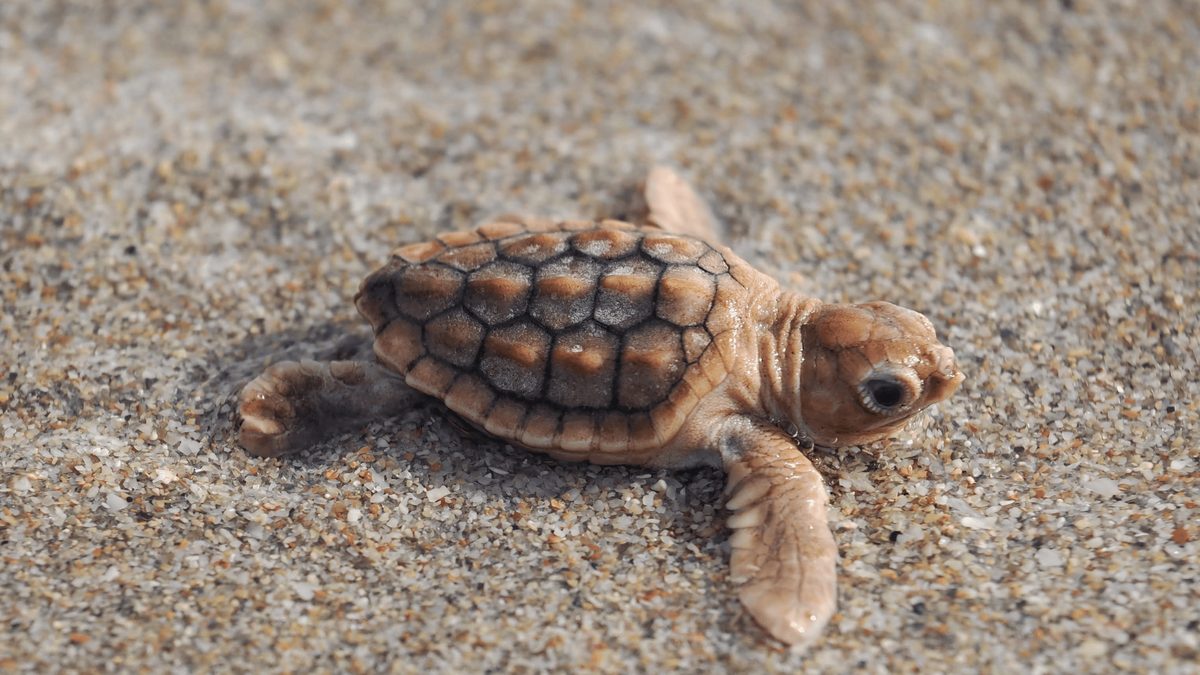
Rare 'Pumpkin Spice' Loggerhead Hatchling Discovered in Florida Waters
Introduction
As the autumn season officially begins, the familiar sights and scents of pumpkin spice often appear earlier than expected. This year, a real-life touch of autumnal charm emerged from the ocean depths when a loggerhead sea turtle hatchling, with a striking resemblance to the popular seasonal flavor, was discovered in Florida. The unique coloration of this young turtle has not only captured public attention but also raised important questions about its implications for survival in the wild.
Key Details
- A loggerhead sea turtle (Caretta caretta) hatchling with an unusually earthy, orange tone was observed in Florida in August.
- The hatchling was named ‘Pumpkin Spice’ by the observer, Michael Landress, due to its distinctive color.
- Loggerhead hatchlings typically exhibit dark to light brown carapaces and dark flippers, with pale edges. Their plastrons are usually tan or faded yellow.
- Unusual shell colors, like that of the ‘Pumpkin Spice’ hatchling or albino turtles, are considered rare.
- Loggerhead sea turtles are classified as Endangered by the IUCN and federally designated as Threatened in the United States.
Background
The discovery was made by Florida resident Michael Landress in August, as the tiny turtle made its determined journey towards the ocean. Landress noted the hatchling’s “earthy tone of autumn,” which immediately brought the popular seasonal flavor to mind. While Landress himself is not a fan of pumpkin spice lattes or pie, the moniker for the unique turtle seemed fitting. Loggerhead turtles, named for their disproportionately large heads, are a significant species found in subtropical and temperate oceans. Florida’s coastlines host one of the largest loggerhead nesting populations globally, underscoring the importance of conservation efforts in the region.
Impact Analysis
Daniel Evans, a biologist at the Sea Turtle Conservancy, highlighted the critical role of coloration in the survival of loggerhead hatchlings. “For hatchling loggerhead sea turtles, coloration is important for camouflage and hiding from predators while floating in mats of seaweed, such as sargassum,” Evans explained. The typical brown and tan hues of hatchlings provide excellent camouflage against the natural backdrop of the ocean, allowing them to evade predators effectively. In contrast, the ‘Pumpkin Spice’ hatchling’s vibrant, unusual coloration could make it a more visible target. “The common coloration, even with slight variation, provides very good camouflage, while coloration that is different won’t provide that same level of protection,” Evans stated. This reduced camouflage could significantly increase the hatchling’s vulnerability during its crucial early stages of life, a period already fraught with peril.
Broader Context
Loggerhead sea turtles face numerous threats throughout their life cycle. Beyond the potential disadvantage posed by atypical coloration, the species is already grappling with significant challenges. Bycatch in commercial fishing gear remains a primary threat, leading to accidental capture and injury or death of these marine reptiles. Habitat loss and degradation, particularly of nesting beaches due to coastal development and climate change, also impact their populations. Furthermore, pollution, including plastic debris, poses a serious risk, as turtles can ingest or become entangled in marine litter. The classification of loggerheads as Endangered and Threatened reflects the precarious state of their populations worldwide, necessitating ongoing conservation initiatives.
Future Outlook
The future for the ‘Pumpkin Spice’ hatchling, and indeed for the loggerhead species as a whole, remains uncertain. While the individual’s unique appearance is noteworthy, its long-term survival depends on overcoming the challenges of predation due to its coloration, alongside the myriad other threats sea turtles face. Conservation organizations and researchers continue to monitor nesting sites, rescue injured turtles, and advocate for policies that protect marine habitats and reduce fishing-related mortality. Efforts to mitigate climate change and reduce pollution are also crucial for the recovery of loggerhead populations. The discovery serves as a poignant reminder of the biodiversity present in our oceans and the urgent need to protect these vulnerable creatures.
Conclusion
The sighting of the ‘Pumpkin Spice’ loggerhead hatchling offers a rare glimpse into the variability within sea turtle populations. While its unique coloration is visually striking and evokes seasonal associations, it also presents a potential survival disadvantage. This discovery underscores the complex interplay between adaptation, environment, and survival in the natural world. As loggerhead sea turtles continue to navigate the challenges of a changing planet and human impact, conservation efforts remain paramount to ensuring the survival of this ancient species. The story of the ‘Pumpkin Spice’ turtle is a small, yet significant, reminder of the wonders and vulnerabilities of marine life.
Source: popsci.com