One Whale at a Time: How Fluke Photos Are Revolutionizing Conservation
Introduction
In the icy waters of Antarctica, where glaciers calve with thunderous booms and the wind bites with salt and cold, marine mammal ecologist Dr. Ari Friedlaender cuts the engine of his inflatable boat and waits. The surface ripples, then breaks—first one shadow, then another. A humpback whale (Megaptera novaeangliae) surfaces, rolls, and peers curiously at the vessel. This moment of connection, fleeting yet profound, lies at the heart of a scientific revolution quietly unfolding across the world’s oceans. It’s not just about observing whales anymore; it’s about recognizing them as individuals. And it all starts with a photograph of a fluke—the whale’s tail.
Friedlaender, a researcher at the University of California, Santa Cruz, has spent decades studying these leviathans in some of the planet’s most remote regions. But today, his work is being transformed by tools far beyond traditional field biology: artificial intelligence, global photo databases, and the eyes of everyday travelers. Through a growing citizen science movement, thousands of people are contributing to a new understanding of humpback whales—one fluke at a time.
"You feel alien out there. And yet, the whale chooses you and interacts with you as a curious individual. It gives you its attention, and that kind of moment is just the most compelling," — Dr. Ari Friedlaender
Key Details
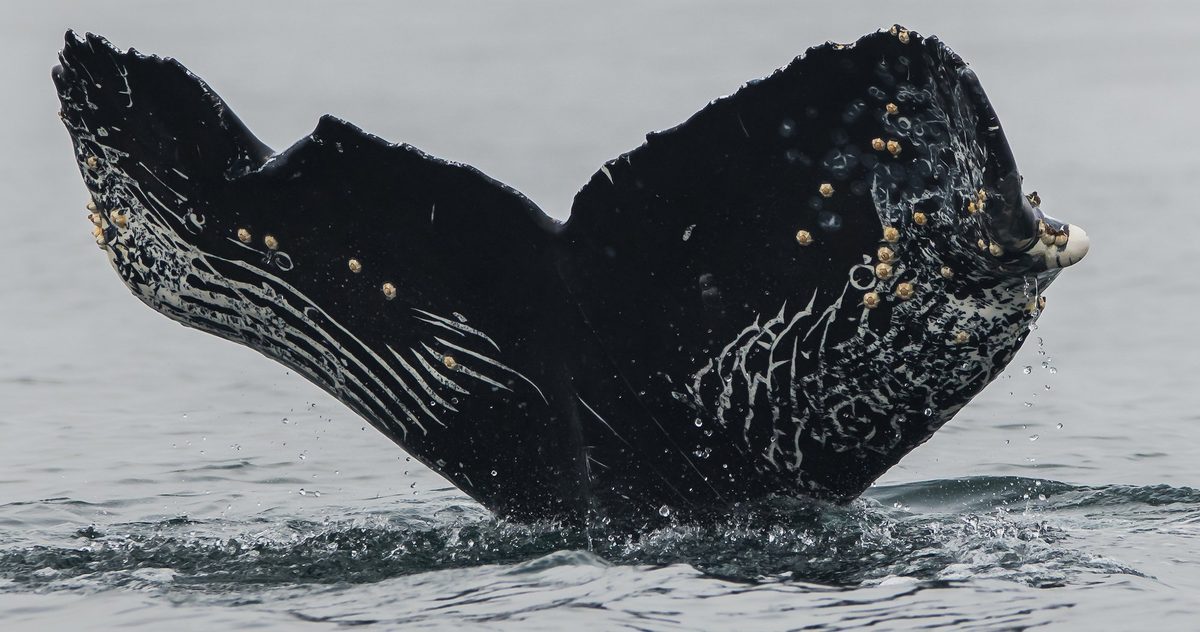
- Each humpback whale has a uniquely patterned fluke, making visual identification comparable to human fingerprinting.
- The Happywhale platform, co-founded by marine ecologist Ted Cheeseman, has cataloged over 112,000 individual whales using AI-assisted photo matching.
- Suction cup tags deployed by scientists capture high-resolution data on feeding, diving, and movement behaviors.
- Citizen scientists—from tourists to sailors—upload fluke photos, enabling long-term tracking of migration and survival.
- Scars, barnacles, and pigmentation changes provide insights into a whale’s life history and environmental challenges.
The project bridges traditional science and public engagement, revealing not just where whales go, but how they adapt to a rapidly changing ocean. For example, AI algorithms detect subtle fluke edge patterns that remain stable over decades, allowing researchers to identify whales first photographed in the 1980s. This level of individual tracking was once unimaginable.
Background
Humpback whales were nearly driven to extinction by commercial whaling, which peaked in the early 20th century. By the 1960s, global populations had plummeted. The 1986 International Whaling Commission moratorium marked a turning point, but recovery has been uneven. In Antarctic waters, however, humpbacks have rebounded remarkably—thanks to protection and their behavioral adaptability.
Yet scientific understanding lagged. As Ted Cheeseman, co-founder of Happywhale, recalls: "We started seeing them again—first almost none, then a few, then many. But we didn’t know who we were seeing." Early research treated whales as anonymous members of a species. Fluke identification changed that. First pioneered in the 1970s using manual photo comparisons, the method gained traction in Alaska and Hawaii. Today, it’s global and digital.
Impact Analysis
The ability to identify individual whales transforms conservation. Researchers can now link a whale’s health to environmental stressors—such as warming waters, ship traffic, or prey scarcity. For instance, scarring patterns reveal entanglement rates. In 2016, NOAA documented 71 entanglements off the U.S. West Coast, but Cheeseman estimates the true number could be ten times higher due to underreporting. Each photo uploaded to Happywhale adds a data point to this hidden crisis.
Moreover, public uploads create emotional investment. When a tourist in Patagonia uploads a fluke photo and later learns "their" whale was sighted near Antarctica, a personal connection forms. "It lights something up inside people," Cheeseman says. "They go from being a bystander to being part of a story." This shift from abstraction to intimacy drives conservation support.
Broader Context
Whales are not just charismatic megafauna—they are ecosystem engineers. Their migrations redistribute nutrients across oceans; their feeding and defecation support phytoplankton blooms that sequester carbon. Yet industrial pressures persist: shipping lanes increase collision risks, noise pollution disrupts communication, and climate change alters krill distribution.
"We’ve urbanized the ocean," Cheeseman warns. "We build roads in it—shipping lanes—and infrastructure like ports and offshore platforms." By making whales visible as individuals, projects like Happywhale challenge the notion of the ocean as a faceless frontier. They foster a sense of shared space and responsibility.
Future Outlook
Friedlaender and Cheeseman are preparing to return to Antarctica, supported by the Friedlaender Lab and Quark Expeditions. Their goal: integrate suction tag data with decades of fluke sightings to model how individual whales respond to environmental change over lifetimes. Some whales in the database have sighting histories spanning over 40 years—a rare longitudinal dataset in marine biology.
Future developments may include real-time AI matching via mobile apps, expanded global collaboration, and integration with acoustic monitoring. The vision is a dynamic, living atlas of whale lives—one that informs policy, educates the public, and strengthens protection measures.
Conclusion
The ocean is becoming less anonymous. Every fluke photo—whether taken by a scientist or a tourist—adds a thread to a global tapestry of understanding. This is not just about data; it’s about redefining our relationship with the natural world. As Friedlaender and Cheeseman demonstrate, conservation gains its power not from statistics alone, but from stories—stories of survival, migration, and connection. One whale at a time, we are learning to see, and to care.