New Meteorite Discovery Challenges Established Timeline of Solar System Formation
Introduction
Recent scientific analysis of a meteorite originating from the outer solar system has significantly challenged long-standing theories about the formation and evolution of early solar system bodies. Traditionally, planetary scientists believed that rocky protoplanets within the inner solar system—closer to the Sun—formed earlier than those beyond the asteroid belt. However, this new finding suggests a more complex, simultaneous timeline for the birth of these primordial celestial objects.
Key Details
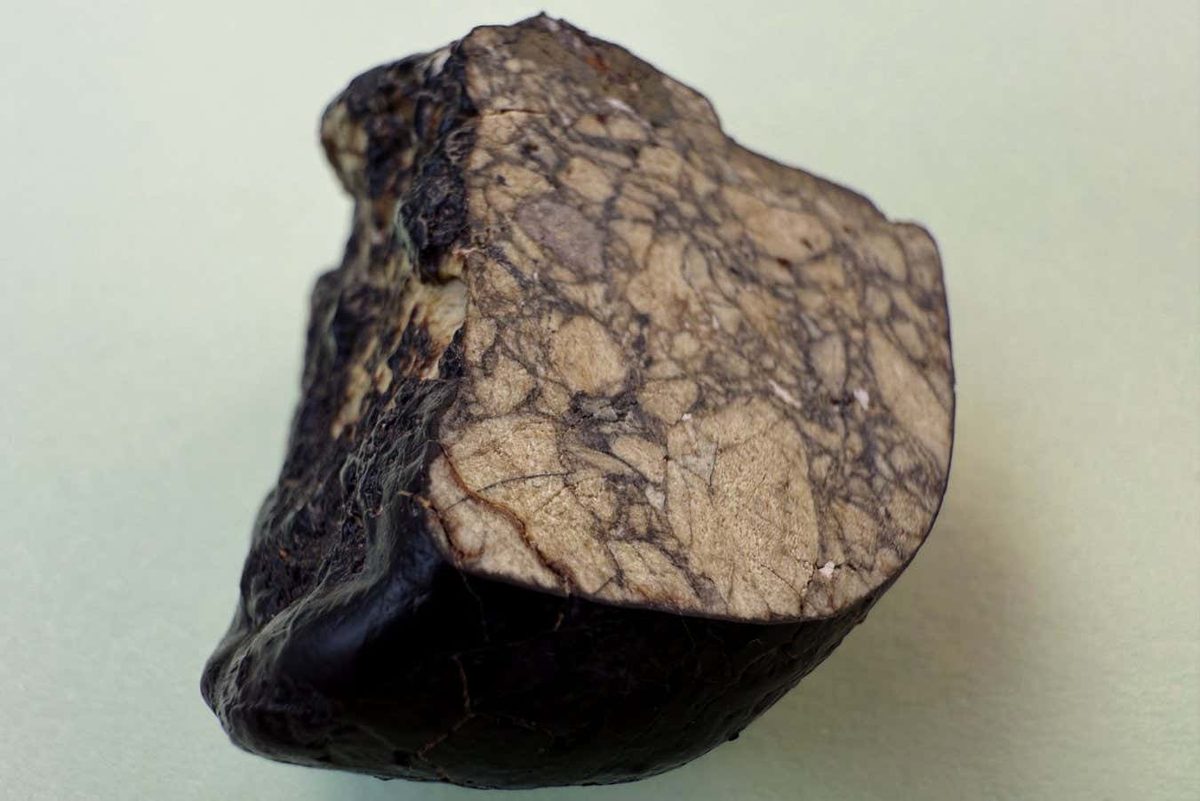
- The meteorite in question was recovered from the outer solar system, a region beyond the asteroid belt, which is home to a diverse population of icy and rocky bodies.
- Analysis indicates that the protoplanetary body from which the meteorite originated formed earlier than previously thought, nearly contemporaneously with inner solar system protoplanets.
- This discovery complicates existing models that positioned the inner solar system as the initial hub of rocky planet formation.
- Advanced isotopic dating and compositional studies were instrumental in revising the timeline.
- The findings suggest that processes leading to protoplanet formation were not strictly confined by distance from the Sun.
Background
The solar system formed approximately 4.6 billion years ago from a rotating disk of gas and dust surrounding the young Sun. Within this protoplanetary disk, dust grains collided and stuck together, gradually building up into larger bodies known as planetesimals and eventually protoplanets. Scientists have long understood that temperature gradients within the disk influenced the composition and timing of planetary formation. Warmer regions closer to the Sun favored the formation of rocky bodies, while colder outer regions were thought to form icy bodies later on.
Until now, this framework suggested that inner solar system protoplanets emerged first, setting the stage for the eventual formation of Earth and its neighboring terrestrial planets. Outer solar system bodies, meanwhile, were considered to have formed later, influenced by different conditions and processes. The discovery of this meteorite challenges these assumptions and calls for a more integrated understanding of solar system evolution.
Analysis
The implications of this find are substantial. If protoplanets in the outer solar system formed at roughly the same time as those in the inner system, it indicates that the physical and chemical processes driving planetary formation were more widespread and synchronized than previously thought. This could affect models of disk evolution, accretion rates, and the migration patterns of early solar system objects.
Moreover, the meteorite's chemical and isotopic composition provides new clues about the environment in the outer solar system during the epoch of planet formation. For example, the presence of certain isotopes suggests that material exchange across vast distances may have occurred earlier and more frequently than expected, perhaps through radial mixing within the protoplanetary disk.
This revelation also invites a reevaluation of how volatile compounds and organic materials were distributed throughout the early solar system. These substances are critical for understanding the origins of life and the habitability of planets. If protoplanets formed simultaneously across the solar system, it might imply a more uniform distribution of life-essential ingredients.
Conclusion
The discovery of this meteorite from the outer solar system is reshaping our understanding of how and when the building blocks of planets formed. By suggesting that protoplanet formation was not a sequential process dictated strictly by distance from the Sun, it opens new avenues for research into solar system dynamics and the conditions that led to the emergence of habitable worlds. Future studies, including further meteorite analyses and space missions targeting primitive bodies in the outer solar system, are essential to deepen our comprehension of these fundamental processes.