New Findings Reveal Climate's Role in Ribcage Evolution and Breakthrough in Transverse Thompson Effect Observation

Introduction
This week brings intriguing scientific discoveries across anthropology, physics, and biology that deepen our understanding of human evolution, fundamental physical phenomena, and species distribution. Researchers from the National Museum of Natural Sciences in Madrid have digitally reconstructed ribcages from prehistoric Homo sapiens fossils to explore how climate could have shaped human anatomy. Meanwhile, physicists have reported the first-ever observation of the transverse Thompson effect, a century-old predicted phenomenon with implications for thermal management technologies. In Mexico, biologists have documented neotropical bats residing well beyond their previously understood geographical range, offering insight into shifting ecosystems.
Key Details
- The Spanish team used advanced imaging to reconstruct ribcages from four prehistoric Homo sapiens specimens, identifying climate as a key driver in the morphological evolution of ribcage structure.
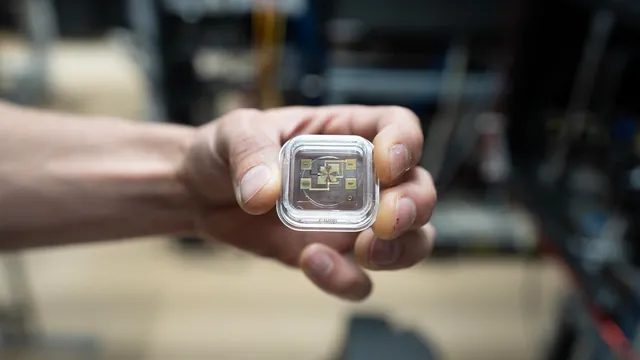
- Physicists observed the transverse Thompson effect, which involves volumetric heating or cooling when an electric current and temperature gradient align directionally within a conductor; a phenomenon first predicted about 100 years ago but never experimentally confirmed until now.
- Neotropical bats were discovered in regions of Mexico far beyond their known habitats, suggesting changes in environmental conditions or animal migration patterns.
Background
The study of human skeletal remains has long sought to connect anatomical variations to environmental adaptations. Ribcage morphology, influenced by respiratory demands and climate, has been hypothesized to evolve differently in populations exposed to varied temperatures and oxygen levels. The Spanish researchers’ digital reconstructions allow precise comparisons not possible with traditional fossil analysis.
Separately, the Thompson effect, a thermoelectric phenomenon involving heat absorption or emission during electrical conduction, has two variants: longitudinal and transverse. While the longitudinal Thompson effect was known and utilized, the transverse counterpart has remained elusive. Its confirmation fills a gap in condensed matter physics and thermodynamics.
Neotropical bats, known for their ecological roles in pollination and insect control, have historically been confined to specific latitudes. Their unexpected presence in northern Mexico signals potential shifts in habitat ranges, possibly influenced by climate change or habitat alteration.
Impact Analysis
The findings about ribcage evolution reinforce the role of climate as a selective pressure on human physiology. This has implications for understanding how ancient humans adapted to different environments and may inform studies on modern respiratory health variations among populations.
The observation of the transverse Thompson effect opens new avenues in material science and thermoelectric applications. By harnessing this effect, future technologies could achieve more efficient thermal management in electronics or energy systems.
The expansion of neotropical bats into new areas has significant ecological implications, including potential effects on local insect populations and pollination networks. Monitoring these shifts is critical to biodiversity conservation and ecosystem balance.
Broader Context
These discoveries highlight how interdisciplinary approaches—combining paleontology, physics, and ecology—are essential to address complex questions about life and the environment. They also reflect ongoing challenges posed by climate change, whether in evolutionary biology or species distribution.
Furthermore, confirming century-old physics predictions exemplifies the long-term nature of scientific progress, where theoretical insights eventually translate into empirical validation and technological innovation.
Future Outlook
Future research on ribcage morphology could integrate genetic data to better understand evolutionary pathways and health outcomes. Continued monitoring of bat populations will help determine the drivers behind their range shifts, informing conservation strategies.
In physics, exploring practical applications of the transverse Thompson effect could revolutionize thermal regulation technologies. Collaborative efforts across disciplines will be key to leveraging these discoveries for societal benefit.
Conclusion
The recent studies collectively expand our knowledge about human evolution, fundamental physics, and ecological dynamics. They underscore the importance of modern technology in revisiting old questions and reveal the interconnectedness of climate, biology, and physical laws shaping the natural world.
"The digital reconstruction of prehistoric ribcages offers unprecedented insight into how our ancestors adapted anatomically to changing climates," said the lead researcher from the National Museum of Natural Sciences.