Medieval Hungarians Consumed Horse Meat for Over 200 Years After Christianization, Study Finds
Introduction
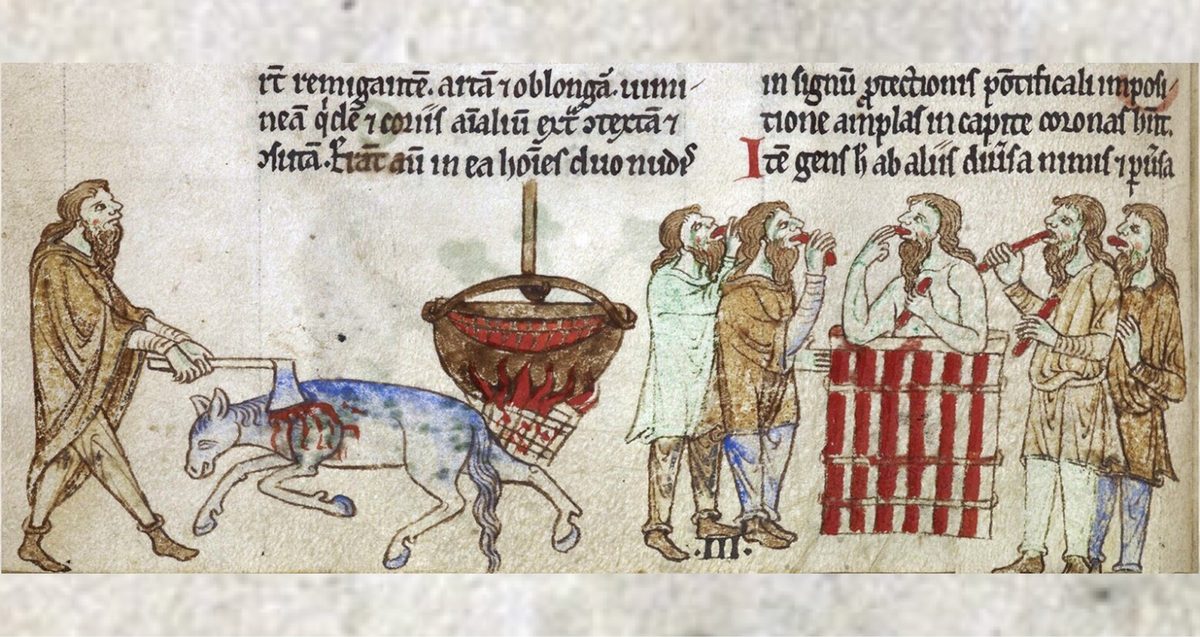
The spread of Christianity across Europe during the Middle Ages is often linked to significant cultural and dietary changes, including the decline in horsemeat consumption. While written medieval sources tend to associate eating horse meat—known as hippophagy—with pagan or 'barbaric' customs, a recent archaeological study challenges this narrative specifically for medieval Hungary. Published in the journal Antiquity on July 14, 2025, the study reveals that horsemeat consumption persisted in Hungary well beyond the country's official Christianization around 1000 CE.
Key Details
- Researchers analyzed over 500 horse bones from refuse pits across 198 medieval Hungarian settlements.
- Horse bones accounted for up to one-third of livestock remains in rural sites, indicating active consumption.
- This practice continued for more than 200 years after Hungary’s conversion to Christianity under King Stephen I.
- The decline in horsemeat consumption coincided with the Mongol invasion of 1241–42, not religious reforms.
- The researchers attribute the decline to horse scarcity due to war demands and demographic shifts from Western settlers preferring pork.
Background
Hippophagy was relatively common in pre-Christian Europe but diminished over the Middle Ages. Christian texts often condemned the practice, associating it with Satanism or non-Christian 'barbarians.' However, the Church never explicitly banned horsemeat, unlike dietary prohibitions such as those concerning pork in Judaism and Islam.
Authors László Bartosiewicz, an archeozoologist at Stockholm University, and Erika Gál, an archaeologist at the HUN-REN Research Center in Hungary, undertook a quantitative analysis of horse remains to test the assumption that Christianity directly caused the decline of horsemeat eating.
Impact Analysis
Their findings reveal a surprisingly high percentage of horse bones in medieval refuse deposits, confirming continued horsemeat consumption. This suggests that religious sentiment alone did not drive changes in diet. Instead, socio-economic and environmental factors played crucial roles.
The study notes that after the Mongol invasion, surviving horses became valuable for military purposes, reducing their availability as food. This invasion also caused massive population loss—40 to 50 percent—leading King Béla IV to invite settlers from Western Europe. These newcomers brought different dietary preferences, favoring pork due to its compatibility with sedentary farming.
"Horses were valuable war booty and surviving horse stock was probably in high demand for purposes other than food," the authors state, emphasizing the practical reasons behind the dietary shift.
Broader Context
This research highlights how archaeological evidence can challenge long-held historical narratives shaped by later cultural biases. The stereotype linking hippophagy to barbarism and paganism, often propagated by sources written centuries after the fact, may reflect negative generalizations rather than the lived realities of medieval populations.
By quantifying horse bone remains, the study provides concrete data to reevaluate assumptions about medieval diets and religious influence. It underscores the complexity of cultural change, showing that shifts in food habits cannot be attributed exclusively to religious doctrine but must be understood in the context of economic, ecological, and demographic transformations.
Future Outlook
This study opens avenues for further interdisciplinary research combining archaeology, history, and zoology to reassess medieval dietary practices in other regions. Understanding how cultural, environmental, and political forces interact to shape human behavior has implications for interpreting historical societies more accurately.
Moreover, these findings encourage historians to critically evaluate primary sources, recognizing the potential biases and agendas that influence historical accounts—especially when they portray minority or marginalized groups.
Conclusion
The persistence of horsemeat consumption in medieval Hungary, despite Christianization, reveals a nuanced relationship between religion and culture. Rather than a straightforward abandonment due to faith, dietary patterns were deeply influenced by practical realities such as war, population shifts, and settlement patterns.
By confronting popular stereotypes and expanding the evidence base, this research contributes to a richer, more accurate understanding of medieval European life. It reminds us that cultural transformations are multifaceted, and archaeology plays a critical role in uncovering the complex truths behind historical narratives.