Global Optical Clocks Synchronized: A Leap in Timekeeping Precision
Introduction
In a remarkable feat of international scientific collaboration, researchers from four different nations have successfully synchronized a network of super-precise optical clocks. This achievement, published in Physical Review Research, represents a significant leap forward in the field of timekeeping, pushing the boundaries of accuracy to new frontiers. The synchronized clocks are so precise that they could, in theory, remain in sync for billions of years, a testament to the underlying physics and engineering prowess involved.
Key Details
- International Collaboration: The project involved synchronized optical clocks located in Germany, Italy, Japan, and the United States.
- Unprecedented Accuracy: The clocks demonstrated a level of synchronization so high that their relative uncertainty is measured in attoseconds over short periods, a scale of precision previously unattainable on a global scale.
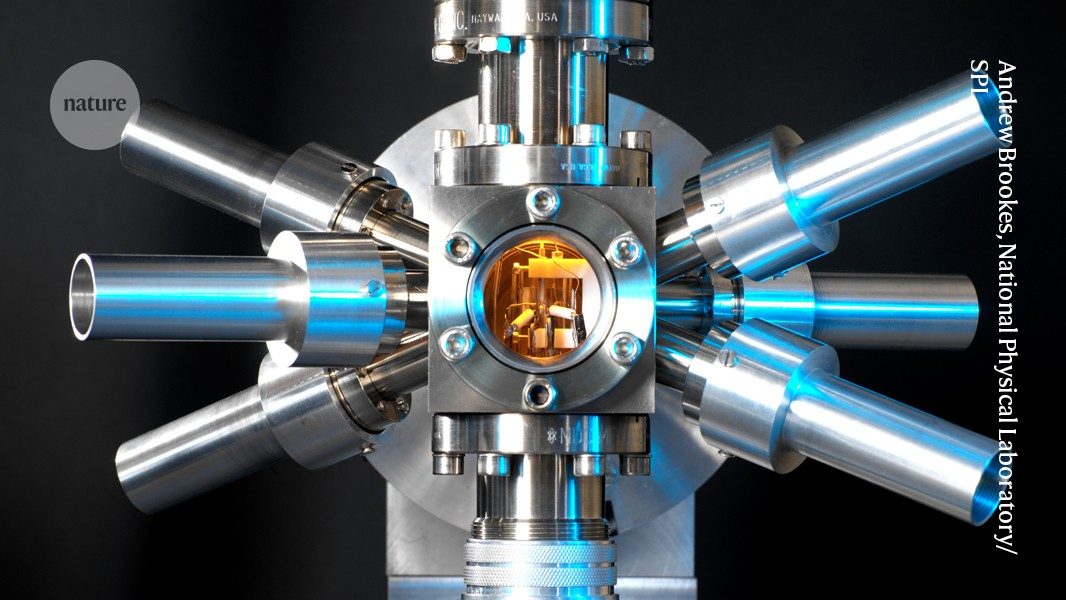
- Underlying Technology: These are not traditional pendulum clocks; they are optical atomic clocks that use the vibrations of individual atoms, such as ytterbium ions, as their timekeeping mechanism. These atomic vibrations occur at optical frequencies, millions of times faster than the microwave frequencies used in current atomic clocks, allowing for much finer time resolution.
- Publication: The findings were published in the journal Physical Review Research by a team including M. Pizzocaro and colleagues.
Background
Atomic clocks have long been the bedrock of modern timekeeping, with caesium-based clocks forming the international standard for decades. However, the quest for even greater precision has led scientists to develop optical atomic clocks. These clocks leverage the much higher frequencies of light emitted or absorbed by atoms when their electrons transition between energy levels. By counting these optical oscillations, scientists can achieve significantly improved accuracy. The challenge has always been to scale this precision from individual laboratory experiments to a robust, interconnected network across vast distances, overcoming environmental noise and signal degradation.
Impact Analysis
The successful synchronization of these advanced optical clocks has profound implications across multiple scientific and technological domains. In fundamental physics, such precise timekeeping can be used to test Einstein's theory of general relativity with unprecedented accuracy, potentially revealing subtle deviations that could point to new physics. For instance, variations in gravitational potential cause time to pass at different rates, and these clocks are sensitive enough to detect such differences over relatively small altitude changes. This could lead to improved geodetic measurements and a deeper understanding of Earth's gravitational field.
Beyond fundamental science, the enhanced precision has practical applications. Global Navigation Satellite Systems (GNSS) like GPS rely on highly accurate timing. While current systems are very good, further improvements could lead to more precise positioning, which is crucial for autonomous vehicles, advanced surveying, and even financial transactions that require millisecond synchronization.
Broader Context
This achievement is part of a global race to develop next-generation timekeeping technologies. Several countries and research institutions are investing heavily in optical clock technology. The ability to synchronize these clocks across international borders signifies a maturing technology and opens the door for distributed sensing networks and enhanced communication protocols. It also highlights the importance of international scientific cooperation in tackling complex, large-scale research challenges.
“The ability to synchronize these clocks across continents is a monumental step, enabling experiments and applications that were once confined to science fiction.”
Future Outlook
The immediate future will likely see further refinement of synchronization techniques and the integration of more clocks into the network. Researchers will aim to extend the duration over which synchronization is maintained and to reduce the impact of environmental factors. Future applications could include enhanced fundamental physics experiments, such as searching for variations in fundamental constants or detecting subtle gravitational waves. The development of a global optical clock network could also pave the way for a future “internet of clocks,” enabling new forms of distributed computation and sensing.
Conclusion
The successful synchronization of super-precise optical clocks across four nations marks a significant milestone in metrology and fundamental science. This achievement not only demonstrates the pinnacle of current timekeeping technology but also unlocks a vast array of potential applications, from testing the limits of physics to revolutionizing navigation and communication. As this technology continues to evolve, its impact on our scientific understanding and technological capabilities will undoubtedly grow.
Source: nature.com