Lightfoot Scooter: A Solar-Powered "Smile Machine" for Short Trips
Introduction
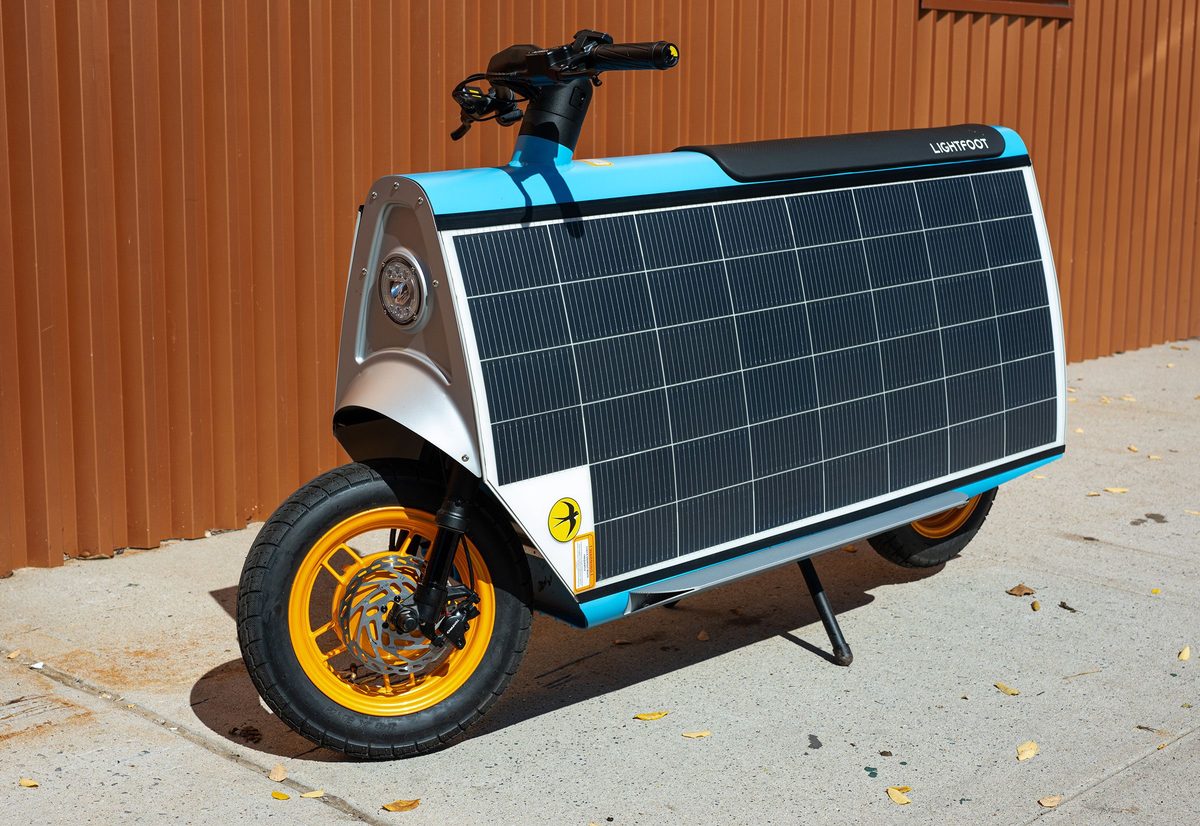
Stepping out in New York City, the sight of the Lightfoot scooter immediately drew attention. This funky, two-wheeled vehicle, designed by Otherlab, is not your typical electric scooter. With its prominent solar panels and bench seat, it looks more like a garage project than a mass-produced item, sparking curiosity and conversation from passersby. The author’s initial encounter set the tone for a unique riding experience with a vehicle that aims to be both functional and fun, earning it the nickname “smile machine.”
Key Details
- Design: A rectangular pod on wheels with two large side solar panels and a bench seat for a rider and passenger.
- Classification: Designated as an electric scooter (not an e-bike) due to the absence of pedals.
- Top Speed: Reaches up to 20 miles per hour.
- Price: Retails for $4,495, with a $100 reservation fee.
- Colors: Available in sky blue and solar orange.
- Weight: Approximately 137 pounds.
- Range: Company claims 37 miles; reviewer achieved 36 miles.
- Charging: Primarily via solar panels, with an option to plug into a standard outlet. Battery is non-removable.
- Features: Minimalist design with no app, speed modes, or turn signals. Includes a PIN for security and an internal storage compartment.
- Braking: Features hydraulic disc brakes and an aggressive regenerative braking system that can recover 15-20% of battery life.
Background
The Lightfoot project was initiated by Otherlab, a research and design firm founded by inventor Saul Griffith, also a co-founder of Rewiring America. The inspiration stemmed from data indicating that 52 percent of all US passenger trips are less than three miles. Griffith envisioned a simple, robust, and self-recharging vehicle as an alternative to cars for these short journeys. The decision to make it a scooter rather than a bicycle was a strategic choice to broaden its appeal, as Griffith believes most people are less interested in pedals than in a simple riding experience. The company is taking a deliberate, phased approach to market entry, avoiding the pitfalls of rapid, large-scale expansion seen in other micromobility ventures.
Impact Analysis
The Lightfoot's primary impact lies in its potential to offer a sustainable and engaging alternative for short-distance travel. Its solar-charging capability, while not a complete replacement for grid charging, can supplement power and reduce reliance on fossil fuels. The regenerative braking system further enhances efficiency by recapturing energy during deceleration. The vehicle's unique design and the attention it garners could also foster greater public interest in alternative transportation. However, its effectiveness is heavily dependent on sunlight availability, making it more suitable for sunnier climates like California, where Otherlab is initially focusing sales. The reviewer noted that in rainy New York City, the solar panels provided minimal, if any, charge, highlighting a key limitation for users in less sunny regions.
“Solar can make a meaningful contribution. There's a nice pathway here for an easy vehicle that people really engage with that's simple and robust,” Saul Griffith, founder of Otherlab, stated.
Broader Context
The Lightfoot emerges at a time when cities worldwide are grappling with traffic congestion, air pollution, and the need for sustainable urban mobility. As e-bikes and e-scooters become increasingly popular, the Lightfoot offers a distinct niche by integrating solar power. Its design philosophy—simplicity and robustness—contrasts with the feature-heavy, app-dependent devices often seen in the market. This approach aligns with Griffith's broader mission through Rewiring America, advocating for practical, accessible clean energy solutions. The plan to eventually expand to markets like Vietnam, where gas-powered scooter restrictions are imminent, underscores the global potential for such innovative vehicles.
Future Outlook
Otherlab's strategy involves a gradual rollout, starting with California and potentially expanding to other southern states before assessing interest in northern regions. The company is actively exploring fleet sales to resorts and campuses, and international markets. A key focus will be establishing a reliable service infrastructure, leveraging the Lightfoot's use of common, off-the-shelf components for easier repairs. The success of the initial production runs will be crucial in validating market demand and gathering user data. Future iterations may address some of the fit-and-finish issues noted in the pre-production model, such as panel gaps and kickstand accessibility, while potentially enhancing solar charging efficiency or offering more integrated safety features.
Conclusion
The Lightfoot scooter is a bold and unconventional entry into the micromobility space. It successfully blends whimsical design with a practical purpose: to make short trips more enjoyable and sustainable. While its solar-charging capabilities face environmental limitations, particularly in less sunny climates, and some aspects of its build quality require refinement, its core concept is compelling. The vehicle's ability to attract attention, its comfortable ride, impressive range, and the novel idea of self-recharging offer a unique value proposition. For those seeking an eco-friendly, conversation-starting mode of transport for short commutes, the Lightfoot presents an intriguing, albeit premium-priced, option.
Source: wired.com