Trump's AI Directive: Mandating Truth or Imposing Bias?
Introduction
On November 2, 2022, during a Google AI event in New York City, the theme of responsible AI was prominent. Executives discussed aligning AI technology with human values, highlighting a critical duality: AI models, while capable of minimizing biases, can also be manipulated to enforce specific viewpoints. This malleability raises concerns about governments potentially demanding censorship of unwelcome facts or the promotion of propaganda, a tactic often associated with authoritarian regimes like China. While the U.S. Constitution traditionally safeguards against direct government interference with private company AI outputs, recent developments suggest a shift in this paradigm.
Key Details
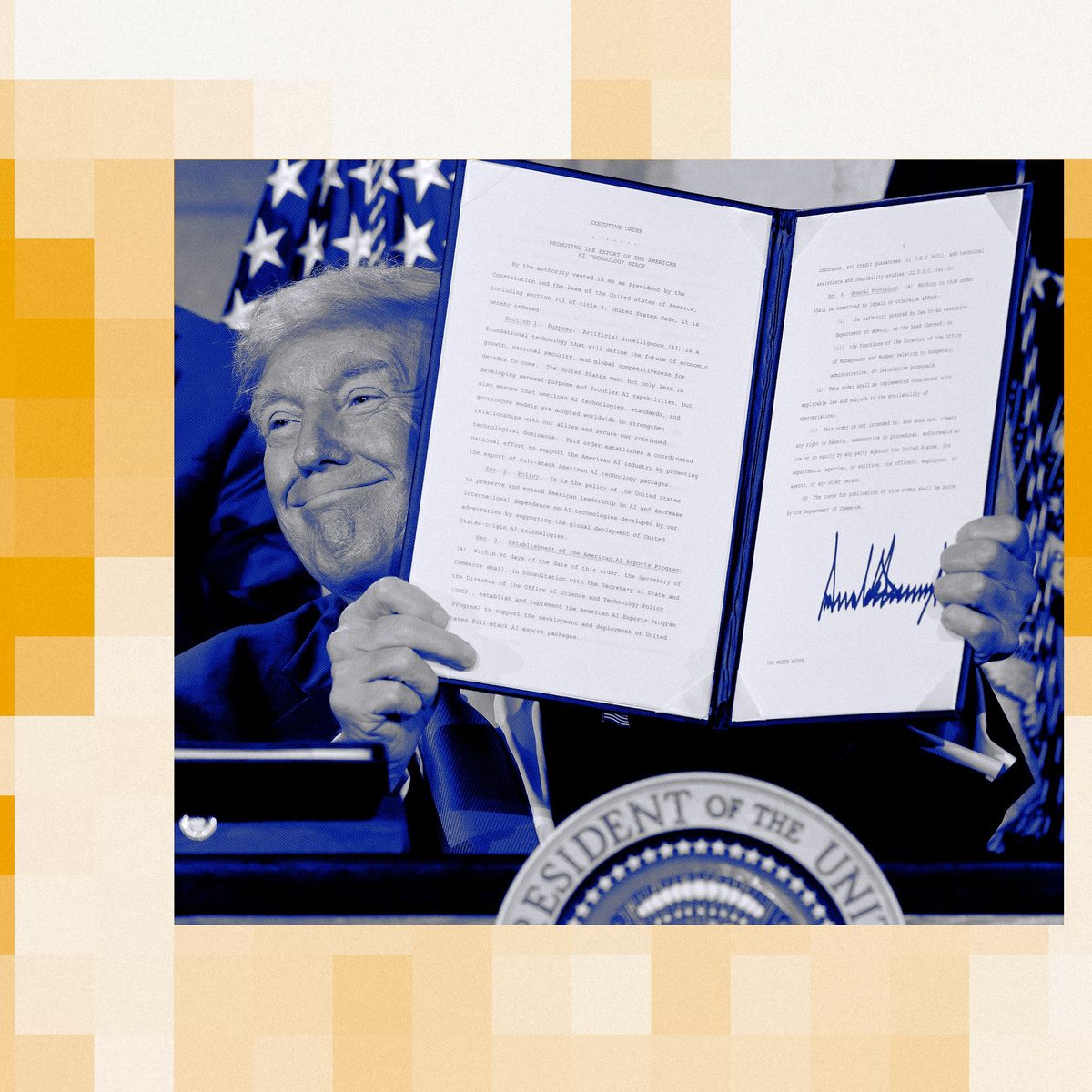
- Executive Order Title: “Preventing Woke AI in the Federal Government.”
- Stated Goal: Ensure AI models procured by the Federal government objectively reflect truth, prioritize historical accuracy, scientific inquiry, and objectivity, and are built with freedom of speech and expression in mind.
- Key Directive: Instructs the Department of Commerce to review Biden-era AI rules and eliminate references to misinformation, Diversity, Equity, and Inclusion (DEI), and climate change.
- Focus on Competition: The broader AI Action Plan emphasizes outcompeting China in AI supremacy.
- Government Procurement: Federal government obligated not to procure models that “sacrifice truthfulness and accuracy to ideological agendas.”
- Demonized Content: The order explicitly criticizes AI that supports diversity, calls out racial bias, or values gender equality.
- Industry Response: Major AI companies have remained publicly silent or offered lukewarm support, with OpenAI stating it already strives for objectivity.
- Congressional Opposition: Senator Edward Markey has urged AI CEOs to resist the order, citing financial incentives to align AI outputs with the administration's views.
Background
The Trump administration’s recently released AI Action Plan, a 28-page document, aims to establish a framework for AI development and deployment in the United States. While a significant portion focuses on achieving AI supremacy over China, a particular section has drawn considerable scrutiny. The plan, particularly the executive order titled “Preventing Woke AI in the Federal Government,” seeks to define and enforce a specific version of “truth” in AI models. This directive instructs federal agencies, especially the Department of Commerce, to remove references to concepts like misinformation, Diversity, Equity, and Inclusion (DEI), and climate change from existing AI regulations. The administration argues that these topics represent “social engineering agendas” and that AI should adhere to what it terms objective truth, historical accuracy, and scientific inquiry. However, critics point to the administration's own track record, including downplaying climate change and promoting a particular interpretation of American history, as evidence that this definition of truth is subjective and politically motivated.
Impact Analysis
The implications of this executive order are far-reaching. By mandating that AI models procured by the federal government must adhere to a specific definition of truth and avoid “ideological agendas,” the administration creates a powerful incentive for AI companies seeking government contracts. This could lead to a chilling effect on AI development, discouraging models that address sensitive topics like racial bias, gender equality, or climate change, as these are explicitly criticized in the order. The order’s language suggests that AI exhibiting support for diversity or gender equality could be deemed non-compliant. This raises significant First Amendment concerns, as AI companies’ efforts to program neutrality or ethical considerations into their models could be interpreted as protected speech. A government mandate that penalizes such efforts, even indirectly through procurement policies, could be seen as unconstitutional interference. The administration’s framing of issues like climate change and DEI as “social engineering” further blurs the line between policy and ideological enforcement.
“Republicans want to use the power of the government to make ChatGPT sound like Fox & Friends.”
Broader Context
This move occurs within a broader geopolitical context of AI competition, particularly between the U.S. and China. The administration frames its AI strategy as a national security imperative to maintain technological dominance. However, the directive’s emphasis on controlling AI narratives and definitions of truth echoes tactics employed by authoritarian states, including China, which actively censors information and promotes state-approved narratives through its technology. The U.S. has historically championed freedom of speech and the independence of information channels from government control. Applying this “anti-woke” agenda to AI, which is increasingly becoming a primary source of information for many, risks undermining this principle. The silence from major AI companies, potentially driven by the lucrative prospect of government contracts and the desire to avoid regulatory battles, further complicates the landscape. This reticence suggests a potential prioritization of business interests over constitutional principles, leaving the public vulnerable to AI systems that reflect a narrow, politically curated worldview.
Future Outlook
The long-term consequences of this executive order remain uncertain, largely dependent on its implementation and the response of the AI industry and the judiciary. If AI companies comply by self-censoring or aligning their models with the administration’s definition of truth, it could lead to a future where AI systems provide a sanitized or politically skewed version of reality. This would not only stifle innovation but also erode public trust in AI as a source of objective information. The potential for legal challenges based on First Amendment grounds is significant, and the outcome of such cases could set important precedents for the regulation of AI and free speech in the digital age. Senator Markey’s call for AI companies to resist the order highlights a growing concern among lawmakers about the potential for government overreach. The effectiveness of this order may also be limited by the inherent technical challenges of defining and enforcing “truth” in complex AI models, potentially leading to a cat-and-mouse game between regulators and developers.
Conclusion
The Trump administration’s AI executive order presents a complex paradox: an order ostensibly aimed at preventing ideological bias in AI appears to introduce a new form of politically motivated bias. By seeking to control the definition of “truth” and eliminate references to concepts like DEI and climate change, the administration risks weaponizing AI for ideological purposes, mirroring the very authoritarian tactics it criticizes in China. The potential impact on free speech, the independence of information, and the future development of AI is substantial. The response of AI companies and the legal system will be crucial in determining whether AI serves as a tool for genuine understanding or as a vehicle for politically curated narratives. The core tension lies between the government's desire to shape AI outputs and the fundamental principles of free expression and objective inquiry.
Source: wired.com