Google's Web Guide: A Step Towards More Relevant AI-Curated Search Results
Introduction
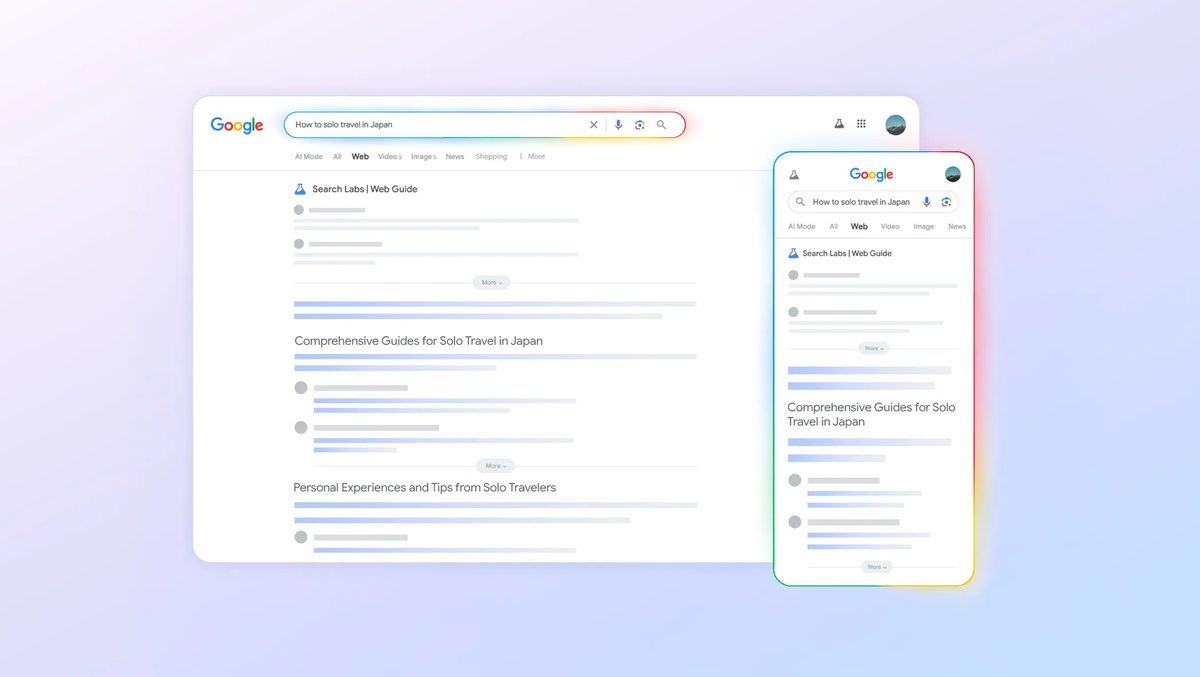
In a significant update to its search platform, Google has introduced the Web Guide, an innovative feature designed to enhance the way users interact with search results. This new AI-powered tool is tailored for those who opt into the test through Google Labs, promising a more structured approach to online searches. By leveraging the capabilities of its proprietary Gemini AI model, the Web Guide aims to sort search results and present related questions, thereby transforming the traditional experience of sifting through the '10 blue links'.
Key Details
- The Web Guide utilizes a modified version of Google’s Gemini AI to process search queries.
- It enhances traditional search results by organizing them into categories based on user intent.
- Users can toggle between the new Web Guide and standard search results.
- The feature uses a technique known as 'query fanout' to simultaneously break down and analyze search queries.
- Web Guide currently operates within the 'Web' tab of Google Search.
Background
This shift towards AI-driven search results comes at a time when users are increasingly inundated with information, making it crucial for search engines to not only deliver accurate results but also to do so in a manner that is easily digestible. Google's Web Guide builds on previous attempts to integrate AI into the search experience, such as the AI Mode and various partnerships for content utilization, including a notable deal with Reddit for AI training data.
Last year, Google committed $60 million annually to utilize Reddit content for training its AI models, underscoring the tech giant's strategy to enhance its AI capabilities. As competition grows among search engines, particularly with the rise of alternatives like Bing integrating OpenAI's technology, Google's continuous development of its AI systems reflects its commitment to maintaining a leading edge in search innovation.
Impact Analysis
The introduction of the Web Guide could represent a pivotal moment in the evolution of search engines. By grouping links into thematic categories, Google's Web Guide attempts to alleviate the cognitive load often associated with traditional search queries. For instance, when searching for how to care for a mango tree, users are presented not just with links but also with AI-generated summaries and organized topics such as 'Mango Tree Care in Specific Climates' and 'Troubleshooting Mango Tree Issues'.
The categorization of results can potentially streamline the search process, allowing users to navigate relevant information more efficiently. However, some users may find that the AI-generated descriptions can sometimes come off as redundant or overly simplistic. For example, in a search for comprehensive mango care guides, the Web Guide suggests consulting multiple sources for detailed instructions—a recommendation that many users might already infer simply from the nature of their query.
Furthermore, the ability to ask more specific questions allows users to delve deeper into topics, potentially improving satisfaction with search results. The AI's attempt to dissect queries and provide tailored answers could foster a more engaging user experience, shifting the paradigm from mere information retrieval to more nuanced inquiry. Despite these advancements, users still have the option to revert to standard search results, allowing for a blend of traditional and AI-enhanced searching.
Broader Context
The evolution of search engines is a reflection of broader trends in technology and user behavior. As more individuals turn to online resources for information, the demand for intuitive, user-friendly interfaces grows. Google's introduction of the Web Guide is a response to these changing dynamics, aiming to meet the needs of a digital-savvy audience that values efficiency and relevance in search results.
Moreover, the emergence of AI technologies has transformed various sectors, prompting companies to rethink their strategies. The Web Guide is part of a larger trend where businesses leverage AI to enhance customer experience, streamline operations, and maintain competitive advantages. As AI continues to evolve, its integration in daily tasks—from searching for information to making decisions—will likely become more pronounced.
Future Outlook
Looking ahead, Google plans to expand the Web Guide feature beyond its current implementation in the 'Web' tab. The company has indicated intentions to integrate AI capabilities into the 'All' tab as well, suggesting a broader application of this technology across its search platform. As users become increasingly accustomed to AI-enhanced search experiences, the expectations for accuracy, relevance, and personalization will likely intensify.
Future developments may include enhanced customization options, allowing users to tailor their search experiences even further. Additionally, Google will need to continuously refine its AI algorithms to ensure that the information presented is not only relevant but also trustworthy, as misinformation remains a significant concern in the digital age.
Conclusion
The launch of Google's Web Guide marks an important milestone in the evolution of search technology. By embracing AI to curate and categorize search results, Google aims to enhance the user experience while addressing the growing need for efficiency and relevance in information retrieval. As the landscape of search engines continues to evolve, the effectiveness of Google's Web Guide will ultimately be determined by user adoption and satisfaction. With the promise of a more organized approach to online searches, Google's latest innovation may very well redefine how individuals access information on the Internet.