Uber Plans Deployment of 20,000 Lucid EV Robotaxis by 2026
Introduction
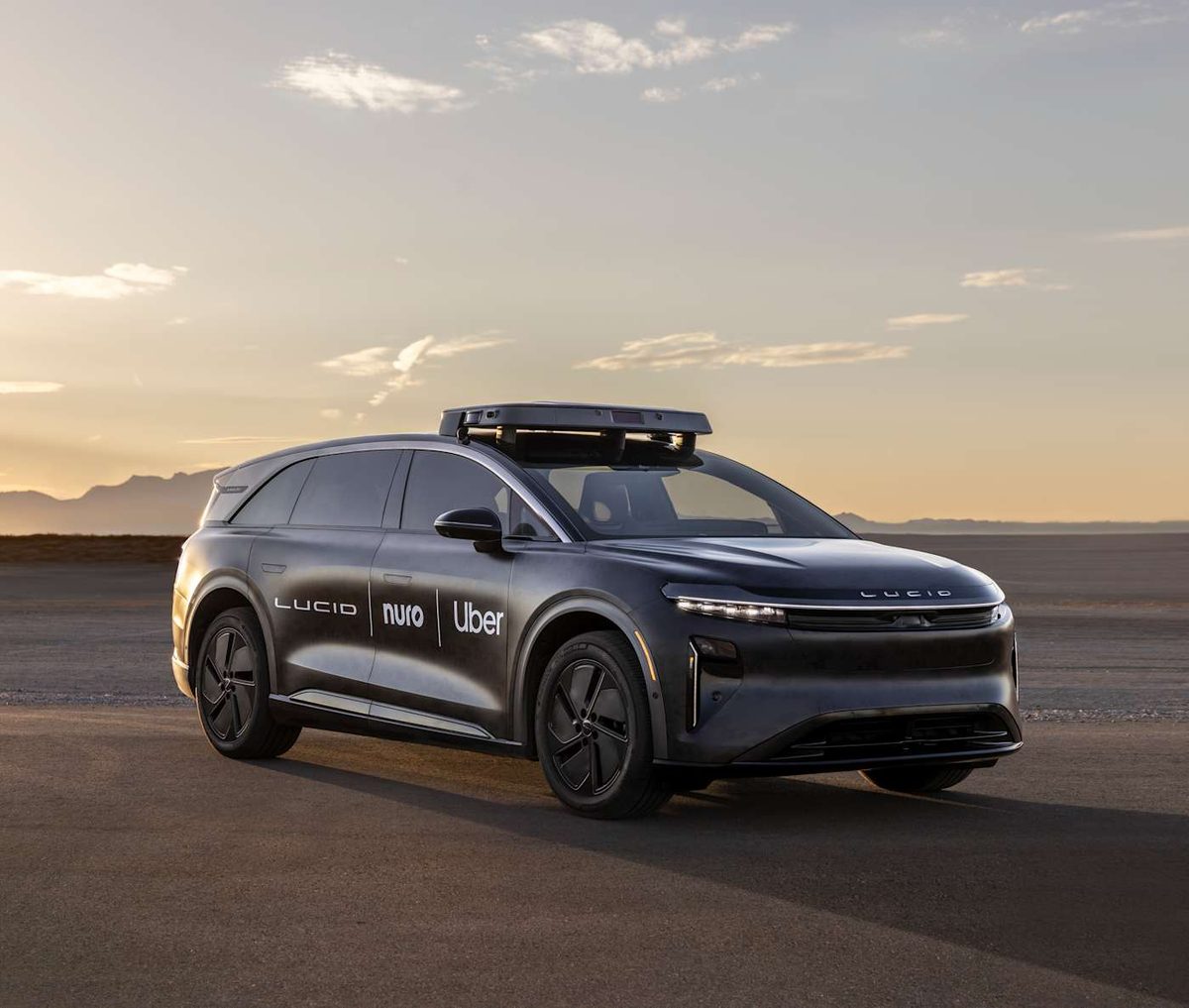
Uber is accelerating its ambition to lead the autonomous robotaxi market by forging a major partnership with electric vehicle manufacturer Lucid Motors and autonomous technology firm Nuro. The ride-hailing giant plans to deploy at least 20,000 Lucid electric vehicles (EVs) equipped with Nuro’s AI-powered autonomous driving system over the next six years. This ambitious program is part of Uber’s broader strategy to build a scalable, global robotaxi network designed to operate efficiently and safely in urban environments.
Key Details
- Uber’s partnership with Lucid involves deploying a minimum of 20,000 Lucid Gravity SUVs.
- The vehicles will be integrated with Nuro Driver autonomous technology, which is currently undergoing rigorous testing.
- The robotaxis will operate at Level 4 autonomy, enabling near full self-driving capability with minimal human intervention.
- Uber and its third-party partners will own and operate the fleet, exclusively servicing Uber users.
- The initial launch is planned for late 2026 in a major U.S. city yet to be announced.
- Nuro oversees comprehensive safety validations, including simulations and on-road testing across dozens of safety categories.
- The Lucid Gravity EV offers an estimated range of around 450 miles, supported by an advanced technology platform and redundant control systems.
Background
Uber has steadily expanded its robotaxi aspirations through partnerships with various automakers and AI companies. Earlier collaborations include Volkswagen, British AI startup Wayve, and Google’s Waymo, with which Uber launched autonomous ride services in Austin, Texas, this year. Waymo One operates across 37 square miles in Austin, allowing Uber users to hail autonomous rides via UberX and other service options. Additionally, Uber recently partnered with China’s Baidu to deploy Baidu’s Apollo Go autonomous vehicles in Chinese and international markets outside the US.
Lucid Motors, headquartered in Newark, California, is known for its high-performance luxury electric vehicles. The Lucid Gravity SUV, chosen for this project, boasts an advanced electrical architecture and long-range battery capabilities, making it well-suited for continuous autonomous operations.
Impact Analysis
The scale of Uber’s planned deployment — at least 20,000 autonomous Lucid EVs — represents one of the largest commitments to robotaxi fleets by a ride-hailing company to date. By combining Lucid’s EV platform with Nuro’s AI autonomy, Uber aims to reduce operational costs and improve safety and user experience compared to human-driven rides.
Level 4 autonomy indicates that the vehicles can handle the majority of driving tasks independently within a designated operational domain. This could lead to significant reductions in human error-related accidents and allow for 24/7 service availability, potentially enhancing urban mobility.
However, challenges remain, including regulatory approvals, public acceptance, and the integration of autonomous vehicles into existing traffic systems. The stringent safety checks Nuro is conducting underscore the importance of safety in scaling such a service.
Broader Context
The robotaxi market is attracting substantial investment as global cities seek sustainable, efficient transport solutions to reduce congestion and emissions. Electric autonomous vehicles are considered a key component in this transformation, promising lower carbon footprints and enhanced mobility for diverse populations.
Uber’s multi-partner strategy, working with Lucid, Nuro, Waymo, Volkswagen, Wayve, and Baidu, reflects the complexity and competitive nature of building a global autonomous fleet. Each partnership targets different geographic markets and technology strengths, underscoring the need for collaboration in this rapidly evolving sector.
Future Outlook
With the initial deployment targeted for late 2026, Uber’s robotaxi service will be closely watched as a key indicator of how quickly autonomous ride-hailing can scale. If successful, the Lucid-Nuro fleet could pave the way for broader adoption across additional cities and countries.
Continued advancements in AI, battery technology, and regulatory frameworks will be critical to the program’s success. Furthermore, public perception and acceptance will influence the pace at which autonomous vehicles become mainstream in urban transport.
Conclusion
Uber’s commitment to deploying 20,000 autonomous Lucid EV robotaxis signifies a major leap forward in the race toward commercial autonomous mobility. By leveraging cutting-edge electric vehicle technology and sophisticated AI autonomy, Uber aims to redefine urban transportation with safer, more efficient, and environmentally friendly ride options. While challenges remain, this partnership highlights the evolving landscape of mobility and the potential for robotaxis to become a common sight on city streets in the near future.