Five-Hour Borges Documentary: A Playful, Provocative Portrait
Introduction
The documentary film, ‘The Life of Jorge Luis Borges,’ directed by Mariano Llínas, is not your typical biographical portrait. Clocking in at an ambitious five-and-a-half hours and presented in three parts, the film eschews a conventional chronological narrative in favor of a more playful, meandering, and often deliberately obtuse exploration of the iconic 20th-century Argentinian writer. Rather than offering definitive answers about Borges’ life and work, Llínas seems more interested in the process of inquiry, the nature of obsession, and the very act of filmmaking. The film’s modus operandi is to invite, even demand, viewer distraction, making active ambivalence the most suitable mindset for approaching this unique cinematic experience.
Key Details
- Runtime: 5.5 hours, divided into three parts.
- Director: Mariano Llínas, known for his expansive projects like the 14-hour film ‘La Flor.’
- Production Collective: El Pampero Cine, an independent filmmaking group.
- Access: Unprecedented access to archival materials, locations, and Borges experts.
- Focus: Rather than a comprehensive biography, the film explores tangential details, the filmmaking process, and the elusive nature of Borges himself, who often functions as a MacGuffin.
- Premiere: Toronto International Film Festival (TIFF) 2026.
- Distribution: Currently seeking U.S. distribution.
Background
Jorge Luis Borges remains one of the most influential literary figures of the 20th century, celebrated for his intricate short stories, essays, and poems that often delve into themes of time, infinity, labyrinths, and identity. His work, characterized by its intellectual depth and philosophical underpinnings, has captivated readers and scholars for decades. ‘The Life of Jorge Luis Borges’ arrives at a time when the writer’s legacy continues to be debated and re-examined. Director Mariano Llínas, a prominent figure in Argentinian independent cinema known for his lengthy and experimental works such as ‘La Flor,’ approaches his subject with a distinctively unconventional methodology. Llínas and his collective, El Pampero Cine, have secured remarkable access to Borges’ archives and personal spaces, yet they consciously choose to sidestep the expected biographical beats.
Impact Analysis
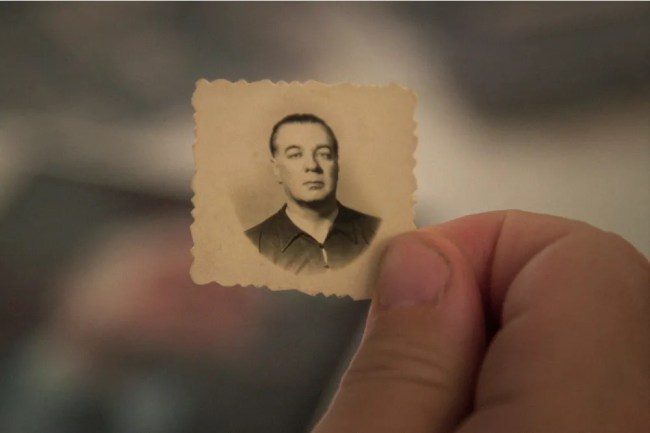
The film’s deliberate pacing and unconventional structure present a unique challenge and reward for viewers. By focusing on the minutiae—a lost footnote, the precise framing of a magazine cover, the search for a specific building—Llínas forces the audience to engage with the material on a different level. The man himself often recedes, becoming visible only through the traces he left behind: in the architecture of Buenos Aires, in archival footage, in the tangential observations of the filmmaker. This approach, while potentially alienating to those seeking a straightforward biography, offers a profound insight into the creative process, both Borges’ and Llínas’ own. The film’s meta-cinematic elements, where the act of filming and researching becomes as significant as the subject matter, highlight the constructed nature of biographical narratives.
Broader Context
‘The Life of Jorge Luis Borges’ exists within a broader trend of experimental documentary filmmaking that pushes the boundaries of the genre. Llínas’ work is in conversation with filmmakers who prioritize subjective experience and conceptual exploration over factual exposition. His previous work, including the monumental ‘La Flor,’ demonstrates a commitment to expansive, time-intensive filmmaking that challenges audience expectations. The film’s playful tone, incorporating elements of comedy—from a toy xylophone score to a comically long list of Borges’ lovers—positions it not as a solemn historical document, but as a deeply personal and often humorous investigation. The film’s engagement with Borges’ often-overlooked political complexities is treated with a deliberately restrained, almost workmanlike approach, a choice that invites further discussion about how such sensitive aspects of a public figure’s life should be presented.
Future Outlook
The film’s premiere at the Toronto International Film Festival marks a significant moment for experimental cinema. Its subsequent search for U.S. distribution will be closely watched by cinephiles and critics. Whether audiences will embrace such a lengthy and unconventional portrait remains to be seen, but its impact lies less in its accessibility and more in its ability to provoke thought about biography, memory, and the art of filmmaking. The film’s enduring charm may well lie in its imperfections and its self-aware indulgence, qualities that ultimately make it a deeply personal and resonant work for those willing to embark on its five-and-a-half-hour journey.
Conclusion
‘The Life of Jorge Luis Borges’ is a film that defies easy categorization. It is a documentary that is simultaneously deeply researched and playfully unconcerned with convention. Mariano Llínas has crafted a work that is less about presenting a definitive life story and more about exploring the elusive nature of its subject and the very process of trying to capture him on film. The film’s length and deliberate pacing are not flaws, but integral components of its unique charm and philosophical inquiry. It is a testament to the power of tangential thought and the beauty found in the negative space, ultimately offering a profoundly original and memorable cinematic experience for the dedicated viewer.
Source: indiewire.com