FAU Study Achieves 84% Accuracy in Non-Invasive Skin Cancer Detection Using AI and Spectroscopy
Introduction
Skin cancer remains a significant global health concern, with millions of new cases diagnosed annually. In the United States alone, nonmelanoma skin cancers like basal cell carcinoma (BCC) and squamous cell carcinoma (SCC) affect millions each year, while melanoma, though less common, is particularly aggressive. Early detection is paramount for successful treatment, yet distinguishing cancerous lesions from benign or precancerous ones can be visually challenging. The current gold standard, a biopsy, is invasive, costly, and can lead to unnecessary procedures for non-cancerous growths. This reality underscores a critical need for rapid, non-invasive diagnostic tools that can accurately identify skin cancer, thereby minimizing unnecessary biopsies and improving patient outcomes.
Key Details
- Technology Used: Raman spectroscopy combined with machine learning (AI).
- Methodology: Raman spectroscopy analyzes the molecular "fingerprint" of tissue by observing how light scatters, revealing chemical composition without tissue removal.
- Study Sample: Over 50 clinical skin tissue samples (BCC, SCC, and normal skin) analyzed ex vivo.
- Data Generated: Nearly 1,000 Raman spectra.
- Machine Learning Models Tested: K-nearest neighbors, support vector machine, shallow neural network.
- Key Findings: Several machine-learning approaches successfully distinguished normal skin from cancerous tissue.
- Highest Accuracy: K-nearest neighbors and support vector machine classifiers achieved approximately 84% overall test accuracy.
- Specific Performance: Support vector machine showed 78.7% sensitivity and 88.6% specificity. A shallow neural network achieved 80.8% accuracy and the highest ROC AUC of 0.910.
- Molecular Signatures: Cancerous samples showed stronger protein signals, while normal tissue had stronger lipid signals.
Background
The challenge of accurately diagnosing skin lesions has long been a focus for dermatologists and researchers. While visual inspection and patient history provide initial clues, definitive diagnosis often relies on histopathological examination of biopsied tissue. This process, while effective, is not without its drawbacks. Biopsies are surgical procedures that carry risks of infection, scarring, and pain. Furthermore, a significant percentage of biopsies are performed on lesions that turn out to be benign, leading to unnecessary healthcare costs and patient anxiety. The development of advanced diagnostic technologies that can offer a non-invasive, rapid, and accurate assessment of skin lesions is therefore a high priority in medical research.
Impact Analysis
The Florida Atlantic University (FAU) study presents a promising advancement in this area. By leveraging Raman spectroscopy, researchers can obtain detailed molecular information from tissue without any physical intrusion. This technique probes the vibrational modes of molecules, creating a unique spectral signature that reflects the tissue's biochemical makeup. The integration of machine learning algorithms is crucial for interpreting these complex spectral datasets. AI can identify subtle patterns and correlations within the spectra that may be imperceptible to the human eye or traditional analytical methods. The reported accuracy of up to 84% in distinguishing cancerous from normal skin is a significant step forward, suggesting that this technology could potentially serve as an adjunct to or even a pre-screening tool before a biopsy is considered. A reduction in unnecessary biopsies could translate to substantial cost savings for healthcare systems and a more comfortable, less invasive experience for patients.
Broader Context
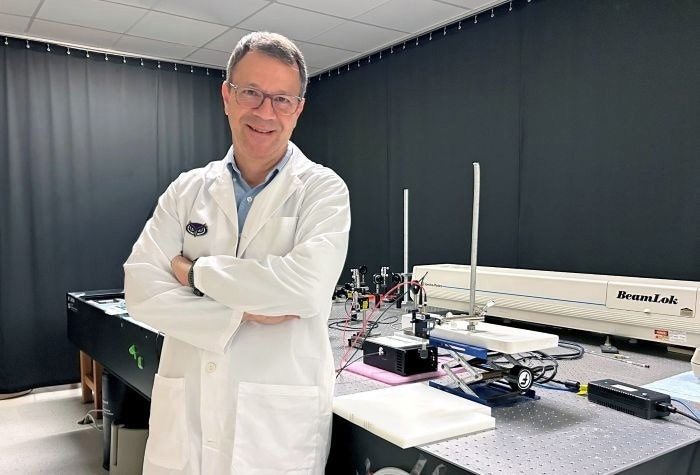
This research aligns with a broader trend in medicine towards the application of artificial intelligence and advanced optical techniques for disease diagnosis. Similar approaches are being explored for detecting cancers in other organs, such as breast and lung cancer, as well as for identifying infectious diseases and neurological disorders. The convergence of spectroscopy, which provides rich molecular data, and machine learning, which excels at pattern recognition in large datasets, offers a powerful paradigm for next-generation diagnostics. The portability of Raman spectroscopy systems, as demonstrated by the mobile setup used in the FAU study, further enhances its potential for widespread clinical adoption, including in resource-limited settings or point-of-care applications.
Future Outlook
The researchers acknowledge that the current study is preliminary, with the achieved accuracy representing an initial benchmark. The next steps involve conducting larger-scale studies with more diverse patient populations and a wider range of skin lesion types. Optimization of the machine-learning models, including the exploration of more sophisticated deep neural networks, is expected to further enhance diagnostic performance. The ultimate goal is to develop a system that is not only highly accurate but also practical, portable, and affordable for routine clinical use. If successful, this technology could revolutionize how skin cancer is screened and diagnosed, potentially leading to earlier detection and improved survival rates. The ability to differentiate between BCC and SCC, which showed some spectral overlap in this study, will be a key area for future refinement.
Conclusion
The FAU study represents a significant stride towards non-invasive skin cancer detection. By skillfully merging Raman spectroscopy’s molecular insights with the pattern-recognition capabilities of AI, researchers have demonstrated a viable path to accurately identify cancerous skin tissue. While further validation and refinement are necessary, the potential to reduce invasive biopsies, improve diagnostic speed, and enhance clinical decision-making marks this research as a highly promising development in the ongoing fight against skin cancer.
“Our results are preliminary, but they point toward a future in which a rapid, non-invasive measurement could help guide clinical decisions and potentially reduce unnecessary biopsies,” said Andrew Terentis, PhD, Study Senior Author.
The study was published in the Proceedings of SPIE as part of Advanced Chemical Microscopy for Life Science and Translational Medicine 2026. Key co-authors include Venkata Dhulipalla, John Strasswimmer, Phuong Nguyen, Lizzie Klein, and Max McCain.
Source: news-medical.net