Electronic Face Tattoo Predicts Mental Strain with 90% Accuracy in Real-Time Monitoring
Introduction
In a groundbreaking development at the intersection of neuroscience and wearable technology, researchers from the University of Texas have unveiled a novel electronic face tattoo designed to monitor mental workload in real time. This removable, sticker-like device uses advanced electroencephalography (EEG) and electrooculography (EOG) sensors to detect fluctuations in brain waves associated with cognitive demand, enabling users—and potentially their supervisors—to maintain an optimal mental state during complex and high-stress tasks. This innovation promises to revolutionize how occupational mental health is managed, particularly in fields such as air traffic control, emergency response, and other demanding professions.
Key Details
- The wearable is a thin, flexible electronic tattoo that adheres to the forehead and around the eyes, equipped with stretchable EEG and EOG sensors.
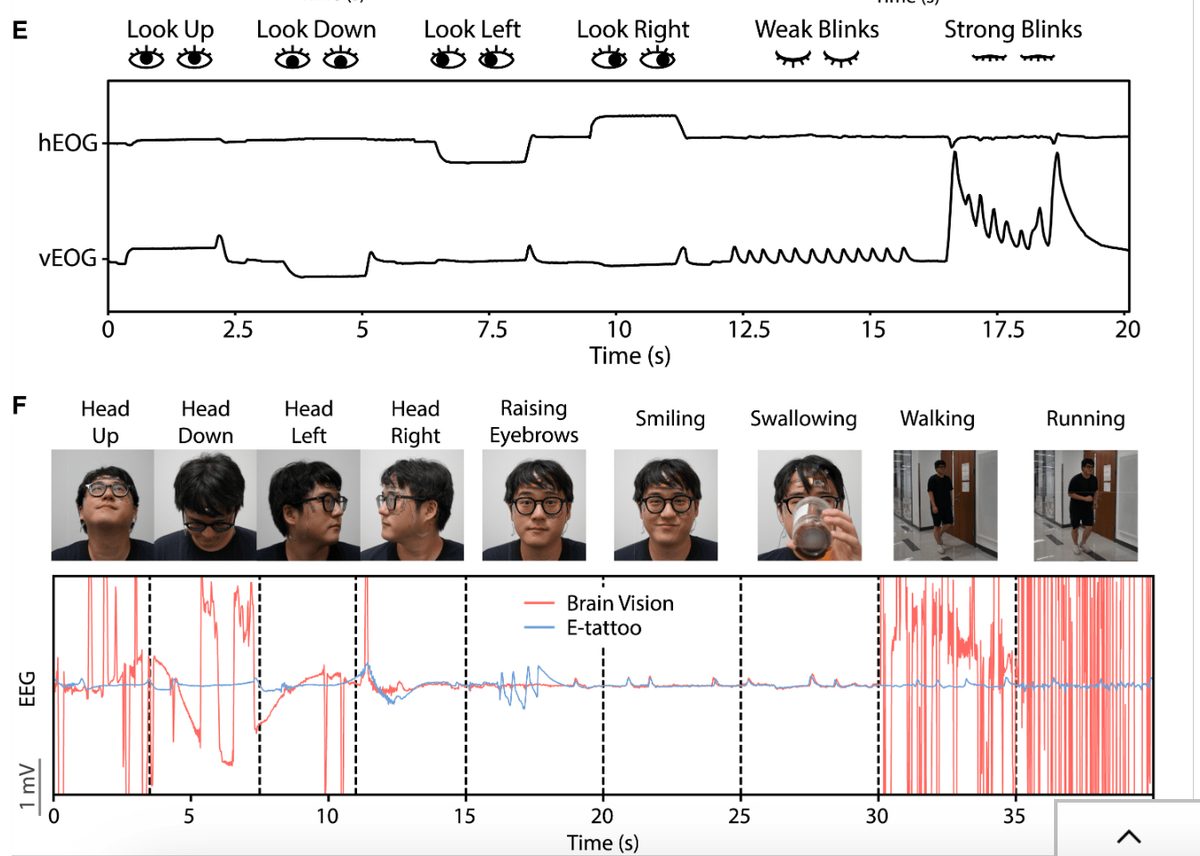
- The device monitors changes in specific brain waves: theta and delta waves increase with cognitive demand, while decreases in alpha and beta waves indicate mental fatigue.
- Testing showed the e-tattoo's objective brain signal measurements closely corresponded to subjective workload reports using the NASA Task Load Index (NASA-TLX).
- An AI model trained on initial brainwave data predicted users’ mental strain levels, allowing for proactive interventions.
- The sensors are custom-fitted to individual faces, disposable, lightweight, and designed for daily use, though currently limited to hairless skin areas.
“We’ve long monitored workers’ physical health, tracking injuries and muscle strain,” said Professor Luis Sentis, lead author. “Now we have the ability to monitor mental strain, which hasn’t been tracked.”
Background
Mental workload is a crucial yet under-monitored dimension of occupational health. Defined as the cognitive effort exerted during task performance, a well-balanced mental workload helps maintain performance without leading to either errors due to overload or boredom and distraction due to underload. Traditionally, mental workload assessments rely on post-task subjective surveys such as NASA's Task Load Index, which are limited by self-report bias and lack of real-time data.
Prior technological approaches to real-time brain monitoring largely depended on bulky helmets or headsets fitted with EEG and EOG sensors. While effective in controlled environments, these systems are impractical for continuous workplace use. The new electronic tattoo overcomes these limitations by providing a skin-like, imperceptible device that integrates seamlessly into daily routines.
Impact Analysis
This innovation holds transformative potential for industries that demand sustained cognitive performance under pressure. For example, air traffic controllers, medical professionals in critical care, and first responders routinely face workloads that can quickly swing from manageable to hazardous. By continuously monitoring brain activity, the electronic tattoo could alert users or supervisors when mental strain exceeds optimal thresholds, allowing timely breaks, task redistribution, or cognitive interventions.
Moreover, the precise detection of mental fatigue could prevent errors stemming from burnout or distraction, potentially reducing costly mistakes and enhancing overall workplace safety. The AI-powered predictive component marks an advance beyond mere monitoring, supporting proactive mental health management. This might contribute to long-term benefits such as improved job satisfaction, reduced absenteeism, and lower incidence of work-related psychological disorders.
Broader Context
Electronic tattoos are part of a broader trend striving to blend health monitoring with wearable convenience. Previous studies have explored tattoos with printed inks that track heart rate, hydration, or even deliver therapeutic substances. At the University of Texas, related research includes a liquid electronic scalp tattoo capable of spray-on brainwave measurement. In 2018, teams at the University of Minnesota developed 3D-printable silver-ink tattoos for wound healing, demonstrating the versatility of this technology platform.
The intersection of flexible electronics and biosensing opens myriad possibilities beyond mental workload. Future iterations could integrate multi-parameter health inputs, detect early warning signs of chronic diseases, or interface directly with machine-learning systems tuned to personal wellbeing.
Future Outlook
Despite promising early results, several challenges remain before widespread adoption: the current design performs best on hairless skin, which could limit usage; social acceptance of visible face sensors in professional settings remains uncertain; and privacy concerns related to continuous brain monitoring must be addressed.
Researchers are actively working to improve sensor durability, miniaturize power supplies, and expand detection capabilities. Integration with workplace management systems could eventually create smart environments that adapt dynamically to workers’ mental states.
Looking ahead, electronic face tattoos may become a standard safety and productivity tool—wearable mental health monitors that are discarded daily, much like common protective gear. This will require collaboration between designers, ethicists, employers, and healthcare providers to realize their full potential responsibly.
Conclusion
The University of Texas’s new electronic face tattoo represents a significant advance in the objective, real-time measurement of mental workload. By capturing specific brain wave patterns correlated with cognitive demand and fatigue, it offers a promising new method to optimize mental exertion in challenging occupations. While the technology is in its infancy and faces hurdles in practical deployment, its potential to enhance both safety and efficiency marks a critical step forward in occupational health monitoring. Innovations like this could redefine workplace wellbeing in an era increasingly shaped by cognitive demands and technological integration.