Chicxulub Impact Crater: A 8-Million-Year Hydrothermal Oasis for Ancient Life
Introduction
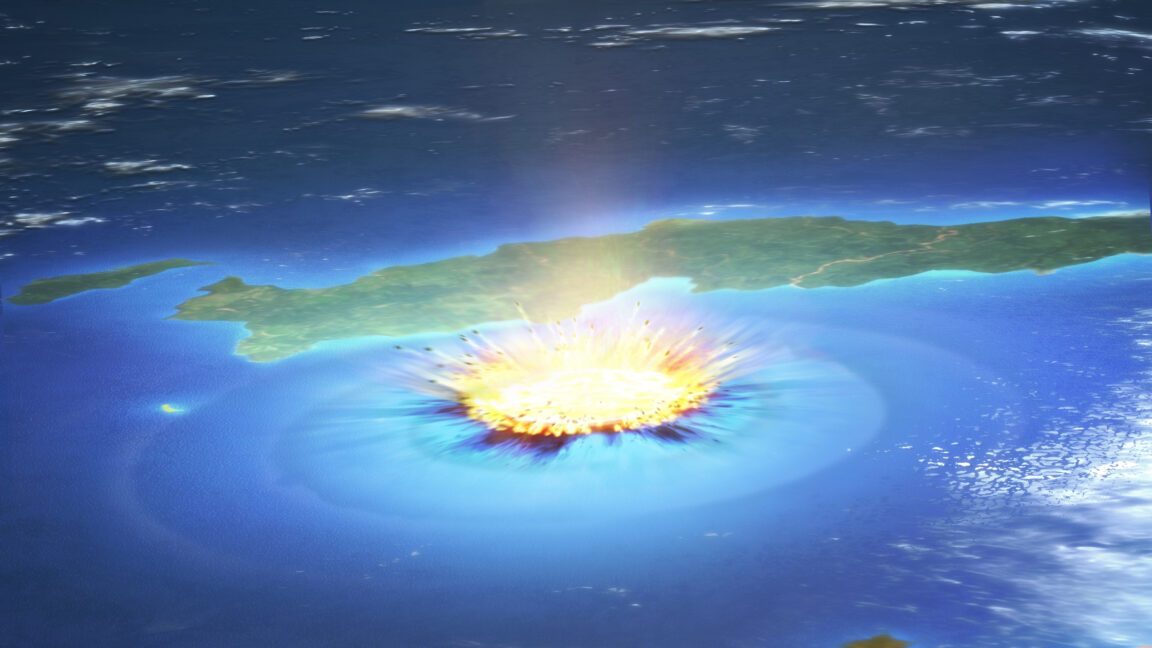
The cataclysmic asteroid impact that marked the end of the non-avian dinosaurs approximately 66 million years ago was a world-altering event. While the immediate aftermath was characterized by widespread destruction, including colossal tsunamis and searing debris, new scientific investigations reveal a surprising consequence: the Chicxulub impact crater may have become a cradle for life. Researchers have uncovered evidence suggesting that the immense heat generated by the impact fostered a vast hydrothermal system that persisted for an astonishing 8 million years, potentially serving as a refuge for microbial life in the post-apocalyptic Earth.
Key Details
- The Chicxulub asteroid struck Earth 66 million years ago, creating a massive impact crater on the Yucatan Peninsula.
- The impact generated intense heat, melting rock deep beneath the surface (up to 35 km).
- This melted rock, exposed to seawater, became porous, forming a hydrothermal system.
- This system, characterized by hot water seeping into pores, is believed to have persisted for 8 million years.
- New research, led by Annemarie Pickersgill of the SUERC Center for Isotope Sciences, indicates the hydrothermal system lasted at least four times longer than previously estimated (previously thought to be around 2 million years).
- The study analyzed rock samples from the impact zone, providing insights into the system's formation and longevity.
Background
The Chicxulub impact event is a pivotal moment in Earth's history, widely accepted as the primary cause for the Cretaceous-Paleogene (K-Pg) extinction event, which led to the demise of roughly 75% of plant and animal species, including the non-avian dinosaurs. The sheer scale of the impact, estimated to be billions of times more powerful than the atomic bomb dropped on Hiroshima, caused immediate devastation. However, scientific understanding of such catastrophic events is evolving. Beyond the immediate destruction, the long-term geological and chemical changes wrought by the impact are now being scrutinized for their potential to foster new environments.
Impact Analysis
The formation of the hydrothermal system within the Chicxulub crater is a remarkable finding. The immense energy released by the asteroid strike not only deformed the Earth's crust to depths of nearly 22 miles but also melted a significant volume of rock. As this superheated, molten rock interacted with the surrounding seawater, it created a porous structure. Subsequently, the circulation of hot water through these pores established a hydrothermal system. This process, akin to the formation of hydrothermal vents on the ocean floor, would have released mineral-rich, heated water into the deep ocean environment. Such conditions, while extreme, are known to support diverse microbial ecosystems on modern Earth. The extended duration of this system, lasting for 8 million years, suggests a prolonged period where these unique conditions prevailed, offering a stable, albeit unusual, habitat.
“The hot water gushing into an isolated region of the freezing depths could have attracted microorganisms and possibly other life forms that were otherwise struggling to survive.”
Broader Context
This discovery places the Chicxulub impact within a broader context of how extreme geological events can influence the evolution of life. While extinction events are devastating, they also create ecological niches and opportunities for surviving species to diversify. The hydrothermal system in the Chicxulub crater represents a potential micro-ecosystem that could have supported life during a period of global environmental upheaval. It raises intriguing questions about the resilience of life and its ability to adapt to even the most hostile conditions. Furthermore, it adds another layer to our understanding of the K-Pg boundary, moving beyond solely focusing on extinction to considering the potential for life's persistence and even flourishing in unexpected ways.
Future Outlook
The extended lifespan of the Chicxulub hydrothermal system, now understood to be 8 million years, opens new avenues for research. Future studies will likely focus on identifying the specific types of microorganisms that may have inhabited this ancient oasis. Analyzing the isotopic signatures and chemical composition of the rock samples could provide direct evidence of past biological activity. Furthermore, understanding the energy sources and nutrient cycling within this system could offer insights into the limits of life and the conditions required for its emergence and sustenance. This research also has implications for astrobiology, providing analogues for potential life-supporting environments on other planets or moons where hydrothermal activity might occur.
Conclusion
The Chicxulub impact, long viewed solely as an agent of destruction, is now being recognized for its dual role in Earth's history. The creation of a long-lived hydrothermal system within the impact crater suggests that even the most catastrophic events can inadvertently foster conditions conducive to life. The persistence of this system for 8 million years, a duration significantly longer than previously believed, highlights the complex and often surprising interplay between geological forces and biological resilience. This finding reshapes our understanding of the post-dinosaur world and underscores the remarkable adaptability of life on Earth.
Source: arstechnica.com