Formula E: The Racetrack as a Catalyst for EV Innovation and Global Motorsport Evolution
Introduction
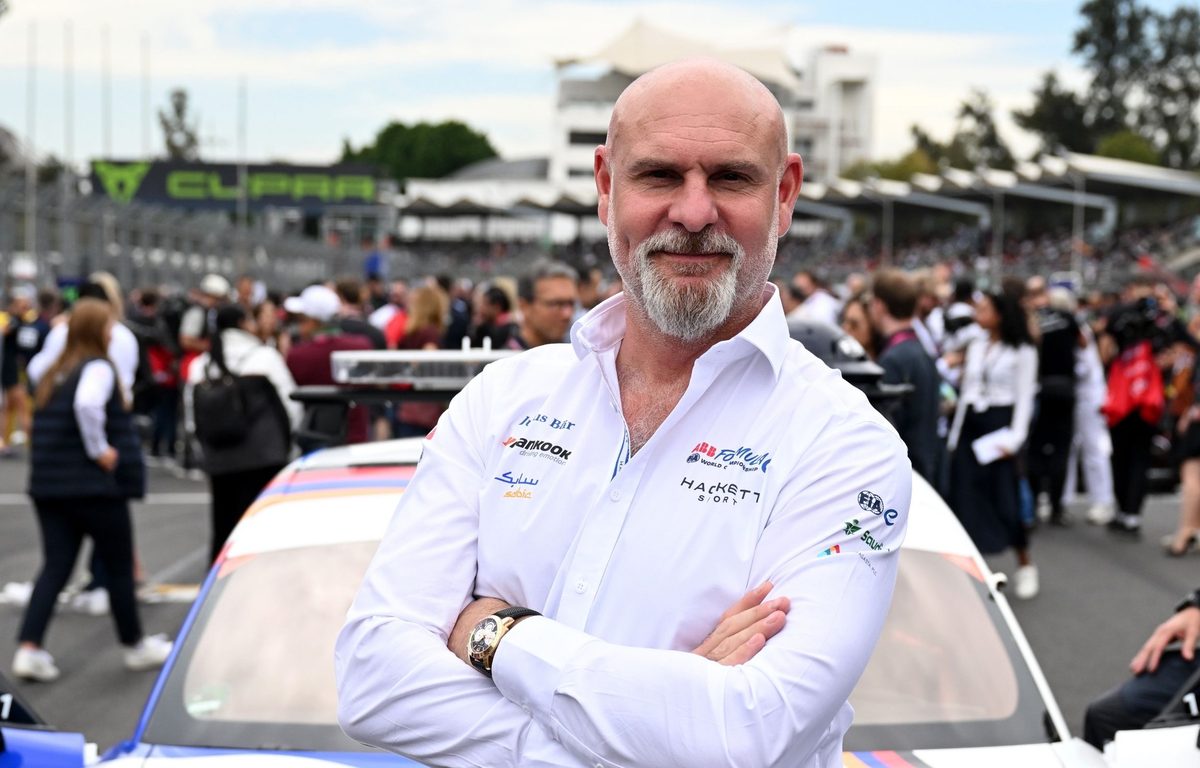
The world of motorsport is undergoing a seismic shift, with electric vehicles (EVs) at the forefront of this transformation. Formula E, the all-electric racing championship, has emerged not just as a competitive sport but as a crucial incubator for EV technology and a testament to the viability of sustainable racing. In just over a decade, it has evolved from a nascent concept requiring battery swaps mid-race to a globally recognized championship boasting speeds exceeding 200 miles per hour and hundreds of millions of fans. Formula E CEO Jeff Dodds emphasizes that the championship's core mission—to accelerate the adoption of electric mobility and promote sustainability—is intrinsically woven into its identity, making it a unique entity in the sporting landscape.
Key Details
- Formula E has transformed from a niche experiment in its debut season, where cars required battery swaps to complete races, into a major global championship within 12 years.
- Current Formula E cars can reach speeds over 200 miles per hour, attracting hundreds of millions of fans worldwide.
- The championship is recognized as the world's first sport to achieve B Corp certification, underscoring its commitment to high environmental and social performance standards.
- Formula E serves as a real-time test laboratory for electric vehicle innovation, with major automakers using it to develop and refine technologies for their production cars.
- The sport's audience is younger, gender-balanced (nearly 50-50 male/female), and particularly interested in technology, sustainability, and innovation.
- A landmark multi-year agreement with Disney+ and ESPN positions Formula E for broader global streaming reach, starting with the 2026/27 season in the U.S.
Background
The inception of Formula E was met with skepticism. Twelve years ago, the global EV market was nascent, with only about 300,000 vehicles sold annually, and these were often considered technologically inferior. Jeff Dodds recalls the early days: “12 years ago, if someone said we’re going to create an all-electric racing championship, people might have thought you were absolutely crazy.” The practical limitations were stark; the inaugural season’s cars lacked the battery range to finish a race without a mid-event car swap. Contrast this with today, where an estimated 22 million EVs are expected to be sold this year, with projections reaching 35-40 million annually by 2030, signaling a dramatic acceleration in EV adoption. Formula E has strategically positioned itself at the vanguard of this transition.
Impact Analysis
Formula E’s significance extends far beyond the racetrack. It functions as a vital proving ground for electric vehicle technology. Major automotive manufacturers like Porsche, Jaguar, Nissan, Stellantis, Yamaha, and Mahindra actively participate, viewing the championship as a high-stakes laboratory. “One of the reasons they’re in is they treat the racetrack like a laboratory for testing technology that can make its way into their road cars,” explains Dodds. He cites the Porsche Cayenne Turbo, the most powerful production Porsche ever, as an example of technology developed through Formula E bleeding into consumer vehicles. Similarly, Jaguar utilized insights from its Formula E program to enhance its I-Pace with over-the-air software updates. This symbiotic relationship ensures that advancements tested at racing speeds are rapidly integrated into the EVs consumers drive.
“My personal view is when people hear ‘sustainable,’ they often hear compromise. They think the product’s going to be more expensive, or not as good, because you’re trying to do it sustainably. And I think we are a brilliant argument against that, because we produce the fastest-selling race cars in the world and the most exciting racing, while being the most sustainable sport.”
Broader Context
Formula E’s commitment to sustainability is not an add-on but a foundational principle. Unlike established industries retrofitting sustainability, Formula E was conceived with it at its core. This dedication is validated by its B Corp certification, a rare distinction in the sporting world, recognizing companies that meet rigorous standards for social and environmental performance. Sustainability permeates every aspect of race weekends, from using hydrogenated vegetable oil to power events and eliminating single-use plastics, to charging cars with renewable energy. The forthcoming Gen4 car is designed to be 100% recyclable or reusable. Dodds argues that Formula E effectively counters the perception that sustainability necessitates compromise, demonstrating that high performance and excitement can coexist with environmental responsibility.
Future Outlook
The trajectory of Formula E has been nothing short of extraordinary. Dodds reflects on the dramatic growth: “12 years ago, we had zero fans, zero TV audience, and a car. You needed two cars to do a race. The car finished at 130 miles an hour. Ten years on, you’ve got 420 million fans, over half a billion TV audience, and you’ve got a car that accelerates to 100 kilometers in 1.6 seconds and races well over 200 miles an hour. It’s inconceivable how far we’ve come.” Given this unprecedented expansion, Dodds is hesitant to set rigid long-term targets, believing that in the rapidly evolving EV sector, overly specific goals could become limiting. The focus remains on continuous innovation and embracing the unpredictable pace of technological advancement.
Conclusion
Formula E represents a paradigm shift in motorsport, proving that electric racing can be thrilling, competitive, and sustainable. It has transcended its origins as a niche experiment to become a global phenomenon, driving technological innovation in the EV sector and setting a new benchmark for environmental responsibility in sports. As the world increasingly embraces electric mobility, Formula E is poised to play an even more significant role, not just as a racing championship, but as a powerful catalyst for a cleaner, faster automotive future.
Source: entrepreneur.com