Ukraine Deploys Twin Kalashnikov Drone Turrets for Cheap Mobile Ground Assault
Introduction
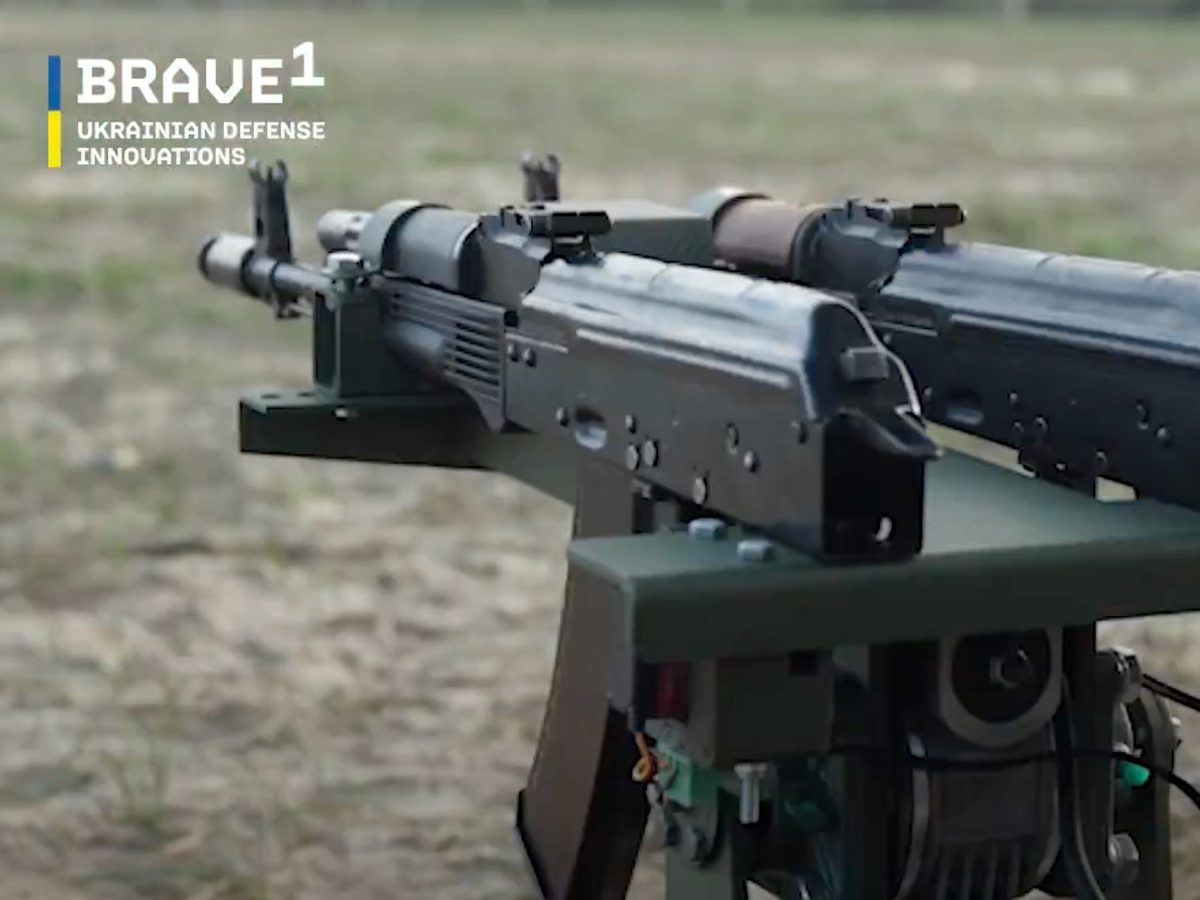
In a significant development for Ukraine's evolving battlefield tactics, the nation's defense technology incubator, Brave1, has revealed a novel uncrewed ground vehicle (UGV) equipped with a formidable twin Kalashnikov assault rifle turret. This innovative system represents a strategic push towards creating affordable, rapidly deployable robotic platforms to augment infantry capabilities and mitigate risks on the front lines. The UGV, designed to be a mobile, remotely operated weapon system, has already undergone operational testing and combat deployment, underscoring its immediate relevance in the ongoing conflict.
Key Details
- Armament: Twin Kalashnikov (AK) assault rifles mounted on a pan-and-tilt gimbal.
- Platform: A four-wheeled, mobile uncrewed ground vehicle (UGV).
- Development: Created by a Ukrainian manufacturer, a member of the Brave1 platform, following a technical brief issued by Brave1.
- Deployment Status: More than five Ukrainian units are currently testing the system operationally.
- Combat Use: Successfully used in combat by the Security Service of Ukraine's Alpha Group special forces to destroy a Russian ambush drone.
- Rationale for Kalashnikov: Chosen for its widespread availability across Ukrainian military units, enabling rapid scaling and front-line deployment.
- Reloading: Current designs still require manual reloading by a nearby soldier, indicating a potential area for future development.
Background
Ukraine has been actively exploring and developing uncrewed ground vehicles for a variety of battlefield roles for years. These UGVs are intended to address critical needs, including ground assault, providing artillery cover, facilitating casualty evacuation, clearing mines, and supporting logistics. The proliferation of drones and the inherent dangers of traversing drone-saturated front lines have made these robotic solutions increasingly vital. The development of the twin Kalashnikov UGV emerges from this broader context, reflecting a strategic imperative to equip forces with simpler, more cost-effective systems that can be produced and fielded quickly to meet the demands of sustained warfare.
Impact Analysis
The introduction of this mobile Kalashnikov turret system offers several key advantages. Firstly, its low cost and reliance on readily available Kalashnikov rifles make it a highly scalable solution. This allows Ukraine to field a significant number of these units without the prohibitive expense associated with more complex robotic systems. Secondly, the UGV's mobility and remote operation capabilities allow it to undertake dangerous tasks, such as engaging enemy positions or drones, thereby reducing the direct exposure of Ukrainian soldiers to enemy fire. The successful engagement of a Russian ambush drone highlights its effectiveness in countering threats. However, the current need for manual reloading suggests that while it can engage targets, its sustained combat effectiveness in prolonged engagements might be limited without further automation or a dedicated support crew.
“We are scaling cheap combat UGVs and robotizing the front line to reduce risks to our infantry,” Brave1 stated in a social media post, emphasizing the dual goals of operational efficiency and soldier safety.
Broader Context
This development aligns with a global trend in military innovation, where unmanned systems are increasingly playing a crucial role. While much attention has been given to aerial drones, the evolution of uncrewed ground vehicles is equally significant. Ukraine's approach, focusing on leveraging existing, widely available weaponry and simple mechanical designs, offers a pragmatic model for developing effective robotic warfare capabilities under resource constraints. It demonstrates an ability to adapt and innovate rapidly, turning readily accessible components into sophisticated combat tools. This contrasts with the often more complex and expensive robotic systems developed by major military powers, suggesting that agility and resourcefulness can be potent strategic assets.
Future Outlook
The future trajectory for this type of UGV likely involves further refinements. Potential enhancements could include improved remote operation capabilities, increased ammunition capacity, enhanced sensor suites for better situational awareness, and perhaps even autonomous targeting features. The successful integration of manual reloading indicates that the platform is modular and adaptable, suggesting that future iterations could address current limitations. As Ukraine continues to innovate, we may see these mobile turrets evolve into more sophisticated robotic soldiers, capable of operating with greater autonomy and for longer durations, further transforming the nature of ground warfare.
Conclusion
The twin Kalashnikov UGV represents a pragmatic and innovative response by Ukraine to the evolving demands of modern warfare. By combining readily available armament with a mobile robotic platform, the system offers a cost-effective, scalable, and risk-reducing solution for front-line operations. Its successful combat debut and ongoing operational testing by multiple units validate its utility. While challenges such as manual reloading remain, the underlying concept of leveraging simple, adaptable technology points towards a significant future for such UGVs in Ukraine's defense strategy and potentially in other conflicts worldwide.
Source: businessinsider.com