Tesla Semi Finally Rolls Out: A Decade in the Making, What Lies Ahead?
Introduction
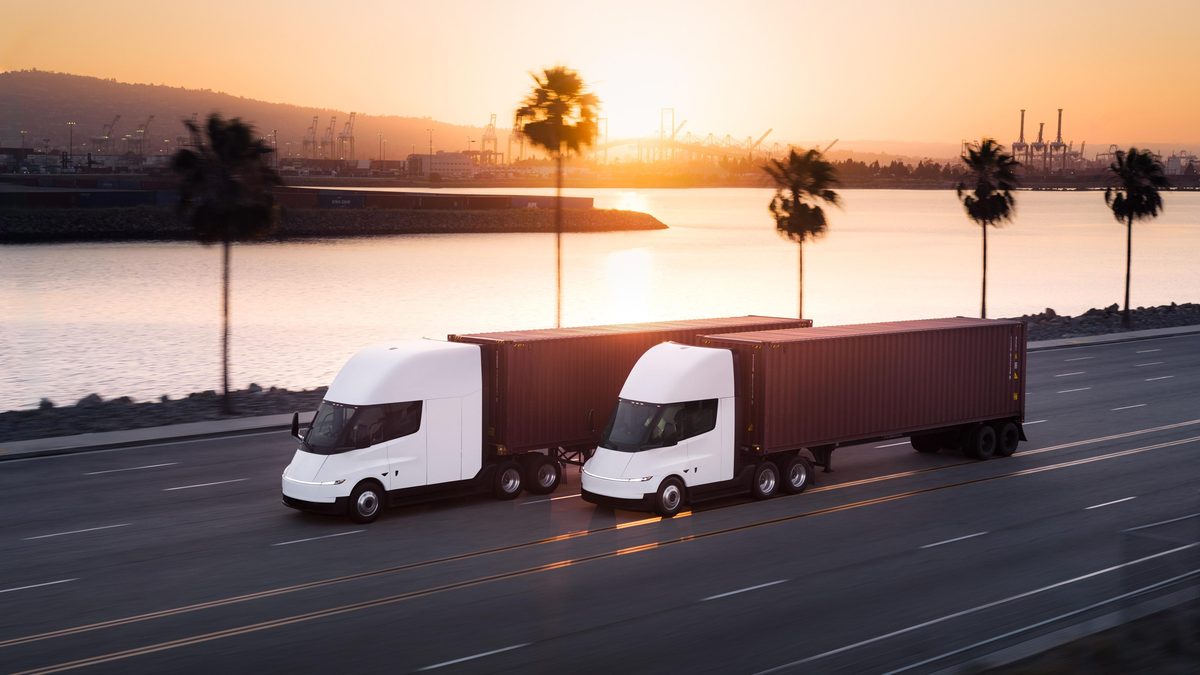
The much-anticipated Tesla Semi, a project first unveiled in concept form in 2017, has finally entered volume production, with the first customer deliveries commencing this week. After nearly a decade of development marked by significant delays, Tesla held an event at its dedicated Semi factory adjacent to Gigafactory Nevada to showcase the truck's readiness and announce a roster of high-profile customers. This milestone marks a critical juncture for Tesla, as it now faces the challenge of proving that the long wait was justified and that the Semi can deliver on its revolutionary promises.
Key Details
- Production Start: Volume production began in April 2026, with the factory capable of producing 50,000 trucks annually (1,000 per week).
- Customer Announcements: New and existing customers include PepsiCo, US Foods, DHL, WattEV, ABF, Einride, IMC, and OK Produce.
- Range and Trims: Two production trims are available: a Standard Range with 325 miles and a Long Range version with 500 miles, both at a gross combination weight of 82,000 lbs.
- Efficiency: The truck consumes approximately 1,700 Wh/mile when fully loaded, an improvement over the initial target of 2,000 Wh/mile.
- Battery Technology: Utilizes Tesla's in-house 4680 battery cells, contributing to a lighter and more efficient battery pack.
- Charging Infrastructure: Tesla is deploying its Megacharger system, capable of delivering up to 1.2 Megawatts per stall, with over 30 charging stations planned by year-end. A 3-60% charge takes about 30 minutes.
- Uptime and Service: Tesla claims over 98% uptime for its fleet, exceeding the industry average for diesel trucks, and is establishing dedicated service and diagnostics for the Semi.
Background
The journey of the Tesla Semi has been a protracted one. Initially slated for production in 2019, the project encountered numerous setbacks, including the COVID-19 pandemic and global supply chain disruptions. While a handful of units were delivered to PepsiCo in 2022, these were built on a pilot line and not representative of mass production. The original advertised prices from 2017—$150,000 for the 300-mile version and $180,000 for the 500-mile version—have significantly increased, with reports suggesting a price tag of around $290,000 for the long-range model. Over the past three years, Tesla has focused on refining the design, reducing weight by nearly 1,000 lbs, and constructing a dedicated manufacturing facility.
Impact Analysis
Tesla is positioning the Semi not just as an electric truck but as a comprehensive fleet solution designed to offer a lower total cost of ownership compared to diesel counterparts. The company highlights reduced energy costs—especially relevant given recent record-high diesel prices—and significantly lower maintenance due to fewer moving parts. The new powertrain and redesigned drive axle, featuring lighter components and simplified lubrication, are expected to enhance durability and reduce service needs. The electric power steering and improved turning radius aim to make urban driving and maneuvering in tight spaces more manageable for drivers. The integration of shared components with the Cybertruck, such as the indirect thermal system, further streamlines manufacturing and maintenance.
“This is really going to be a revolutionary truck,” said Elon Musk in a pre-recorded message, “that is capable of carrying the heaviest loads over very long distances. With ease of recharge, Megacharger that’s capable of a megawatt of power. This is really going to be a phenomenal truck.”
Broader Context
The launch comes at a time of increasing regulatory pressure and market demand for sustainable transportation solutions. Major logistics companies and shippers are actively seeking zero-emission freight options to meet environmental goals and comply with regulations. Tesla's announcement of a significant order from a coalition of large shippers for 2,500 trucks underscores this trend. The company's claim of superior uptime and its integrated service model aim to address common concerns about the reliability and practicality of electric commercial vehicles. The Semi's success could significantly accelerate the transition to electric heavy-duty trucking, impacting not only the automotive industry but also the broader energy and logistics sectors.
Future Outlook
While the production launch is a significant achievement, Tesla faces substantial hurdles. The company has yet to officially confirm order numbers or the final pricing, leaving potential customers and investors to rely on unconfirmed reports. Meeting the demand from a growing list of customers, including Einride's 500-truck order and IMC Logistics' 50-truck commitment, will require scaling production rapidly and efficiently. The expansion of the Megacharger network is also crucial for enabling long-haul operations. Tesla's ability to consistently deliver on its promises of lower operating costs, reliability, and performance will be key to establishing the Semi as a dominant force in the commercial trucking market and justifying the decade-long development cycle.
Conclusion
The Tesla Semi's entry into volume production marks the culmination of years of development and anticipation. With its advanced engineering, focus on total cost of ownership, and growing customer base, the electric truck has the potential to disrupt the heavy-duty transportation industry. However, the lack of concrete pricing and order figures, coupled with the immense challenge of scaling production and infrastructure, means the road ahead is complex. Tesla must now demonstrate that the Semi is not just a technological marvel but a viable, profitable, and reliable solution for the demanding world of commercial logistics.
Source: theverge.com