Siemens CEO Calls for Clarity on US Tariffs to Protect European Economy
Siemens CEO Calls for Clarity on US Tariffs to Protect European Economy
Introduction
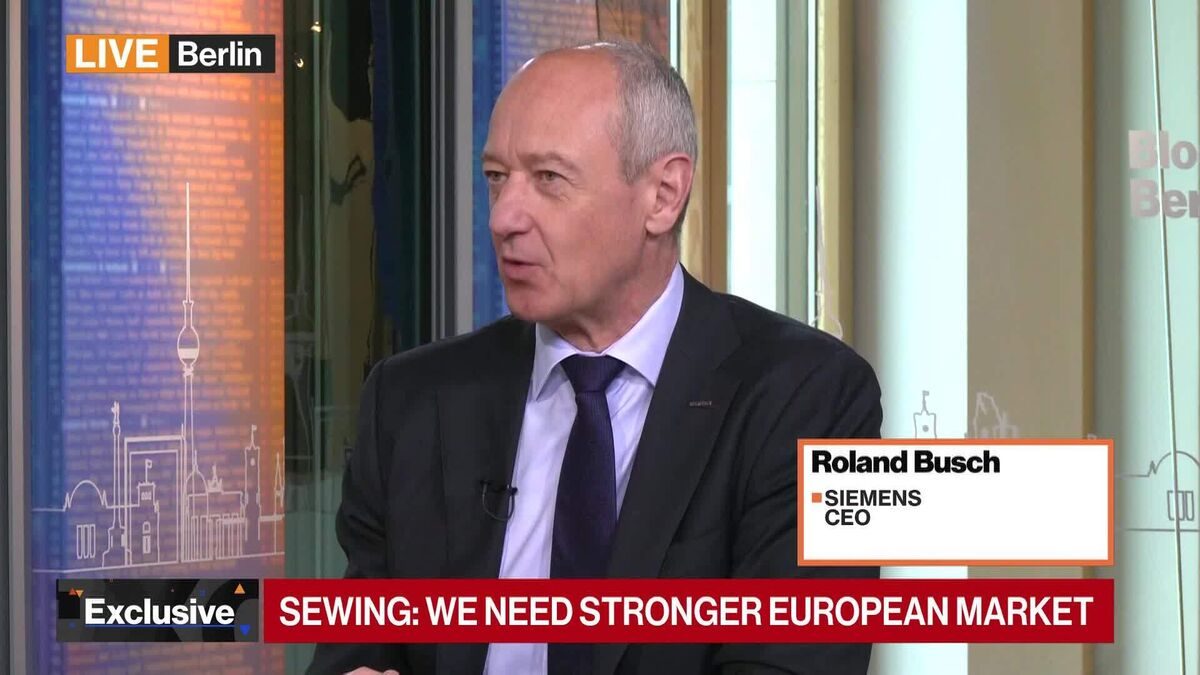
Roland Busch, Chief Executive Officer of Siemens AG, one of Europe's largest industrial conglomerates, has voiced strong concerns about the ongoing uncertainty related to US tariffs and their implications for the broader European economy. Speaking during an interview with Bloomberg in Berlin, Busch emphasized the urgent need to stabilize trade policies to safeguard economic growth and industrial planning across the continent.
Key Details
- Siemens CEO Roland Busch addressed tariff uncertainty in an interview with Bloomberg.
- He highlighted the negative impact of fluctuating US tariff policies on European businesses.
- Busch called for clearer, more predictable trade relations to prevent disruption in supply chains.
- The comments come amid ongoing tensions between the US and Europe over trade tariffs.
- Siemens, as a major exporter and industrial player, is directly affected by such trade policies.
Background
The issue of trade tariffs has been a significant point of contention between the United States and the European Union in recent years. Tariffs imposed on steel, aluminum, and various industrial components have led to reciprocal measures, affecting many multinational corporations, including Siemens. As a company deeply integrated into global supply chains, Siemens depends on predictable trade relations to manage costs, investment plans, and production schedules efficiently.
The uncertainty created by abrupt tariff changes or threats of new duties complicates strategic decision-making for Siemens and similar enterprises. This environment challenges companies' ability to remain competitive on a global scale, potentially slowing down innovation and growth.
Analysis
Roland Busch’s comments underscore a broader economic concern: the destabilizing effects of unpredictable trade policy on global industries. For Siemens, which operates across multiple sectors including energy, healthcare, and manufacturing, tariff volatility means increased costs and supply chain disruptions. This can translate into higher prices for consumers and reduced investment in new technologies.
Moreover, tariff uncertainty affects the confidence of both businesses and investors. Companies may delay expansion plans or hesitate to enter new markets if trade rules remain unclear. This hesitation can hinder economic recovery, especially as Europe faces challenges such as post-pandemic inflation and geopolitical tensions.
The call to "stop this uncertainty" is also a plea for greater cooperation between the US and EU to establish stable, transparent trade frameworks. Such frameworks would reduce retaliatory measures and promote a more balanced and sustainable economic relationship, benefiting businesses and consumers alike.
Conclusion
Siemens CEO Roland Busch’s appeal highlights the critical need for clarity and stability in international trade policies. In an increasingly interconnected global economy, unpredictable tariff regimes pose significant risks not only to individual companies like Siemens but also to broader economic growth and innovation in Europe. Moving forward, constructive dialogue and coordinated policy efforts between the US and EU will be essential to mitigate these risks and foster a more predictable trading environment.