Revealing Ancient Wisdom: X-ray Technology Unveils Buddhist Prayers in Tibetan Scrolls
Introduction
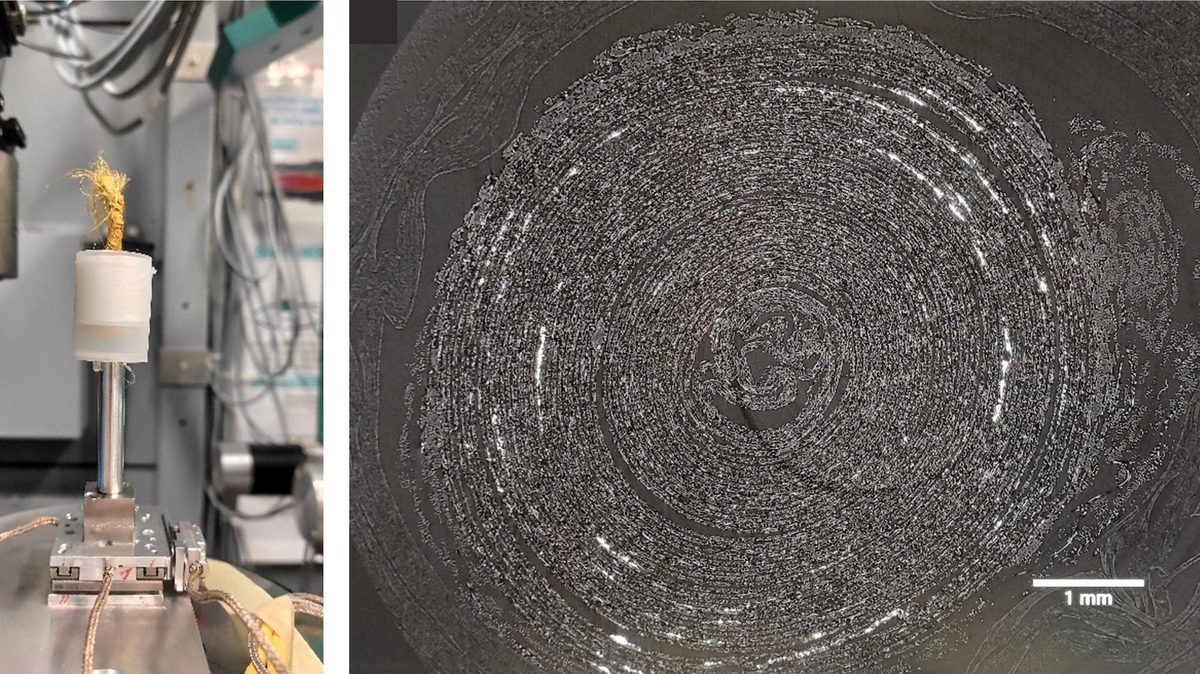
Recent advancements in X-ray imaging technology have enabled researchers to delve into the mysteries of ancient artifacts without causing any damage. A striking case in point is the careful examination of a delicate Buddhist scroll crafted by Mongolian nomads, revealing its hidden treasures of spirituality and culture. This remarkable achievement stems from the collaborative efforts of the Helmholtz-Zentrum Berlin (HZB) research institute, which utilized advanced 3D X-ray tomography, complemented by artificial intelligence (AI) analysis, to unveil the scroll's contents. This breakthrough was documented in a study published in the Journal of Cultural Heritage.
Key Details
- The scroll is part of a gungervaa, a portable shrine used by nomadic Buddhist families.
- Many ancient artifacts, including similar scrolls, were lost during the Soviet-backed Mongolian Revolution of 1921.
- Modern imaging techniques were used to explore the scroll without unrolling it, preventing potential damage.
- The study revealed the presence of metal particles in the scroll’s ink and a unique use of Sanskrit grammar.
- The findings highlight the importance of preserving cultural heritage through technology.
Background
The nomadic people of Mongolia have a rich history that extends back centuries, characterized by a lifestyle that revolved around mobility and adaptability. For Buddhist families, the gungervaa served as a vital part of their spiritual practice, housing various artistic and religious objects, including precious dharanis. These tiny scrolls, often no larger than a few inches, contained prayers and were typically wrapped in silk, making them both decorative and functional.
The historical significance of these scrolls is underscored by the turmoil faced during the Mongolian Revolution of 1921, which led to the destruction of many cultural artifacts. The surviving scrolls hold immense value as a testament to the once-thriving Buddhist tradition in Mongolia. One such scroll found refuge in Germany's Ethnological Museum in 1932, albeit with its original context largely lost due to wartime disassembly and subsequent damage.
Impact Analysis
The application of X-ray tomography marks a significant milestone in conservation techniques, offering a non-invasive method to study delicate artifacts. Researchers faced an initial challenge due to the scrolls being tightly wound—up to 50 times—complicating imaging efforts. The advanced tomography technique utilized at HZB allowed for a detailed examination of the scrolls, producing 3D models that revealed previously hidden inscriptions while preserving their fragile state.
One of the most striking discoveries was the identification of metal particles within the ink, suggesting a level of craftsmanship and complexity in the preparation of the scrolls that had not been previously recognized. Furthermore, the text inscribed on one of the scrolls contained the well-known Tibetan mantra "Om mani padme hum" but interestingly utilized Sanskrit grammar, indicating a blending of cultural influences that is rarely documented in historical texts.
“An object always means only what people see in it; that’s what’s important,” said Birgit Kantzenbach, a preservationist at the Ethnological Museum.
Broader Context
The implications of this study extend far beyond the individual scrolls. It highlights the necessity for innovative practices in cultural heritage preservation, particularly in an era where many artifacts are at risk due to environmental changes and increasing urbanization. The use of AI in conjunction with X-ray tomography also opens avenues for interdisciplinary collaboration, potentially leading to more comprehensive understandings of artifacts that have been historically inaccessible.
As the world increasingly prioritizes the preservation of cultural heritage, the technologies leveraged in this study could serve as a model for examining similar artifacts globally. By employing non-invasive methods, researchers can protect cultural legacies while simultaneously enhancing our understanding of historical contexts, materials, and craftsmanship.
Future Outlook
The successful application of X-ray tomography in unearthing the secrets of the Tibetan scrolls sets a promising precedent for future research in the field of archaeology and cultural heritage conservation. As technology continues to evolve, there is potential for even more sophisticated imaging techniques that will allow for deeper analysis of ancient materials.
Researchers hope that continued advancements in this field will not only protect fragile artifacts from damage but also facilitate greater collaboration across various disciplines, from art history to material science. By uncovering the layers of history encapsulated within these artifacts, scholars can contribute to a broader dialogue on cultural preservation and the significance of maintaining connections to our shared human history.
Conclusion
The unveiling of the Buddhist prayers within the Tibetan scrolls serves as a reminder of the wealth of knowledge embedded in cultural artifacts. As researchers harness advanced technologies to explore the past, they also illuminate the importance of preserving these connections for future generations. The findings from the Helmholtz-Zentrum Berlin not only shed light on the craftsmanship and spiritual practices of the past but also pave the way for innovative approaches to cultural preservation that honor and protect our shared heritage.