Prehistoric Mole Fossil Reveals Complex Transcontinental Migration 3.1 Million Years Ago
Introduction
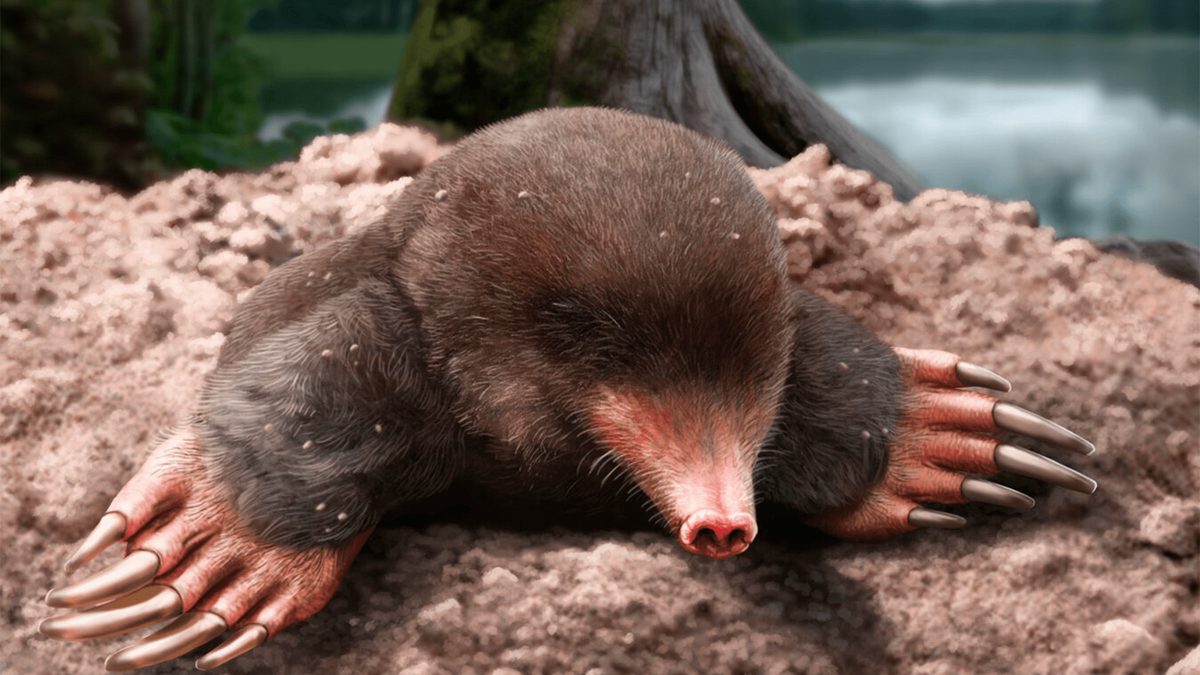
In a groundbreaking paleontological discovery, researchers have unearthed a new genus and species of prehistoric mole named Vulcanoscaptor ninoti from the Pliocene epoch, approximately 5.3 to 2.6 million years ago. This fossil was found in the crater of an ancient volcano in northeastern Spain, near Girona, at the notable paleontological site Camp dels Ninots. The specimen is hailed as one of the most complete and well-preserved small mammal fossils from the Pliocene in Europe, offering unprecedented insight into mole evolution and biogeography.
Key Details
- Species and genus: Vulcanoscaptor ninoti, a previously unknown prehistoric mole.
- Age: Pliocene epoch, roughly 3.1 million years old.
- Location: Camp dels Ninots, an ancient volcanic crater in northeastern Spain.
- Condition: Exceptionally preserved skeleton including mandible with complete dentition, torso sections, and leg bones.
- Research method: Micro-computed tomography (microCT) enabled detailed 3D reconstruction of tiny, delicate bone structures.
- Affinities: Related to Scalopini tribe of moles, currently found in North America and Asia.
- Significance: Suggests complex transcontinental migration patterns and challenges the idea of low dispersal capacity in moles.
Background
The Scalopini are a tribe of fossorial (digging) moles predominantly found today in North America and Asia. Until now, their evolutionary history in Europe was poorly understood due to limited fossil evidence. The discovery of Vulcanoscaptor ninoti in Spanish volcanic lake sediments offers new data on the geographic distribution and evolutionary adaptations of these animals during the Pliocene.
The fossil was preserved in lacustrine (lake) sediments formed in the crater of an ancient volcano following an eruption around 3.1 million years ago. Such volcanic events are known to create ideal fossilization conditions, preserving even delicate skeletal elements intact. Adriana Linares, the study's lead author and a predoctoral researcher at Universitat Rovira i Virgili, emphasized how microCT scanning allowed the team to analyze minute anatomical features like phalanges and teeth that traditional methods might have missed.
Impact Analysis
Analyzing the fossil’s anatomy reveals a creature well-adapted for an underground lifestyle, with strong digging limbs and robust jaw structures. Interestingly, the specimen’s preservation in lake sediments and its lateral fossil position suggest the possibility of some aquatic locomotion ability. While this remains speculative, modern moles known for proficient digging can also be capable swimmers, implying a versatile locomotion strategy in past species as well.
"Despite its clearly fossorial morphology, this mole is closely related to extant North American species of the genera Scapanus and Scalopus, which points to a far more intricate evolutionary history for these animals than we had imagined," said Marc Furió, co-lead of the study and geologist at Universitat Autònoma de Barcelona.
This close phylogenetic relationship across continents challenges the long-held assumption that moles have low dispersal capacities. Instead, it suggests complex migration routes and possibly multiple transcontinental dispersal events, reshaping our understanding of mammalian biogeography during the Pliocene.
Broader Context
The discovery of Vulcanoscaptor ninoti enriches the broader narrative of mammalian evolution during a dynamic period marked by climatic shifts and geological upheavals. The Pliocene epoch was a critical time for faunal migrations and species diversification, influenced by changing habitats and the formation of land bridges.
This find also contributes to paleontological knowledge regarding the ecological niches occupied by small burrowing mammals and their adaptive strategies in diverse environments, from subterranean burrows to potentially semi-aquatic habitats. It expands the scope for studying evolutionary convergences within fossorial mammals and invites reexamination of other poorly understood fossil specimens.
Future Outlook
Further study of Vulcanoscaptor ninoti and related fossils is likely to clarify the exact pathways of mole migration and their ecological adaptations. Advanced imaging and molecular techniques may refine the evolutionary timeline and offer more detailed insights into the mechanisms behind their dispersal across Eurasia and North America.
Moreover, this discovery underscores the importance of volcanic paleontological sites for exceptional fossil preservation, encouraging intensified exploration of such regions. Understanding these ancient migration events could illuminate broader patterns of animal movement in response to climatic and geological changes in Earth's history.
Conclusion
The finding of the prehistoric mole Vulcanoscaptor ninoti in an ancient Spanish volcanic crater marks a significant advance in the study of mammalian evolution and biogeography. It reveals a complex evolutionary history involving transcontinental dispersals far earlier and more intricate than previously thought, challenging assumptions about the mobility of fossorial mammals. As paleontologists continue to uncover and analyze such fossils, the story of prehistoric life and its dynamic transformations continues to unfold with surprising depth.