Octopuses Exhibit Body Ownership Perception Similar to Humans
Octopuses Exhibit Body Ownership Perception Similar to Humans
Introduction
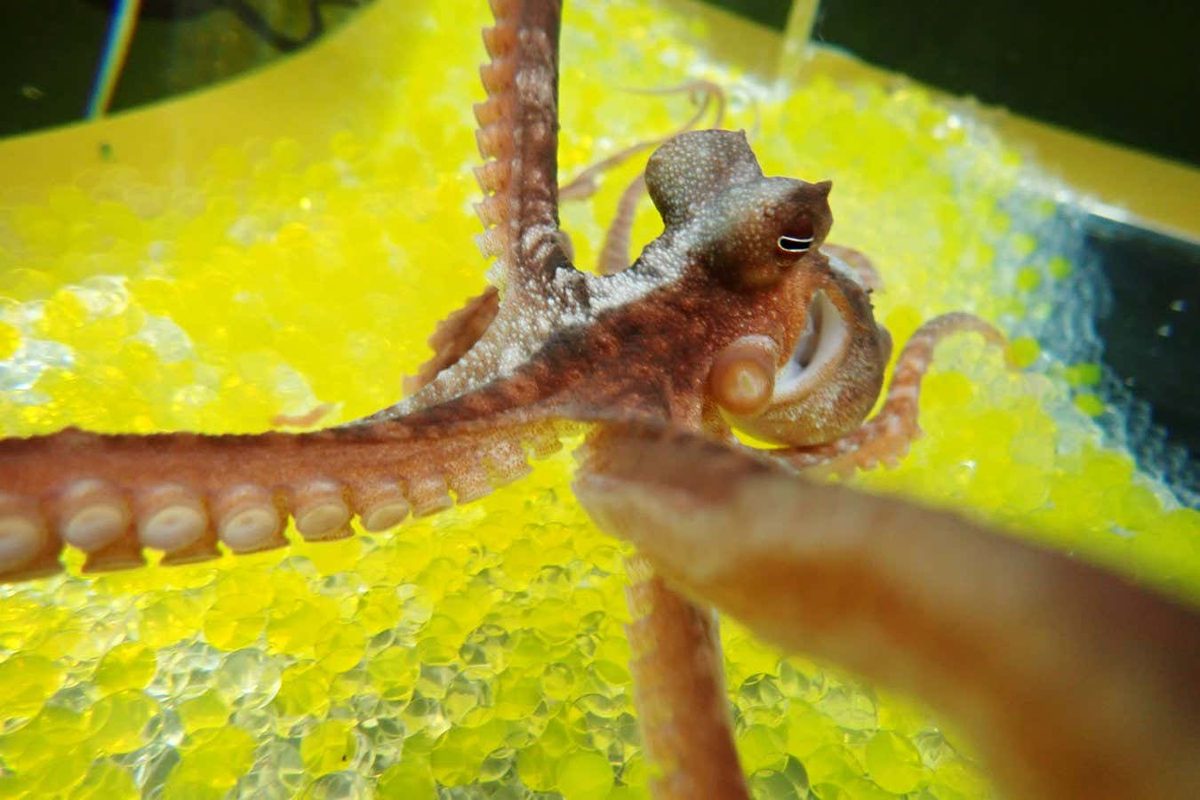
In a remarkable demonstration of cognitive complexity, octopuses have shown a capacity for what is known as the rubber hand illusion, a phenomenon typically observed in humans. Researchers have discovered that these highly intelligent cephalopods can be tricked into perceiving a fake rubber arm as part of their own body. This intriguing finding raises questions about the nature of consciousness and body awareness in non-human animals, particularly in creatures with such different biological structures from mammals.
Key Details
- Researchers conducted experiments with octopuses using a rubber arm and various stimuli.
- When the rubber arm was stroked in synchronization with the octopus’s actual limb, the creatures exhibited signs of recognition.
- The study indicates that octopuses have a sophisticated understanding of body ownership.
- This phenomenon is reminiscent of similar studies conducted on humans, where multisensory integration plays a crucial role.
- The findings may have implications for understanding the evolution of consciousness across different species.
Background
The rubber hand illusion has been widely studied in human psychology, where participants experience a disconnection between visual and tactile sensations. In this illusion, when a person's real hand is hidden from view and a rubber hand is stroked in synchrony with the hidden hand, many individuals report feeling as though the rubber hand is actually theirs. This sensation is believed to arise from the brain's integration of sensory information, leading to a reassessment of body ownership based on visual and tactile cues.
Octopuses, known for their intelligence and complex behaviors, provide a unique opportunity to explore similar cognitive processes in an entirely different biological context. With three hearts and a decentralized nervous system, octopuses challenge traditional notions of intelligence, consciousness, and self-awareness. The latest studies suggest that these creatures possess a form of body ownership perception that may parallel human experiences, prompting further investigation into the cognitive abilities of invertebrates.
Analysis
The implications of octopuses falling for the rubber hand illusion extend beyond mere curiosity about animal intelligence. Understanding how these creatures perceive their bodies could shed light on the evolutionary pathways that have led to consciousness in diverse species. The fact that octopuses can integrate sensory information to form a coherent understanding of their physical self suggests that the capacity for self-awareness may not be exclusive to mammals.
Moreover, this research challenges the anthropocentric view of cognition, emphasizing that complex cognitive processes can emerge in a variety of life forms. The ability of octopuses to experience body ownership suggests that the neural architectures used to integrate sensory input and produce self-awareness might have evolved independently in different lineages. This finding can open new avenues for research into how other non-mammalian species perceive themselves and their environments.
Additionally, octopuses have been observed displaying behaviors that indicate problem-solving skills, tool usage, and even emotional responses. These attributes align with the concept of a sophisticated cognitive framework, which could be further understood through studies on body perception and ownership. This research not only broadens our understanding of cephalopod intelligence but also invites us to reconsider how we define and recognize consciousness across the animal kingdom.
Conclusion
The discovery that octopuses can be tricked into feeling ownership over a rubber arm opens a fascinating window into the minds of these enigmatic creatures. As we delve deeper into the cognitive abilities of octopuses and other non-human animals, we are urged to rethink our assumptions about consciousness and self-awareness. This research not only enhances our understanding of cephalopod behavior but also challenges the boundaries of what we consider unique to humans. By continuing to explore these themes, scientists can gain invaluable insights into the nature of intelligence and the evolutionary history of consciousness itself.