Lanterns Finale: Creators Opt for Emotional Resonance Over Spectacle, Embracing a New Oath
Introduction
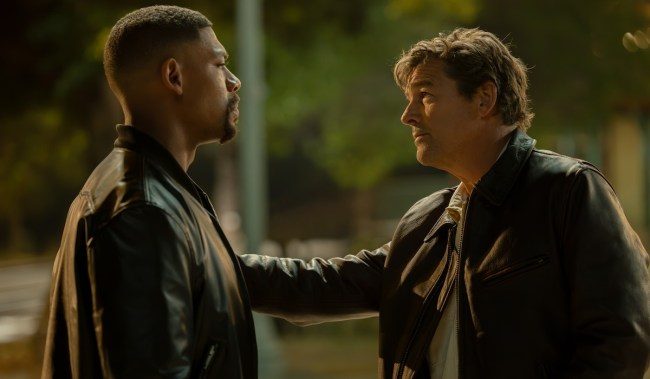
The first season of the superhero series “Lanterns” concluded not with a bang, but with a heartfelt embrace. In a significant departure from typical genre finales, the show opted for emotional depth over explosive, CGI-laden action. The final episode saw John Stewart (Aaron Pierre) solve the murder of his mentor, Hal Jordan (Kyle Chandler), share a poignant farewell via a Hal-o-gram, and ultimately embrace his destiny as Earth's new Green Lantern. This deliberate choice, a stark contrast to the bombastic finales often seen in superhero narratives, was a central theme in a recent panel discussion with the show's creators.
Key Details
- The season finale focused on the emotional journey of John Stewart and Hal Jordan, rather than a large-scale action sequence.
- Co-creator and showrunner Chris Mundy emphasized that the series' core was the relationship between the two leads.
- The creators intentionally downplayed the use of the Green Lantern ring's reality-warping powers in the finale to maintain emotional focus.
- John Stewart forged his own personal oath as Green Lantern, deviating from the traditional, widely recognized oath from the comics.
- The series explored themes of fear, personal identity, and the evolution of oaths and loyalties.
- “Lanterns” is available on HBO and HBO Max, with its renewal status for a second season unconfirmed.
Background
“Lanterns” faced a unique challenge in adapting the iconic Green Lantern mythology for a modern television audience. Unlike the 2011 film, which was criticized for its overreliance on CGI and the ring's powers, the series aimed for a more grounded and character-driven narrative. Showrunner Chris Mundy explained the philosophy behind this approach: “This story was about these two guys. We knew that if we landed it emotionally with them, we would have done our job.” He argued that a more action-heavy ending would have been “distracting” and merely “incident instead of emotion.” This sentiment was echoed by co-creator Damon Lindelof, who highlighted the advantages of long-form television storytelling. “We got to [do] that almost over the course of three episodes […] You can only do that in TV,” Lindelof stated, contrasting it with the constraints of a two-hour film that would necessitate a traditional action climax followed by a brief emotional coda.
Impact Analysis
The decision to prioritize emotional resonance over spectacle in the “Lanterns” finale has sparked discussion among fans and critics. While some comic book purists may have desired a more traditional display of the Green Lantern's powers, the creators’ focus on the evolving relationship between Hal Jordan and John Stewart offered a deeply human conclusion. The poignant exchange of “I love you” between the two characters, a moment of profound vulnerability, underscored the series' commitment to exploring complex emotional bonds. Kyle Chandler, who played Hal Jordan, noted the significance of such an expression in a genre often dominated by stoicism: “Maybe in a film from the ’50s or the ’60s, you’ve got The Duke standing there, and he’s just not going to say, ‘Well, I love you, kid’ — it just didn’t happen that way back then. But these were words that were actually expressed, and it was really nice to be able to do that. It was painfully exposed.” Aaron Pierre, as John Stewart, echoed the sentiment, describing the moments of emotional connection as “really quite moving.”
“If we’re not afraid of doing an idea, then we probably shouldn’t do it. We have the baton, we are wearing the ring for this period of time, we get to make a season of this show — who knows what happens next. You can’t take a risk for risk’s sake, it has to be earned, and the way that it’s earned is the character starts to tell you what they will do and won’t do.”
Broader Context
The creation of a unique oath for John Stewart represents a significant thematic departure. Traditionally, all Green Lanterns recite the same oath, a powerful symbol of their shared purpose and commitment. However, the creators of “Lanterns” felt this wouldn't be authentic to John’s journey. Mundy explained that John’s path was “not the normal path,” and his version of the oath, while “rooted, obviously, in the O.G. version,” was tweaked to reflect his personal choices and themes of the season, emphasizing self-determination over inherited duty. Lindelof further elaborated, stating that John’s story makes it difficult to align him with the traditional Green Lantern Corps and its tenets. “For a man who pledged his loyalty to the military, to his parents, that’s like this idea of saying ‘I’m kind of beyond doing that for other organizations, and in order for me to formulate an oath, it has to be on my own terms and in my own way,’” he said. This narrative choice directly addresses the show's exploration of fear and individuality, suggesting that true strength lies in embracing one's own path, even if it means challenging established norms.
Future Outlook
While the first season of “Lanterns” has concluded, its future remains uncertain, with no official renewal announcement from HBO or HBO Max. The creators, however, seem prepared to take risks, as Lindelof’s quote suggests: “If we’re not afraid of doing an idea, then we probably shouldn’t do it.” This willingness to deviate from convention, particularly with John Stewart’s oath and the finale’s emotional focus, indicates a potential for continued bold storytelling should the series be picked up for a second season. The show has successfully laid the groundwork for exploring John’s unique path as Earth’s Green Lantern, and the creators’ commitment to character-driven narratives suggests that future seasons could delve deeper into the personal struggles and triumphs of its protagonists, potentially further challenging audience expectations within the superhero genre.
Conclusion
The “Lanterns” season finale stands as a testament to the power of emotional storytelling in the superhero genre. By eschewing a conventional, action-packed climax for a more intimate and character-focused conclusion, the creators delivered a resonant ending that prioritized the human element. The development of the relationship between John Stewart and Hal Jordan, culminating in a heartfelt declaration of love, and the bold decision to have John forge his own oath, underscore the series’ unique vision. While the show’s departure from comic book tradition may divide some fans, its commitment to exploring complex themes and character arcs offers a compelling argument for its artistic merit. The series has proven that even within the familiar framework of superhero narratives, there is ample room for innovation and emotional depth.
Source: indiewire.com