Jon Stewart Slams Natalie Harp's Role in Trump's 'Warped Reality'
Introduction
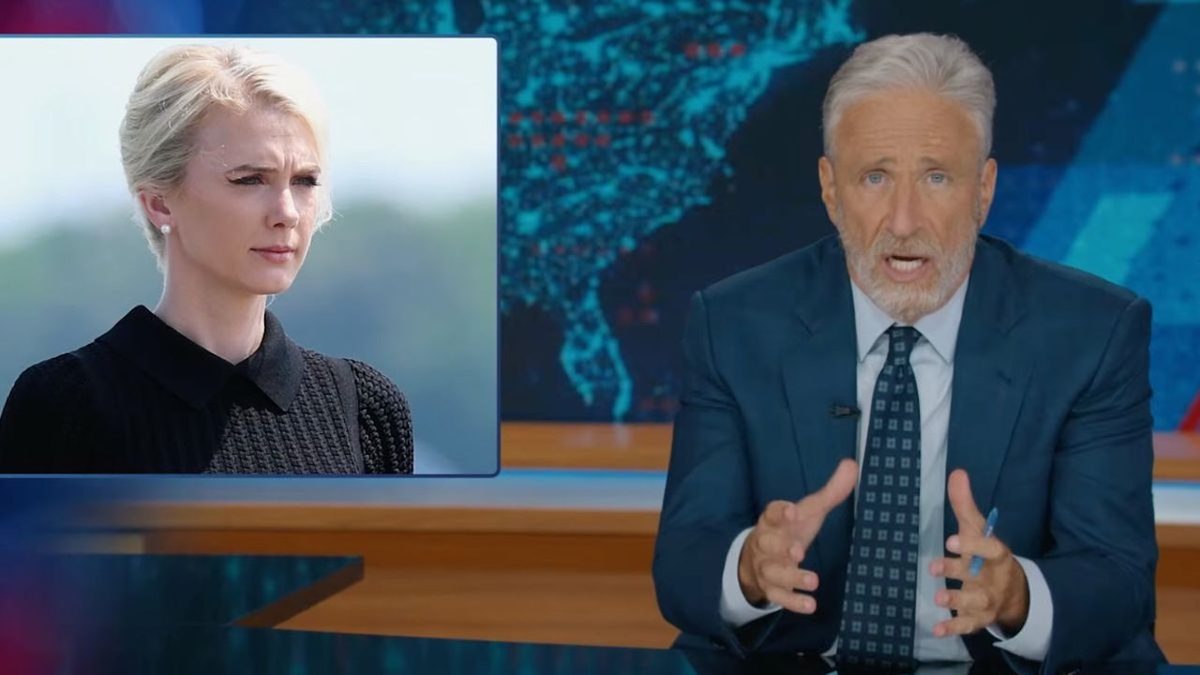
Jon Stewart, the veteran host of "The Daily Show," has returned from his summer break with a pointed critique, not of President Donald Trump's policies, but of the alleged architect behind his insulated perception of reality: Natalie Harp, Trump's executive assistant. In his first monologue back on Tuesday evening, Stewart dedicated a significant segment to dissecting Harp's role, labeling her as the primary filter for information reaching the President, and suggesting this curated reality is detrimental to the nation.
Key Details
- Stewart highlighted Natalie Harp's position as an executive assistant to President Trump.
- He described her role as feeding Trump a "steady stream of positive news stories."
- Stewart expressed concern that Harp acts as the sole conduit for information into Trump's psyche, creating a "warped reality."
- He quoted a line attributed to Harp: “I never want to bring you anything but joy.”
- Stewart questioned Harp's trustworthiness, noting her repeated refusal to obtain security clearances.
- The commentary was delivered during Stewart's monologue on "The Daily Show" on Comedy Central.
Background
Natalie Harp has been a consistent presence around Donald Trump, often described as a devoted aide who closely follows the President. Her proximity and access have led to speculation about her influence on Trump's decision-making and perception. Stewart's segment appears to stem from recent media coverage that detailed Harp's function within the White House, emphasizing her role in shaping the information landscape for the President. This focus on an individual aide's influence is a characteristic approach for Stewart, who often uses satire to dissect the mechanics of power and communication within political spheres.
Impact Analysis
Stewart's central argument is that Harp's function as a 'reality curator' for Trump is not merely an administrative detail but a significant factor contributing to the President's disconnect from the outside world. He likened the effort to fight this 'reality distortion field' as something that is 'slowly killing us all,' comparing the nation's exposure to it as a battleship rusting from the inside. The implication is that by shielding Trump from critical perspectives or negative news, Harp is enabling a distorted understanding of pressing issues, which could have profound consequences for policy and public trust. Stewart's use of the 'blue pill' analogy from 'The Matrix' further underscored the idea that accepting a comfortable, albeit false, reality might seem appealing, but the cost of such delusion is ultimately too high.
“The outside world is somehow fed into this woman, a single conduit, and from there, she is the filter to all of the information that is directly fed into Donald Trump’s psyche.”
The concern extends beyond the President's personal bubble; Stewart questioned the implications of Harp's alleged refusal to obtain security clearances. This detail, if accurate, raises serious questions about the vetting process and the potential security risks associated with an individual wielding such influence over the President's information intake, especially when that individual has not undergone standard security protocols.
Broader Context
Stewart's commentary taps into a larger, ongoing discussion about the role of media, information flow, and perception management in modern politics. The Trump presidency was frequently characterized by accusations of a 'fake news' environment and a White House that often seemed at odds with factual reporting. Stewart's focus on Harp suggests a belief that the internal mechanisms of information control within the administration are as critical to understanding its dynamics as any external policy or political event. His return to "The Daily Show" signals a continued engagement with these themes, using humor and sharp analysis to hold power accountable.
Future Outlook
Stewart's critique of Natalie Harp's role sets a tone for his renewed tenure on "The Daily Show." Viewers can anticipate further segments dissecting the communication strategies and perceived realities of political figures. The emphasis on Harp indicates a potential focus on the individuals who operate behind the scenes, influencing the public discourse and the decision-making processes of top leaders. The question of security clearances, in particular, may foreshadow future investigations into personnel and access within sensitive government roles. As Stewart continues his run, the public will be watching to see how he further unpacks the complexities of political messaging and its impact on governance.
Conclusion
Jon Stewart's return has been marked by a direct challenge to the information ecosystem surrounding President Trump, personified by Natalie Harp. By highlighting her role as a potential 'reality filter,' Stewart raises critical questions about the integrity of information reaching the highest levels of government and the potential consequences of a leader operating within a self-constructed, positive-feedback loop. His commentary serves as a stark reminder of the importance of unfiltered information and robust scrutiny in a democratic society, urging a re-evaluation of how leaders consume information and who controls that flow.
Source: thewrap.com