European Bonds Face Decline Amid Shifting Market Sentiment on ECB Rate Cuts
European Bonds Face Decline Amid Shifting Market Sentiment on ECB Rate Cuts
Introduction
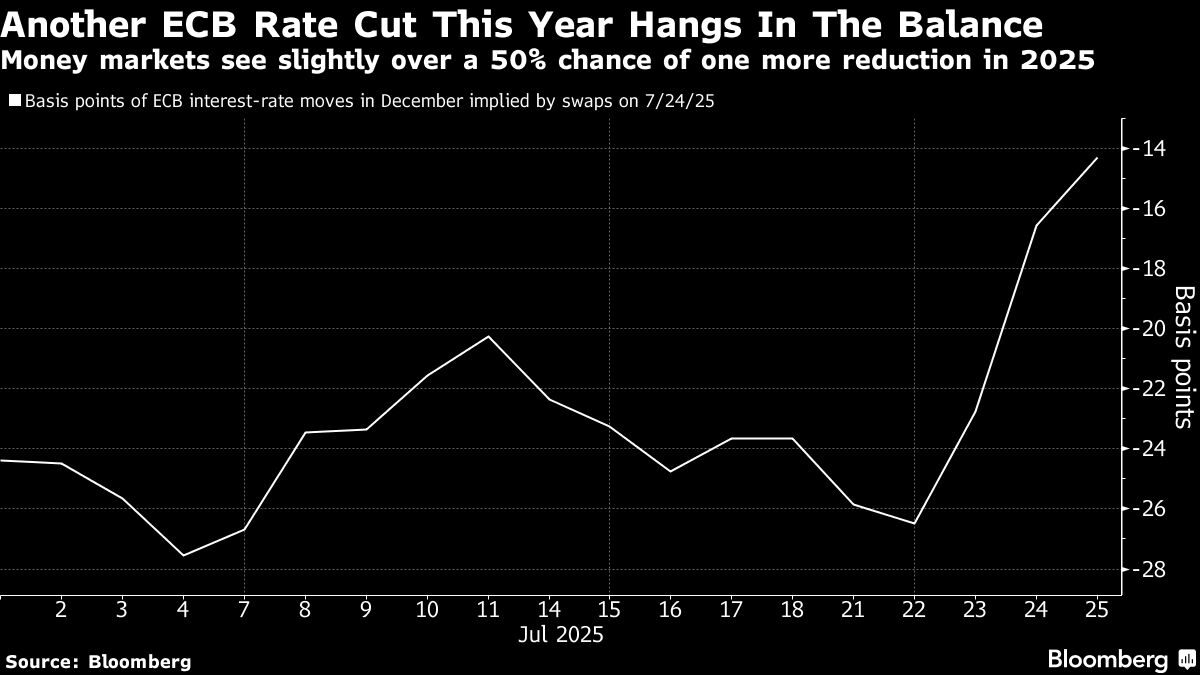
The European bond market is currently facing a downturn as traders have begun to reassess their expectations regarding potential interest rate cuts by the European Central Bank (ECB). This trend marks the third consecutive day of declines in bond prices, reflecting a broader shift in market sentiment that carries significant implications for investors and the European economy as a whole.
Key Details
- European bonds have seen a notable decrease in value, continuing a downward trend.
- Traders are reducing their bets on a final interest rate cut from the ECB this year.
- The ECB's monetary policy decisions are closely tied to inflation data and economic performance across the Eurozone.
- Market reactions suggest growing confidence in the stability of the Eurozone economy, diminishing fears of a recession.
- Analysts predict that any changes to interest rates will be heavily influenced by upcoming economic indicators, including employment rates and inflation reports.
Background
The European Central Bank has been navigating a complex economic environment characterized by fluctuating inflation rates and varying growth across member states. In recent months, there has been speculation surrounding the ECB's potential moves to cut interest rates as a means to stimulate economic growth. However, the recent data releases have led traders to rethink these projections.
Historically, bond prices tend to rise when interest rates are expected to fall, as investors seek to lock in higher yields before rates drop. Conversely, when the market anticipates that interest rates will remain stable or increase, bond prices typically decline. This recent drop in European bonds suggests that traders are becoming more optimistic about the eurozone economy's resilience, which can alter the dynamics of interest rate speculation.
Analysis
The decline in European bonds can be attributed to several factors. First and foremost, improved economic data from key Eurozone countries has led to increased optimism among investors. For instance, recent reports have shown signs of economic stability, with robust employment numbers and a slowdown in inflationary pressures. As a result, the notion that the ECB would need to implement further rate cuts has lost some of its urgency.
Moreover, geopolitical factors, including ongoing discussions about fiscal policies across the EU, play a critical role in shaping market perceptions. Investors are closely monitoring how EU member states will navigate economic recovery post-pandemic, especially in light of fiscal support measures and their potential long-term impacts on inflation and growth.
Furthermore, the bond market is sensitive to global economic conditions. With the U.S. Federal Reserve signaling a cautious approach to interest rate hikes, European traders are recalibrating their strategies. The interconnectedness of global markets means that developments in one region can ripple across to others, influencing investor behavior and expectations.
Conclusion
As European bonds continue to decline, the implications for the broader market and the ECB's future monetary policy are significant. While the current sentiment points toward a more stable economic outlook within the Eurozone, it remains to be seen how upcoming economic indicators will influence the ECB's decision-making process. Traders and investors must remain vigilant and adaptable, as the landscape of interest rates can shift rapidly based on new data and geopolitical developments.