Deutsche Bank CEO Highlights Unified Effort to Revitalize Germany’s Economy Amid Global Challenges
Introduction
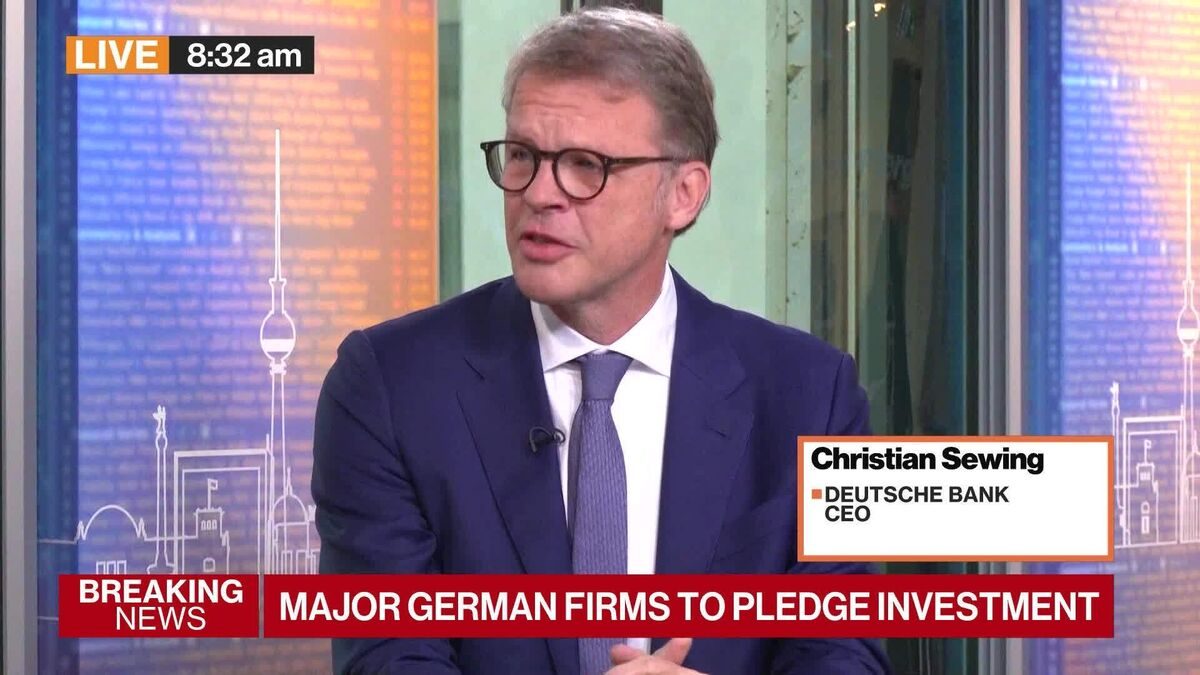
In a recent conversation with Bloomberg’s Oliver Crook in Berlin, Christian Sewing, the Chief Executive Officer of Deutsche Bank AG, discussed a significant new initiative led by German Chancellor Friedrich Merz alongside more than 60 of Germany’s top companies. This initiative aims to bolster investment efforts to reinvigorate Europe’s largest economy amid a complex global economic landscape.
Key Details
- German Chancellor Friedrich Merz has spearheaded a collaborative investment push involving over 60 leading German companies.
- Deutsche Bank CEO Christian Sewing emphasizes alignment on the shared goal of restoring growth and competitiveness.
- The initiative reflects a strategic response to stagnation and challenges in Germany’s industrial and economic sectors.
- Focus areas include increasing domestic investments, innovation, and strengthening Germany’s position within the European and global markets.
Background
Germany, known as the economic powerhouse of Europe, has faced a series of challenges in recent years, including supply chain disruptions, inflationary pressures, and geopolitical tensions impacting trade. Chancellor Friedrich Merz, who took office in late 2021, has prioritized economic revitalization through fostering greater cooperation between the government and major industry players.
The German economy, traditionally driven by manufacturing and exports, has seen slower growth rates compared to previous decades. This slowdown has raised concerns over long-term competitiveness, especially against rising global players and technological shifts. In this context, the recent investment initiative represents a concerted effort to reverse these trends by mobilizing capital and expertise from leading corporations.
Analysis
Sewing’s remarks highlight the importance of unity and shared objectives between the public and private sectors. By aligning the interests of government policymakers and corporate leaders, Germany aims to create a more conducive environment for innovation, infrastructure development, and sustainable growth.
The initiative also reflects a broader European trend where nations are seeking to enhance economic sovereignty amid geopolitical uncertainty, including tensions with Russia and trade disruptions linked to China and the United States. Germany’s proactive stance, led by Chancellor Merz and supported by influential firms like Deutsche Bank, aims to safeguard the country’s industrial base and ensure it remains competitive globally.
Moreover, Deutsche Bank’s role extends beyond that of a financial institution; as Germany’s largest bank, it acts as a catalyst for investment and economic strategy. Sewing’s emphasis on shared goals underscores the bank’s commitment to supporting national priorities and helping to channel investments into key sectors such as technology, energy transition, and infrastructure.
Conclusion
The new investment initiative launched by Chancellor Merz and Germany’s top companies, as highlighted by Deutsche Bank CEO Christian Sewing, marks a pivotal step toward economic renewal. By fostering collaboration across sectors and focusing on growth and competitiveness, Germany is positioning itself to better navigate global economic challenges and maintain its leadership in Europe.
This collective approach serves as a model for other economies seeking resilience through coordinated policy and industry engagement, emphasizing the vital role of investment in securing a prosperous future.