Deutsche Bank CEO Highlights Growing Demand for European Banking Amid Geopolitical Strains
Deutsche Bank CEO Highlights Growing Demand for European Banking Amid Geopolitical Strains
Introduction
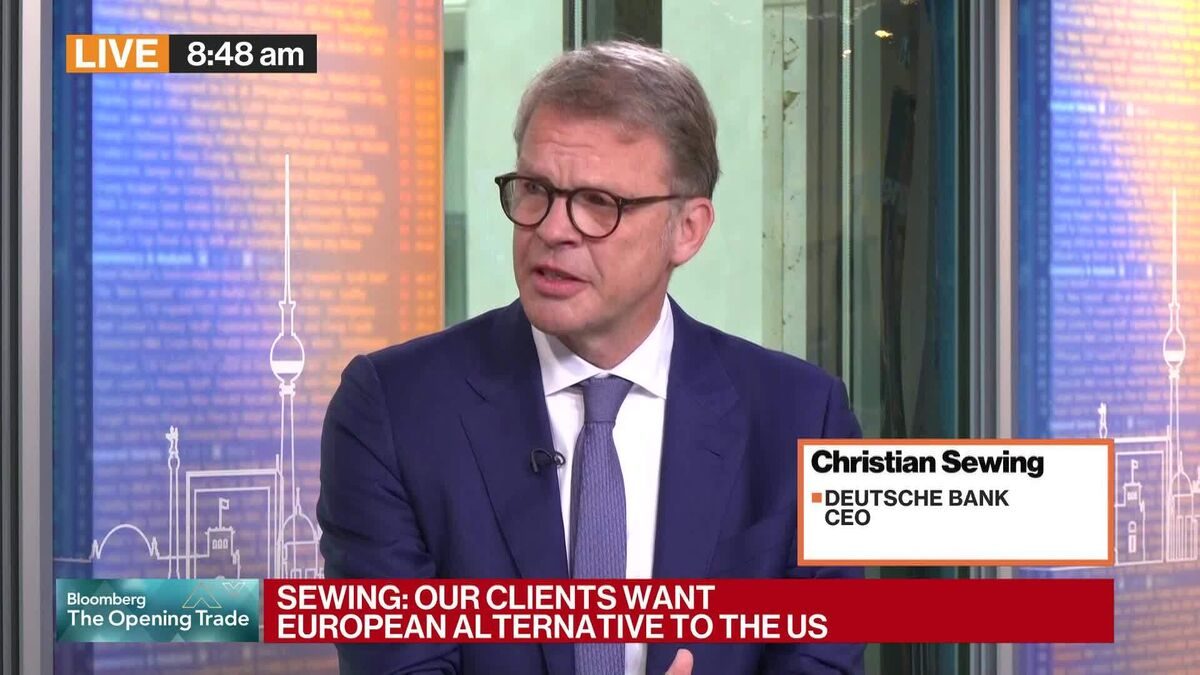
In an exclusive interview with Bloomberg in Berlin, Christian Sewing, Chief Executive Officer of Deutsche Bank AG, addressed a significant trend emerging in the global financial landscape: a rising preference among clients for European banking alternatives to traditionally dominant US financial institutions. This shift, Sewing explains, is driven largely by ongoing geopolitical uncertainties that are reshaping how and where international capital is allocated.
Key Details
- Client Preferences: Sewing states that many clients, including corporations and institutional investors, are actively seeking European banks as safer or more strategic partners compared to US banks.
- Capital Movement: Over recent months, Deutsche Bank has observed a "quite significant" reallocation of funds towards Europe, marking a notable trend in global asset flows.
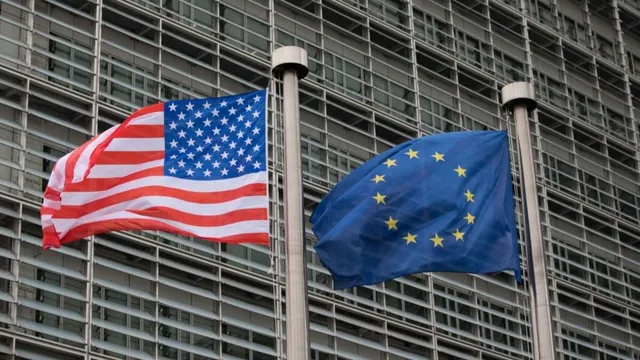
- Geopolitical Context: The increasing unpredictability of US policies, along with heightened geopolitical tensions, is prompting a reevaluation of risk among global investors.
- Deutsche Bank’s Role: Positioned as a leading European banking institution, Deutsche Bank is capitalizing on this momentum to offer enhanced financial solutions tailored to this demand.
Background
The global banking sector has long been dominated by US institutions due to their vast scale, innovative services, and the dollar’s status as the world’s reserve currency. However, recent geopolitical developments—including trade tensions, regulatory shifts, and international sanctions—have introduced elements of uncertainty that have begun to influence investor behavior.
European banks, traditionally seen as secondary players on the global stage, are now gaining renewed interest. The European Union’s efforts to strengthen its financial regulatory framework, improve cross-border banking integration, and promote the euro as a global currency alternative, contribute to this evolving landscape.
Deutsche Bank, as Germany’s largest bank and a key player in European finance, stands at the forefront of this transformation. Its strategic initiatives aim to leverage this environment by offering alternatives that appeal to clients seeking to diversify away from US-centric financial systems.
Analysis
Christian Sewing’s remarks underscore a broader trend of financial recalibration amid geopolitical tensions involving the US, Europe, and other global powers. The increasing demand for European banking services reflects both risk management strategies and a desire to tap into the EU’s stable regulatory environment.
The reallocation of funds towards Europe may also be interpreted as a signal of confidence in the continent’s economic resilience and its ability to offer competitive banking services. This shift could stimulate greater integration within the European financial markets, potentially enhancing the euro’s position in international finance.
Moreover, this trend highlights the delicate balance global investors must maintain in a multipolar world where political and economic alliances are continually evolving. The preference for European banks may serve as a hedge against the unpredictability of US monetary policy and geopolitical maneuvers.
However, challenges remain for European banks, including the need to innovate rapidly, manage regulatory complexity, and compete with well-established US and Asian counterparts. Deutsche Bank’s success in capitalizing on this opportunity will depend on its ability to address these challenges effectively.
Conclusion
The financial landscape is undergoing a noteworthy transformation as geopolitical uncertainties drive clients to reconsider their banking relationships. Deutsche Bank CEO Christian Sewing’s insights reveal a growing appetite for European banking alternatives that could reshape global capital flows.
This shift not only highlights changing investor priorities but also signals a potential recalibration of global financial power balances. As Europe positions itself as a credible alternative to US banking dominance, institutions like Deutsche Bank are set to play a pivotal role in shaping the future of international finance.