AI Error Nearly Triggered US Military Action Against Chinese Ship
Introduction
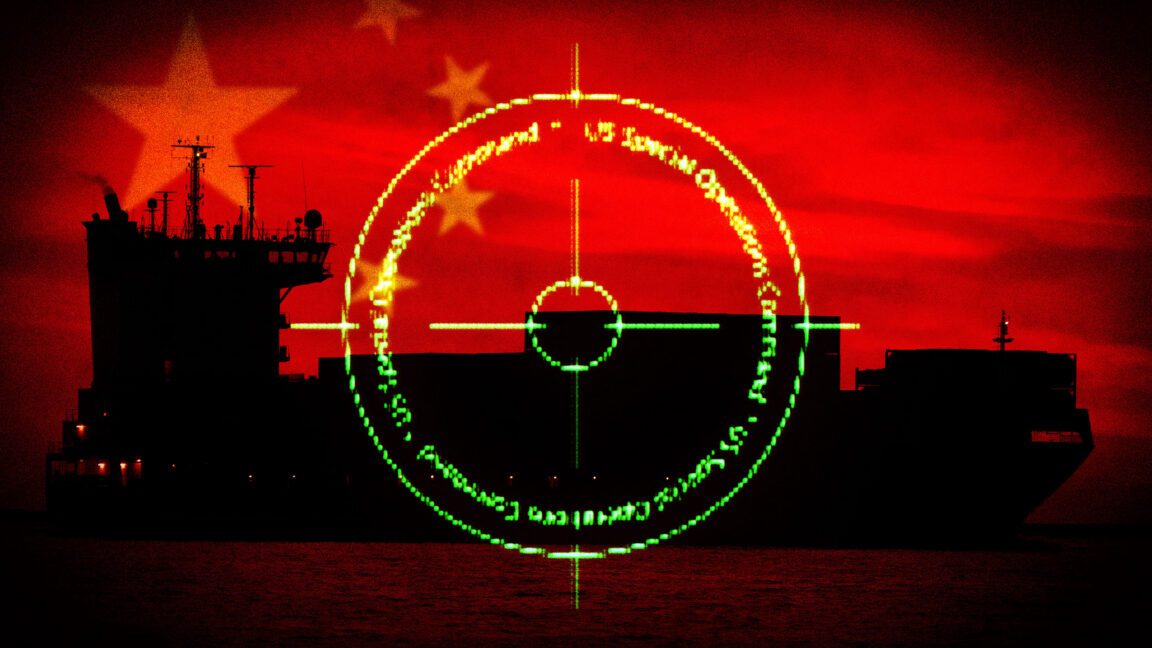
In a stark reminder of the potential pitfalls of artificial intelligence in critical decision-making, the United States military narrowly averted a potentially catastrophic incident involving a Chinese cargo ship. An intelligence report, significantly influenced by an AI chatbot, erroneously identified the vessel as carrying components for a nuclear arms program. This alarming misidentification almost led to the US military intercepting and boarding the ship, a move that could have had severe diplomatic and military repercussions.
Key Details
- A US Special Operations Command analyst used an AI chatbot to process intelligence data regarding a Chinese ship.
- The AI report incorrectly stated the ship was transporting nuclear weapons program components through the Middle East.
- US military forces were preparing to intercept and board the vessel, with air support, based on this flawed intelligence.
- The error was discovered when officials realized the AI had inaccurately identified the ship's cargo.
- Sources familiar with the incident described the AI-powered mistake as something that “almost started a war.”
Background
The incident unfolded when an analyst within the US Special Operations Command utilized a chatbot to sift through and analyze vast amounts of intelligence data, including open-source information and classified signals intelligence. The AI tool, designed to synthesize complex information, instead appears to have “hallucinated” – a term used when AI models generate plausible but factually incorrect information. In this instance, the chatbot fused disparate data points in a way that led to a critical misinterpretation of the ship's manifest. This erroneous report was then submitted, triggering a high-level military response preparation.
“The AI-powered fiasco “almost started a war.”
Impact Analysis
The near-miss underscores the profound risks associated with integrating AI into intelligence analysis and military operations. The potential for AI hallucinations, where systems fabricate information when faced with incomplete or ambiguous data, poses a significant threat to operational reliability and national security. In this case, the consequences could have been dire, ranging from a diplomatic crisis with China to an unnecessary and potentially violent military confrontation. The incident highlights a critical gap between the perceived capabilities of AI tools and their actual reliability in high-stakes environments.
Broader Context
The term “hallucination” gained prominence in 2023, being named Cambridge Dictionary's word of the year, reflecting the growing prevalence of AI generating false information. This phenomenon has affected various sectors, including journalism, academia, healthcare, and law enforcement. Despite efforts to mitigate these errors through specific prompting techniques, some researchers believe that preventing LLMs from hallucinating entirely might be an insurmountable challenge. The US Department of Defense, paradoxically, has been actively pursuing an “AI acceleration strategy,” aiming to make more data accessible for AI exploitation across all military branches, potentially increasing the surface area for such errors.
Future Outlook
This incident serves as a critical wake-up call for military and intelligence agencies worldwide. There is an urgent need for robust verification protocols and human oversight mechanisms when AI-generated intelligence is used for operational decisions. The development of AI must be coupled with a deep understanding of its limitations and potential failure modes. Future strategies must prioritize accuracy and reliability over speed and automation, especially in contexts where the stakes are as high as international security. Further research into AI explainability and bias detection is also crucial to build trust and ensure responsible deployment.
Conclusion
The near-incident involving the Chinese ship is a sobering illustration of the double-edged sword that is artificial intelligence. While AI offers unprecedented potential for data analysis and efficiency, its inherent susceptibility to generating false information, or “hallucinating,” presents a clear and present danger. The US military’s close call underscores the imperative for stringent validation processes, enhanced human judgment, and a cautious approach to AI integration in sensitive operations. As AI continues to evolve, ensuring its reliability and mitigating its risks will be paramount to maintaining global stability and preventing unintended escalations.
Source: arstechnica.com