SpaceX Unveils $100 Billion Starbase Louisiana: A New Frontier for Space Exploration
Introduction
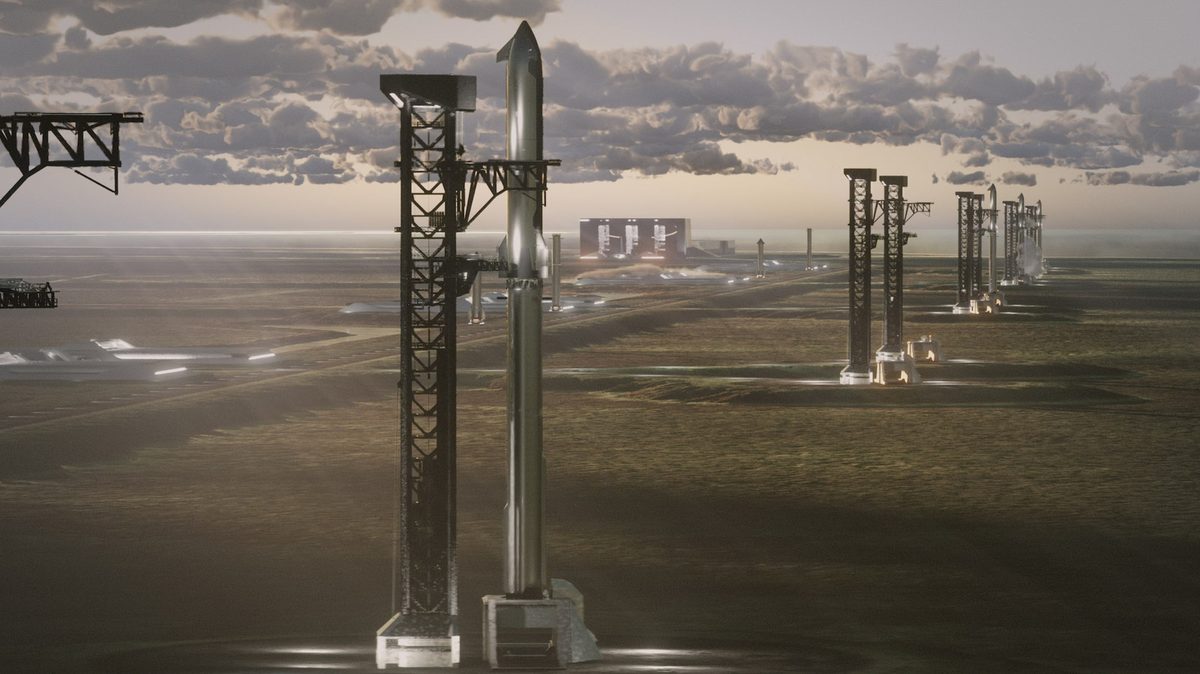
SpaceX, the aerospace giant founded by Elon Musk, has revealed ambitious plans to construct a monumental $100 billion spaceport, dubbed Starbase Louisiana, on the southern coast of the state. This significant undertaking, situated on a vast 195-square-mile (125,000-acre) tract of land on Pecan Island, is poised to become a critical hub for the company's future space endeavors, particularly for its colossal Starship rocket.
Key Details
- Massive Scale: The Starbase Louisiana facility will encompass five distinct launch complexes, each equipped with two launch pads, enabling a high cadence of operations.
- Comprehensive Infrastructure: Beyond launch capabilities, the site will host a propellant production facility, power generation infrastructure, vehicle processing areas, and residential housing for employees and their families.
- Strategic Location: The southern Louisiana coast offers SpaceX strategic advantages, including proximity to natural gas reserves essential for producing Starship's methane-based fuel and a southward trajectory ideal for launching satellites into polar orbits.
- Timeline: Construction is slated to commence in 2027, with the inaugural launch targeted for 2029.
- Environmental Commitment: As part of its agreement with Louisiana, SpaceX has pledged to undertake extensive marshland preservation, wildlife restoration, and storm protection initiatives for the coastal area.
Background
The announcement of Starbase Louisiana arrives amidst a period of significant growth and expansion for SpaceX. The company recently made headlines with a substantial public offering and unveiled plans for a “Terafab” chip foundry in Texas, designed to produce AI processors for its SpaceXAI division. This foundry is a key component in Musk's broader vision of establishing AI-powered data centers in orbit. The chosen site in Louisiana was previously owned by Exxon Mobil, which returned the land to the state as part of a settlement concerning coastal land loss.
“We're preparing to build a spaceport that, until now, has only existed in science fiction,” stated SpaceX CEO Elon Musk. “SpaceX was founded to bring about a future where humans are out exploring amongst the stars, which will only be possible when we make going to space as routine as flying on an airplane. Starbase, Louisiana will unlock that future.”
Impact Analysis
Starbase Louisiana represents a quantum leap in SpaceX's launch capabilities and strategic positioning. The sheer scale of the facility, with its multiple launch complexes, suggests a dramatic increase in the operational tempo for Starship. This will be crucial for realizing SpaceX's ambitious goals, which include not only lunar and Martian exploration but also the deployment of a vast constellation of data center satellites. The facility's location is particularly advantageous for polar orbit launches, essential for SpaceX's “Starmind” initiative, which aims to place AI processing power in orbit. Furthermore, the integration of propellant production on-site will streamline operations and potentially reduce costs.
Broader Context
The development of Starbase Louisiana is intertwined with Elon Musk's overarching technological ambitions. The creation of a dedicated, large-scale launch facility underscores the commitment to making space access more routine and affordable, a long-held tenet of SpaceX's mission. The synergy between the Starbase launch site, the Texas chip foundry, and the “Starmind” satellite network highlights a cohesive strategy to build a self-sustaining space-based infrastructure. This vision extends beyond mere transportation, aiming to leverage space for advanced computing and data processing, potentially revolutionizing fields from scientific research to global communication.
Future Outlook
With a projected start date for production in 2027 and the first launch in 2029, Starbase Louisiana is set to become a cornerstone of humanity's expansion into space. The facility is designed to support thousands of Starship flights annually, facilitating regular missions to Earth orbit, the Moon, and Mars. This increased launch capacity could accelerate the timeline for crewed missions to the Moon and Mars, as well as the deployment of large-scale orbital infrastructure. The environmental restoration component of the project also signals a growing awareness and responsibility within the aerospace industry regarding the impact of large-scale industrial development on sensitive ecosystems.
Conclusion
Starbase Louisiana is more than just a launch site; it is a declaration of SpaceX's intent to dominate the future of space exploration and utilization. The $100 billion investment signifies a profound belief in the potential of Starship and the broader vision of a multi-planetary species. As the facility takes shape, it promises to not only redefine launch capabilities but also to play a pivotal role in the development of orbital AI infrastructure and the sustainable exploration of the solar system.
Source: engadget.com