Abandoned 'Coyote vs. Acme' Surpasses $100 Million at Box Office After Tax Write-Off
Introduction
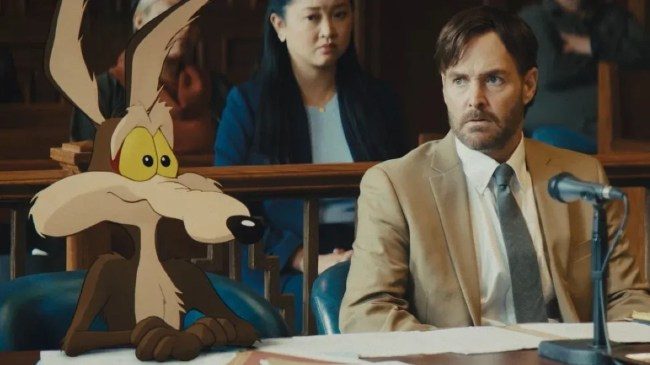
In a surprising turn of events, the animated/live-action comedy ‘Coyote vs. Acme,’ which Warner Bros. had controversially decided to abandon as a tax write-off, has now surpassed the $100 million global box office mark. This unexpected financial success story unfolds after Ketchup Entertainment acquired the film’s rights for $50 million and subsequently sold off some international distribution rights to mitigate risk.
Key Details
- Global Gross: The film has officially crossed $100 million in worldwide box office revenue.
- Domestic vs. International: As of Sunday, it had earned $54.7 million globally and $44.3 million domestically, according to Rentrak.
- Acquisition and Distribution: Ketchup Entertainment purchased the rights for $50 million and later sold some foreign rights.
- Digital Release: The film is scheduled for a digital release on September 28 at 9 p.m. PT / midnight ET on September 29.
- Production Budget: The film reportedly cost $70 million to produce.
Background
‘Coyote vs. Acme’ centers on the iconic Looney Tunes character Wile E. Coyote, who enlists the help of a personal injury law firm to sue the Acme Corporation for its consistently faulty products that have plagued him throughout his many escapades. The decision by Warner Bros. to shelve the film, deeming it unreleasable and opting for a tax write-down, was a significant move. This strategy, often employed by studios to recoup losses on projects deemed unlikely to perform, suggests a lack of confidence in the film’s commercial viability. The studio’s history with Looney Tunes reboots and spin-offs has been inconsistent, adding a layer of caution to any new ventures.
Impact Analysis
The film’s journey from being shelved to achieving over $100 million in revenue presents a stark contrast to Warner Bros.’ initial assessment. While the studio might have correctly predicted that the film’s quirky premise could be a challenge for mainstream audiences, its subsequent financial performance, even after being acquired by another entity, suggests a potential underestimation of its market appeal. The $50 million acquisition by Ketchup Entertainment, followed by a profitable run, indicates that the film still held significant value. This situation raises questions about the studio’s decision-making process and its ability to accurately gauge market potential, especially when compared to the performance of other recent Warner Bros. releases.
Broader Context
Warner Bros. has faced commercial struggles in the current year, a notable shift from a stronger previous period. Several of their recent releases, including “The Bride!” ($23.9 million worldwide on a $90 million budget), “Supergirl” ($126.4 million worldwide on a $180 million budget), and “The End of Oak Street” ($120.6 million worldwide on an $85 million budget), have underperformed significantly. Even newer releases like “Practical Magic 2” are struggling to recoup their substantial production costs. This trend has led to a diminished market share, with reports indicating that independent studio A24, largely thanks to films like “Backrooms,” has even surpassed Warner Bros. in domestic market share for the summer. The success of ‘Coyote vs. Acme,’ even in this post-acquisition phase, could potentially have narrowed this gap.
“Coyote vs. Acme” might have shrunk the gap. Heck, it might have even earned a profit.
Future Outlook
The digital release of ‘Coyote vs. Acme’ presents another opportunity for the film to generate revenue and potentially prove its commercial viability further. For Ketchup Entertainment, this success validates their investment and acquisition strategy. For Warner Bros., the situation serves as a cautionary tale about the potential downsides of utilizing tax write-offs for films that may still possess market value. It underscores the importance of thorough market analysis and strategic distribution, especially in a competitive landscape where even smaller studios are making significant inroads. The film’s performance might also influence future decisions regarding the handling of potentially “risky” but creatively distinct projects within the industry.
Conclusion
The unexpected box office triumph of ‘Coyote vs. Acme’ after being written off by Warner Bros. is a compelling narrative of a film finding its audience against the odds. It highlights the complexities of studio accounting, risk assessment, and the inherent unpredictability of the film market. While Warner Bros. may have sought to cut its losses, the film’s subsequent performance suggests a missed opportunity, demonstrating that even seemingly unconventional projects can achieve significant financial success when given a chance.
Source: indiewire.com