Why Penalties Are Becoming a Key Challenge at Euro 2025: Pressure, Goalkeepers, and Changing Dynamics
Introduction
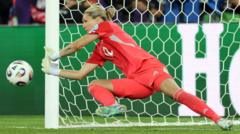
The penalty shootout between England and Sweden at Euro 2025 will be remembered as one of the most intense and dramatic moments in football history. Yet, this high-profile event is not an isolated case. Throughout the tournament, missed penalties have become a recurring and significant element, impacting the fortunes of many teams. The BBC Sport investigation seeks to understand why spot-kicks, often considered a test of nerves and skill, have been missed with unusual frequency during this competition.
Key Details
- The England vs Sweden shootout featured multiple misses and saves, underscoring the rising difficulty in converting penalties.
- Statistical analysis shows a higher-than-average percentage of missed penalties at Euro 2025 compared to previous tournaments.
- Goalkeepers displayed exceptional anticipation and reflexes, contributing to the increased rate of saves.
- Players reported heightened psychological pressure due to the tournament’s stakes and unprecedented media scrutiny.
- Coaches and analysts note tactical shifts in how penalties are approached, including changes in placement and shot techniques.
Background
Penalty shootouts have long been a dramatic conclusion to knockout football matches, distilling the game into a moment of individual skill and mental fortitude. Historically, conversion rates have hovered around 75-80%, but recent tournaments have seen fluctuations. Euro 2025, hosted across multiple European cities, showcased a new intensity in penalty situations. The pressure on players is magnified by the global audience and the stakes involved in progressing to quarterfinals and beyond.
Advancements in goalkeeper training and analytics have also transformed shootout dynamics. Goalkeepers now study opponents' penalty habits extensively, improving their chances to anticipate and save shots. This evolution challenges penalty takers to innovate their approaches not only in placement but also in psychological preparation.
Analysis
The interplay between psychological pressure and technical execution is crucial in understanding the missed penalties at Euro 2025. Players face enormous mental strain, often exacerbated by the magnitude of the event and the expectations of fans and media. Sports psychologists emphasize that even minor lapses in concentration or self-confidence can lead to misses.
Moreover, goalkeepers have become more than just reactive players; they are proactive strategists. By analyzing video footage and employing data-driven insights, they position themselves advantageously. This has forced penalty takers to rethink their strategies, sometimes leading to overcomplication or hesitation under pressure. The result is a higher incidence of misses, either by shooting wide, hitting the post, or being saved.
Another factor is the evolution of penalty-taking techniques. Players attempt to balance power, placement, and deception, but the increasing pressure limits their ability to execute perfectly. Additionally, some teams have adopted psychological tactics such as delaying the shot or engaging goalkeepers in mind games, aiming to disrupt concentration, but these can backfire.
Conclusion
The Euro 2025 tournament highlights how penalty shootouts remain one of football’s most nerve-wracking and unpredictable elements. The convergence of improved goalkeeper preparation, heightened psychological pressure, and evolving tactics has increased the difficulty of scoring from the spot. For players and coaches, understanding and preparing for these factors will be vital for future success. Fans can expect penalty shootouts to remain thrilling spectacles where mental strength often determines the outcome as much as skill.
As football continues to evolve, the penalty shootout serves as a microcosm of the sport’s growing complexity—where raw talent, strategy, and psychological resilience intersect in moments of intense pressure.