Seth Meyers Highlights Troubling News Cycle with 2-Minute Bad News Montage
Introduction
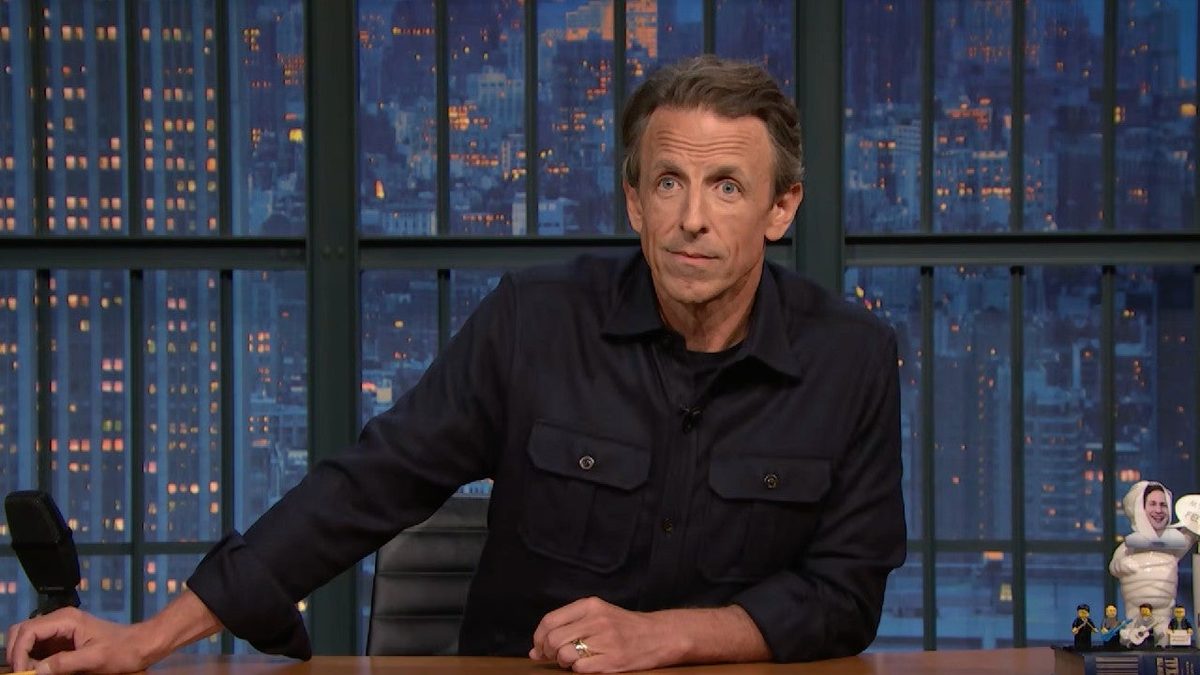
Late night host Seth Meyers made a notable return to his show Late Night with Seth Meyers following an extended hiatus. True to form, Meyers dedicated a significant portion of his monologue to a rapid-fire recap of the news he missed. However, this time, he amplified the segment by presenting a two-minute supercut of predominantly negative news headlines that emerged during his time away, prompting a mixture of dark humor and genuine bewilderment.
Key Details
- Seth Meyers returned from hiatus and addressed the news he missed.
- He presented a 2-minute supercut of negative news headlines from his break.
- The montage included reports on record-high diesel prices and an impending fuel crisis.
- It also featured rising Medicare premiums and damage to U.S. structures from Iranian strikes.
- Escalating trade wars, specifically with Canada, were highlighted as a potential cause for increased prices on everyday items like toilet paper.
- Meyers expressed frustration with political statements, particularly a comment from President Trump about potentially banning fishing.
- He connected these issues to broader economic anxieties, including the cost of fuel, food, and essential goods.
Background
Meyers’ “A Closer Look” segment is a staple of his show, often used to dissect complex or troubling news stories with a blend of sharp wit and critical analysis. This particular segment was framed by Meyers’ initial, perhaps facetious, claim that “nothing happened” during his absence. This setup allowed him to pivot to the reality of a news cycle that, from his perspective, was filled with significant challenges and concerning developments.
The host then adopted a persona of self-doubt, questioning whether his cynicism was unwarranted. He humorously suggested that perhaps his own biases as a “crooked left-wing fake news Trump-hater” were coloring his perception. This self-deprecation served as a lead-in to the supercut, which he presented as an objective check on his feelings, ironically curated from reports by actual news anchors.
Impact Analysis
The supercut effectively condensed a barrage of negative news into a digestible, albeit alarming, two-minute package. By juxtaposing headlines about economic hardship (high gas and potential toilet paper prices), international conflict (Iranian strikes), and systemic issues (rising Medicare premiums), Meyers painted a stark picture of the period he was away. The segment resonated with viewers who may have felt overwhelmed by the constant stream of challenging news, offering a shared moment of acknowledgment and dark humor.
Meyers’ comedic reaction to the news, particularly his mock celebration of owning toilet paper due to anticipated shortages and price hikes, underscored the absurdity and anxiety surrounding these issues. His specific critique of President Trump’s comment about banning fishing highlighted a perceived disconnect between political rhetoric and the practical concerns of everyday citizens. The host’s pointed questions – “Why the f–k, sir, would you ban fishing?” – tapped into a common sentiment of bewilderment at political priorities.
“This is how bad things are. Gas is too expensive to drive to the grocery store, and even if you do, you can’t eat anything because the food costs too much. It might make you sick, and if it does make you sick, the soap you use to clean your hands has just been recalled, while the toilet paper you need will be too expensive because of a trade war with Canada no one asked for.”
Broader Context
The segment taps into a broader cultural conversation about the relentless nature of the 24/7 news cycle and the psychological toll it can take. In an era of information overload, Meyers’ approach offers a way to process difficult news through satire and shared experience. The specific issues highlighted – inflation, international tensions, supply chain disruptions – are not isolated incidents but rather interconnected symptoms of complex global and domestic challenges.
The mention of trade wars and their potential impact on consumer goods like toilet paper serves as a relatable example of how geopolitical decisions can trickle down to affect ordinary people’s lives. This strategy of connecting macro-level issues to micro-level impacts is a hallmark of Meyers’ “A Closer Look” segments, making complex problems more accessible and, in this case, darkly humorous.
Future Outlook
Meyers’ segment, while comedic, reflects a genuine concern about the trajectory of current events. The issues he raised – economic instability, international relations, and public health concerns (implied by recalled soap) – are likely to remain prominent in the news cycle. His use of a supercut suggests a recurring theme of grappling with a seemingly unending stream of bad news.
As audiences continue to navigate a turbulent world, comedians like Meyers play a crucial role in providing commentary and catharsis. His ability to distill complex issues into relatable, humorous observations suggests that segments like this will remain a vital part of late-night television’s response to the news.
Conclusion
Seth Meyers’ return from hiatus was marked by a sharp and insightful “A Closer Look” segment that effectively used a two-minute supercut of negative headlines to underscore the challenges of the preceding weeks. By blending humor with pointed analysis, Meyers not only recapped the news he missed but also provided a commentary on the anxieties and absurdities of the current socio-economic and political climate. The segment serves as a reminder of the power of satire to process difficult realities and the enduring relevance of late-night television in shaping public discourse.
Source: thewrap.com