Ava DuVernay's '14th': A Dense, Overstuffed Look at the Erosion of Civil Rights
Introduction
Ava DuVernay's documentary “14th”, a thematic successor to her 2016 film “13th”, delves into the complex legacy of the Fourteenth Amendment to the U.S. Constitution. Released during a period of heightened political tension and challenges to democratic norms, the film aims to connect historical struggles for civil rights with contemporary issues. Guided by a constellation of scholars, activists, and commentators, “14th” traces the amendment's transformative impact on American citizenship and the persistent threats it faces.
Key Details
- Central Theme: The documentary examines the Fourteenth Amendment, focusing on its promise of birthright citizenship and its failure to explicitly guarantee voting rights, as foreseen by Frederick Douglass.
- Narrative Voice: Constitutional law expert Sherrilyn Ifill serves as a recurring guide, invoking Douglass's warnings about enduring enmity to frame the film's argument.
- Visual Style: Similar to “13th”, the film employs a talking-head format, but situates experts in academic settings like libraries and museums to visually underscore the value of expertise.
- Structure: The film uses an animated five-pointed star to represent the amendment's sections, illustrating their gradual erosion throughout history.
- Interviewees: Features over 50 individuals, including Bryan Stevenson, David Blight, Jelani Cobb, Van Lathan, Alexandria Ocasio-Cortez, Jeff Flake, and Stacey Abrams.
- Archival Material: Utilizes historical photographs and footage, often animated to bring Reconstruction-era Black life and efforts to build institutions to life.
- Release: Premiered at the New York Film Festival, with a limited theatrical release on November 27 and a Netflix debut on December 4.
Background
The Fourteenth Amendment, ratified in 1868, granted citizenship to all persons born or naturalized in the United States, including formerly enslaved people. However, as Frederick Douglass presciently warned, the amendment's omission of explicit voting rights protections left Black Americans vulnerable to disenfranchisement. The film draws a direct line from this historical vulnerability to contemporary challenges like voter suppression, the gutting of the Voting Rights Act, and attacks on birthright citizenship.
Impact Analysis
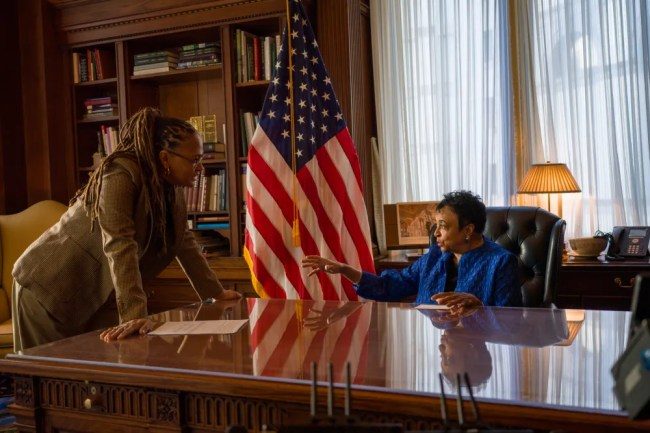
“14th” excels in its initial sections, providing crucial historical context about the amendment's origins and the transformative period of Reconstruction. The film effectively uses archival footage, subtly animated, to depict the aspirations and efforts of Black Americans in building institutions and participating in civic life. Moments featuring contractor Devon Henry removing Confederate monuments and Librarian of Congress Carla Hayden moving through the Library of Congress offer welcome visual respites, demonstrating the power of action and movement in contrast to the static talking-head format. Comedy, through clips from stand-up comedians like Paul Mooney, also serves as an effective tool to underscore historical ironies and provide necessary relief.
Broader Context
The documentary arrives at a critical juncture, reflecting a broader societal concern about the fragility of democratic institutions and civil rights. By incorporating a wide range of voices, from progressive advocates to conservatives, DuVernay attempts to bridge the hyperpolarization of the current era. The film positions the Fourteenth Amendment not merely as a historical artifact but as a living document whose guarantees are under active threat, urging viewers to recognize the present-day relevance of historical struggles.
“That enmity will not die out in a year. It will not die out in an age.”
Future Outlook
Sherrilyn Ifill posits that contemporary America stands at an inflection point similar to the Reconstruction era, where a reimagining of the nation and its laws is necessary. The film suggests that the spirit of opposition to equality, which Frederick Douglass warned would persist, continues to challenge the ideals enshrined in the Fourteenth Amendment. The ultimate message is one of urgency and agency: the ongoing struggle for a more perfect union depends on present-day action and a renewed commitment to democratic principles.
Conclusion
While “14th” is rich with vital information and features compelling insights from its diverse cast of experts, its maximalist approach proves to be its primary weakness. The sheer number of interviewees, including some seemingly tangential figures like Hasan Piker, dilutes the impact of the strongest voices and creates a sense of cognitive clutter. This overstuffed nature, coupled with the relentless density of information, risks overwhelming the audience, potentially inducing the very paralysis the film seeks to overcome. Despite these formal shortcomings, “14th” serves as a powerful, albeit exhausting, reminder of the enduring relevance of the Fourteenth Amendment and the ongoing fight to uphold its promises.
Source: indiewire.com