Andrew Scott Shines in 'Elsinore' Despite Clunky AIDS Drama Tropes
Introduction
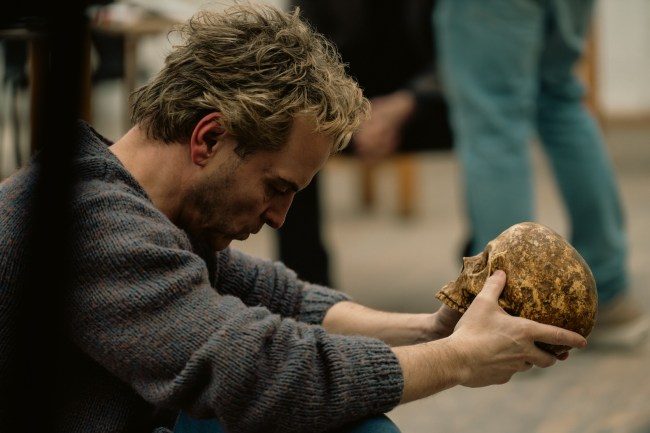
Andrew Scott, a celebrated contemporary actor known for his nuanced portrayals, takes on a challenging role in Simon Stone’s new film, ‘Elsinore.’ He embodies Ian Charleson, a Scottish actor who died of HIV/AIDS complications in 1990 while performing Hamlet at the National Theatre. Scott, who has a history of playing complex characters, including Tom Ripley and the Hot Priest, and recently showcased his range in a stage production of ‘Vanya,’ brings his usual intensity to Charleson. However, the film itself struggles to match the actor’s brilliance, employing conventional narrative techniques and an over-reliance on frenetic editing that undermines the gravity of its subject matter.
Key Details
- Actor: Andrew Scott portrays Ian Charleson.
- Subject: The film focuses on Charleson’s final months, including his acclaimed Hamlet production amidst his battle with HIV/AIDS.
- Director: Simon Stone.
- Screenplay: Stephen Beresford.
- Setting: London, 1989-1990.
- Supporting Cast: Features Olivia Colman as Dr. Margaret Johnson, Johnny Flynn as Richard Eyre, and David Dawson as Derek Jarman.
- Premiere: ‘Elsinore’ premiered at the 2026 Telluride Film Festival.
- Release: Focus Features is set to release the film starting November 20.
Background
Ian Charleson was a notable actor of his generation, with significant roles in films like ‘Chariots of Fire’ (1981) and ‘Gandhi’ (1982), both Best Picture winners. He also appeared in Derek Jarman’s ‘Jubilee’ (1978) and Dario Argento’s ‘Opera’ (1987). Despite a handful of film credits, Charleson primarily focused on stage work. His death from AIDS complications during a run of Hamlet at the National Theatre in 1990 was a significant event, though Charleson himself was not openly out about his diagnosis at the time, reflecting the intense stigma surrounding HIV/AIDS in the late 20th century. Many actors then feared damaging their careers by disclosing their status, a fear that, while lessened, still echoes today.
Impact Analysis
Andrew Scott’s performance is the undeniable anchor of ‘Elsinore.’ He captures Charleson’s artistic dedication and the personal toll of his illness with profound authenticity. His scenes with Olivia Colman, who plays Dr. Margaret Johnson, a physician who ran a groundbreaking HIV testing clinic named after Charleson, are particularly compelling. Their interactions highlight the medical and personal challenges of the era. However, the film’s narrative structure, characterized by rapid-fire editing and montages, often disrupts the emotional resonance. Instead of allowing key moments, such as Charleson’s final performances as Hamlet, to breathe, the film rushes through them. This editorial choice, as Scott’s character himself notes in the film about the nature of stage acting versus film editing, prevents the audience from fully immersing themselves in the drama and Charleson’s experience.
“The problem isn’t his: It’s that the movie surrounding him dulls the greatness of his performance with its conventional storytelling, and over-complication in post.”
Broader Context
‘Elsinore’ arrives at a time when films dealing with the AIDS crisis are often scrutinized for their potential to exploit the subject matter for awards prestige. The film’s approach, while featuring a stellar lead performance, risks falling into the category of ‘AIDS-movie awards bait.’ The narrative includes a constellation of British cultural figures from the era, including director Richard Eyre and Derek Jarman, adding a layer of authenticity but sometimes feeling like a checklist of notable gay personalities rather than organic plot developments. This contrasts sharply with films like Robin Campillo’s ‘Beats Per Minute,’ which, despite its activist focus, managed to imbue its portrayal of the AIDS crisis with immense energy and emotional heat. ‘Elsinore,’ by comparison, is often visually muted and emotionally distant, with its grey cinematography seeming to mirror the bleakness of the subject without offering much aesthetic counterpoint.
Future Outlook
The film’s success will likely hinge on its ability to transcend its structural flaws and connect with audiences on an emotional level, despite its conventional approach to the AIDS narrative. While Scott’s performance is a significant draw, the film’s reliance on familiar tropes may limit its critical reception and audience engagement. The narrative’s tendency to tell rather than show Charleson’s impact on others, and its rushed depiction of his final performances, could leave viewers feeling unsatisfied. The film’s premiere at the Telluride Film Festival and its upcoming release by Focus Features will provide the first indications of how it is received by critics and the public, and whether it can overcome its perceived shortcomings to deliver a truly moving tribute.
Conclusion
‘Elsinore’ is a film anchored by a towering performance from Andrew Scott, who fully inhabits the role of Ian Charleson. His portrayal is a testament to his skill, capturing the actor’s artistic spirit and the devastating reality of his illness. However, the film’s directorial and editorial choices—a conventional narrative structure and a relentless pace—ultimately detract from its potential impact. By prioritizing a familiar, almost formulaic, approach to the AIDS drama genre, ‘Elsinore’ struggles to find its own voice. While it serves as a reminder of Charleson’s legacy and the broader struggles of the era, it ultimately feels like an opportunity missed, a film that aims for prestige but falls short of profound emotional connection.
Source: indiewire.com